
Governor Newsom Unveils California’s Updated Climate Adaptation Strategy
Governor Newsom Unveils California’s Updated Climate Adaptation Strategy
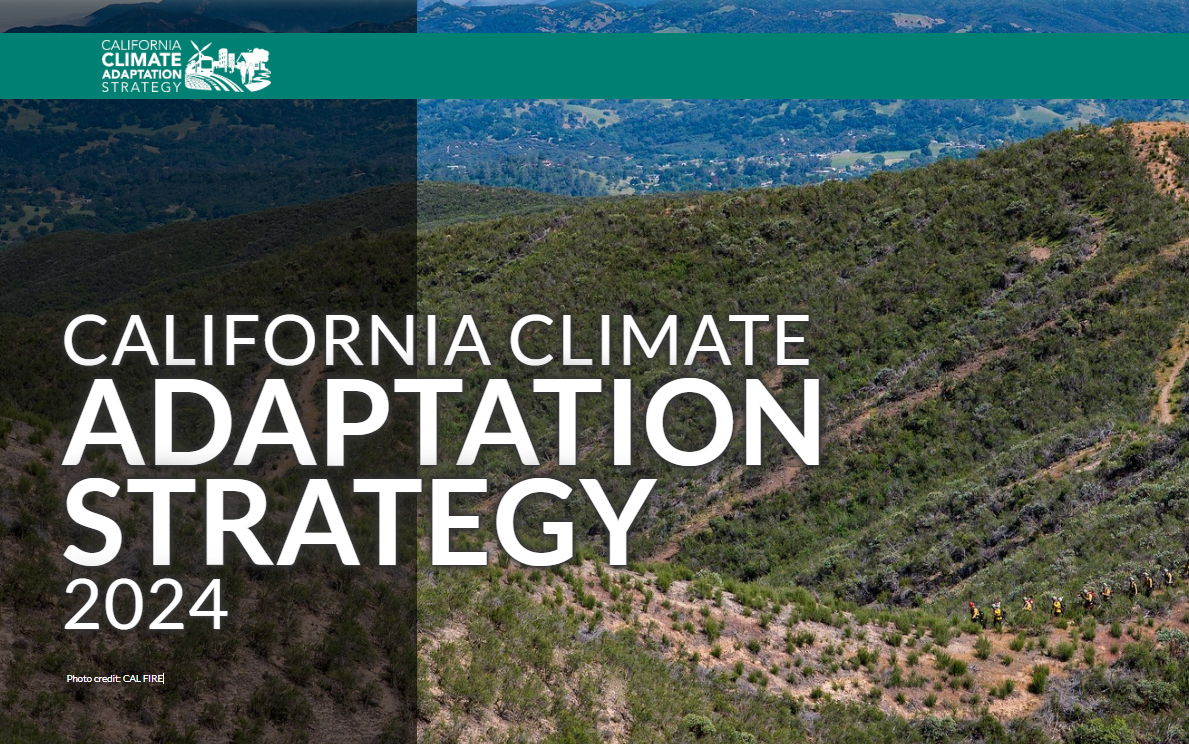
September 4, 2025 – Governor Newsom unveiled California’s updated Climate Adaptation Strategy — the state’s overarching framework to better protect communities and nature from dangerous climate impacts. California last updated the Strategy in 2021. The updated strategy sets strategic direction through six priorities:
- Protecting communities most vulnerable to climate change
- Improving public health and safety to protect against increasing climate risk
- Building a climate-resilient economy
- Expanding nature-based climate solutions and strengthening the resilience of natural systems
- Making decisions based on best available climate science
- Partnering and collaborating to leverage resources
These priorities are supported by cross-cutting climate resilience actions, each with associated success metrics. The strategy aligns with and builds on the goals set forth by California’s Wildfire and Forest Resilience Action Plan and includes the following actions specific to wildfire resilience:
- Prioritize actions that reduce wildfire risks to California Native American tribes and climate vulnerable communities.
- Support wildfire-prone communities by increasing the capacity of local and regional partnerships to build and maintain a pipeline of forest health and fire prevention projects.
- Invest Community Development Block Grant Disaster Recovery funds in long-term disaster recovery and resilience building that targets the unmet housing recovery needs of low and moderate-income households in a way that mitigates disaster risk and reduces future losses among vulnerable communities.
- Reduce health impacts of wildfire and prescribed fire smoke.
- Reduce the risk of energy infrastructure-related ignitions that lead to catastrophic wildfire.
- Bring to scale a thriving forest and wood products market in California that leverages public investments by energizing private capital for sustainable forest management, regional economic recovery, and climate resilience.
- Increase the pace and scale of wildfire resilience and forest health projects.
- Reduce risks of wildfire through increased use of fuel breaks and fuels reduction.
- Assist the federal government in scaling up forest treatments by supporting collaborative forest management and encouraging landscape level planning.
- Coordinate and guide prescribed fire and cultural fire activities and address the key barriers to its widespread use in California.
- Expedite permitting processes for wildfire and forest resilience projects using exemptions or the California Vegetation Treatment program.
- Invest in science-based management focused on climate resilience of California’s fire adapted landscapes.
- Improve wildfire smoke guidance for schools, children, and other vulnerable populations. Develop outreach materials for health care providers and the public on wildfire smoke health effects and ways to decrease exposure.
- Collaborate with federal, state, tribal, and private partners to increase pace and scale of restoration of fire-adapted lands and maximize the climate resilience benefits of these treatments.
- Leverage federal funding to support fire-hardening roads and communities.

California Continues Quick and Effective Action to Assist Los Angeles Fires Recovery
California Continues Quick and Effective Action to Assist Los Angeles Fires Recovery
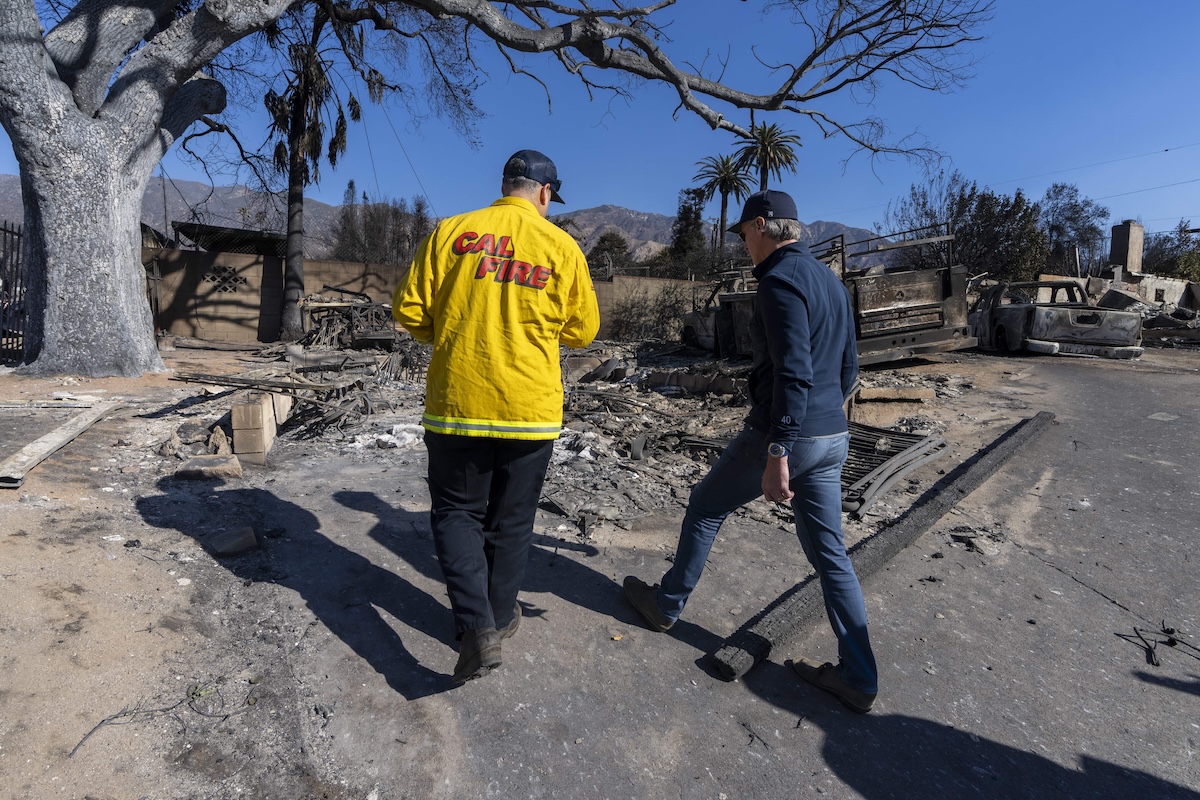
February 7, 2025 – Governor Newsom has launched historic recovery and rebuilding efforts to accelerate recovery and signed legislation providing over $2.5 billion to support ongoing response and jumpstart recovery efforts for Los Angeles. The Governor has signed 15 executive orders that together are:
- streamlining rebuilding of homes and businesses;
- cutting red tape and suspending permitting requirements under the California Coastal Act;
- removing bureaucratic barriers to provide critical regulatory relief to help fire survivors rebuild, and access essential services;
- providing tax and mortgage relief to impacted communities and businesses, as well as extending tax deadlines;
- fast-tracking temporary housing and protecting tenants; and
- mobilizing debris removal and cleanup and protecting communities from flooding and landslides.
Additionally, State and federal resources have come together to accelerate a safe recovery for Los Angeles:
- The California Conservation Corps (CCC) responded quickly in recovery efforts by installing silt socks and straw wattles around storm drains in the burn zones to keep contaminants found in the ash from washing into the Los Angeles watershed. This was the largest deployment of Corpsmembers in CCC history targeting erosion and contaminant control.
- The California Department of Water Resources deployed over 30 watershed experts and engineers to Los Angeles to support fire mitigation work in burn scar areas and protect downstream communities by keeping toxic runoff out of local watersheds.
- The California Department of Conservation deployed its Watershed Emergency Response Teams to the front lines to quickly assess post fire hazards such as debris flows, flash floods, and falling rocks.
- The California Department of Fish and Wildlife (CDFW) is supporting intake of burned and impacted wildlife to rehabilitation centers, as well as relocating wildlife to help expedite recovery for both people and animals. CDFW also mobilized staff and volunteers to rescue a population of endangered Steelhead trout in Topanga Creek.
- California State Parks is working with US EPA, Cal OES, and CalEPA to help the recovery effort by hosting two temporary sites to safely process hazardous household materials removed from properties destroyed by the Palisades Fire.
- The U.S. Forest Service continues ongoing assessment of damage from the Eaton and Hughes fires through the deployment of Burned Area Emergency Response (BAER) Teams. These teams include scientists, historians and other subject matter experts that identify potential emergency threats on federal lands, such as human life and safety, national forest property, critical natural resources, and critical pre-historic and historic properties, and more. In addition, BAER Teams coordinate with other agencies, who assist businesses, homes and landowners preparing for rain events and potential flooding and debris flow in fire affected areas.
- The Bureau of Land Management (BLM) is currently engaging in emergency stabilization and rehabilitation (ESR) planning following the Border 2 Fire to mitigate the potential impacts of the burned area, such as mud and debris flows, erosion, and other damages. Additionally, BLM assessed impacts of the Hughes Fire and no emergency stabilization or rehabilitation needs were identified.