

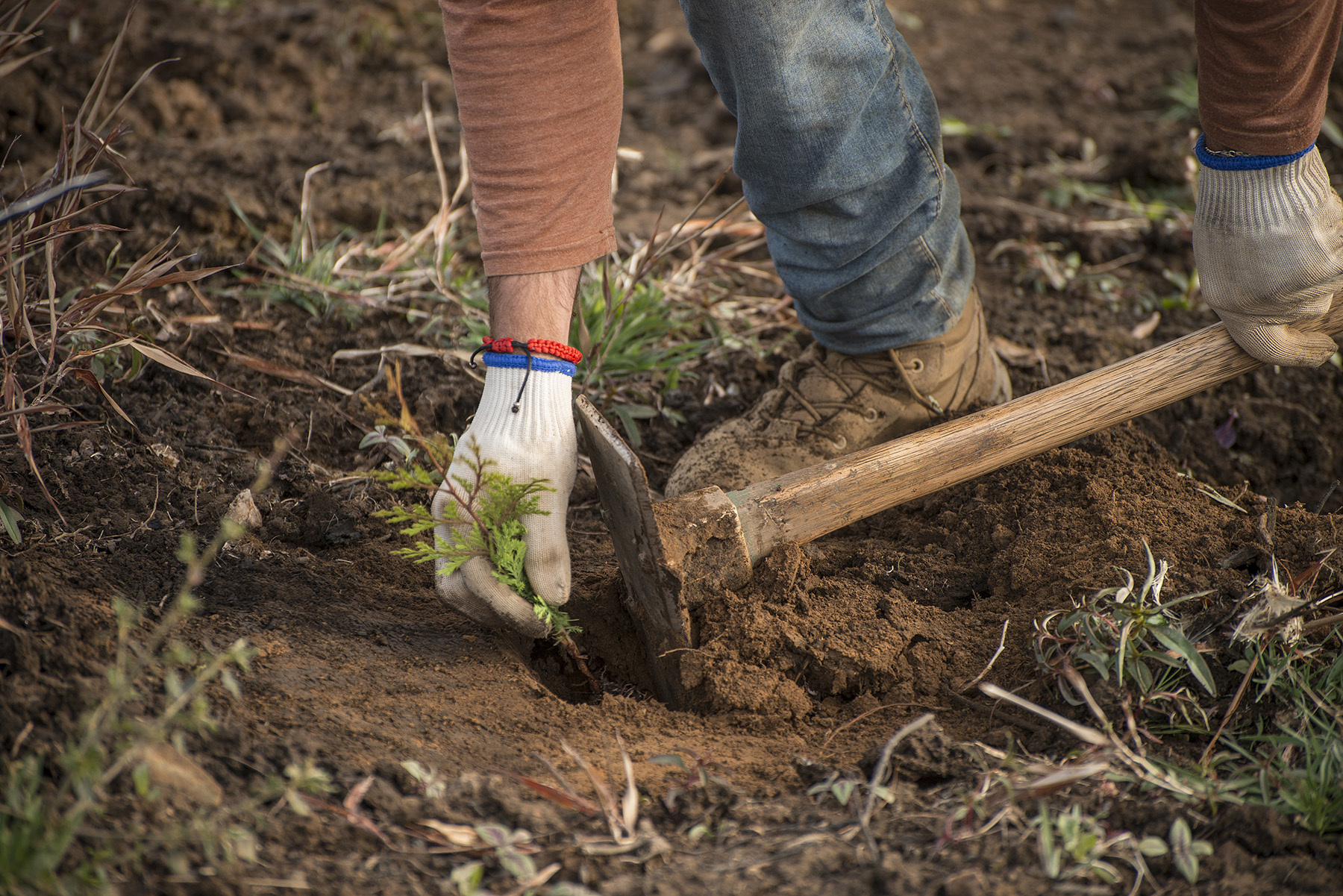
Task Force Releases Statewide Reforestation Strategy
Task Force Releases First Statewide Interagency Strategy to Restore Forests After Wildfire
October 21, 2026 – The California Wildfire and Forest Resilience Task Force released the state’s first statewide interagency reforestation strategy, establishing a shared roadmap to accelerate forest recovery after severe wildfire to mitigate the growing risk of permanent forest loss. Millions of acres of burned forestland remain at risk of failing to regenerate naturally, a challenge no single agency or landowner can address alone. California’s Reforestation Strategy: An All-Lands Approach to Restoring Forests After Severe Wildfire calls for coordinated action across public and private lands, bringing agencies and partners together to expand reforestation over the next decade. Developed by the USDA California Climate Hub, with support from CAL FIRE, the USDA Forest Service and American Forests, the Strategy provides a framework to accelerate reforestation, expand planting capacity and help prevent the loss of millions of acres of California forestland.

California is Over Halfway to 30 x 30 Goal
California is Over Halfway to 30 x 30 Goal
September 27, 2026 – The California Natural Resources Agency published a report documenting the State’s progress toward its goal of conserving 30% of lands and coastal waters by 2030 (30×30). According to the report, California is past the halfway mark to 30×30, having conserved more than 3.5 million acres of lands and coastal waters since 2022. More than 1 million acres of land were added to the 30×30 database in the past year, bringing the state to 27.1% of lands conserved and 21.9% of coastal waters conserved.
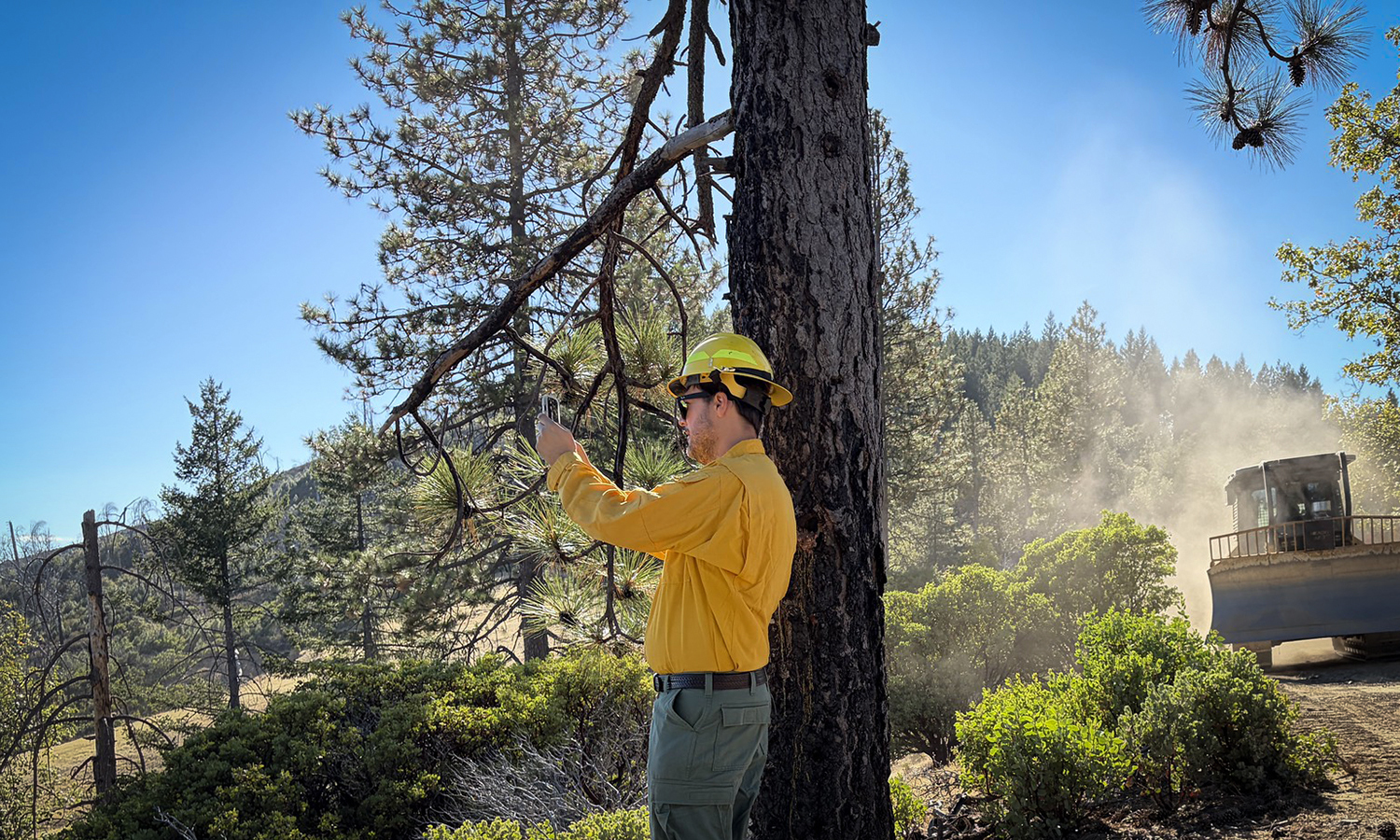
CAL FIRE Announces $10M in Grants to Strengthen California's Forest Workforce
CAL FIRE Announces $10M in Grants to Strengthen California's Forest Workforce
September 22, 2026 – CAL FIRE announced the award of $10 million to 17 Business and Workflow Development grants, supporting innovative solutions that advance forest health, wildfire resilience, and rural economic development. Together, these 17 projects will train hundreds of workers, create new career pathways, expand the capacity to conduct forest restoration and wildfire risk reduction, and strengthen markets for wood and biomass generated through forest management.
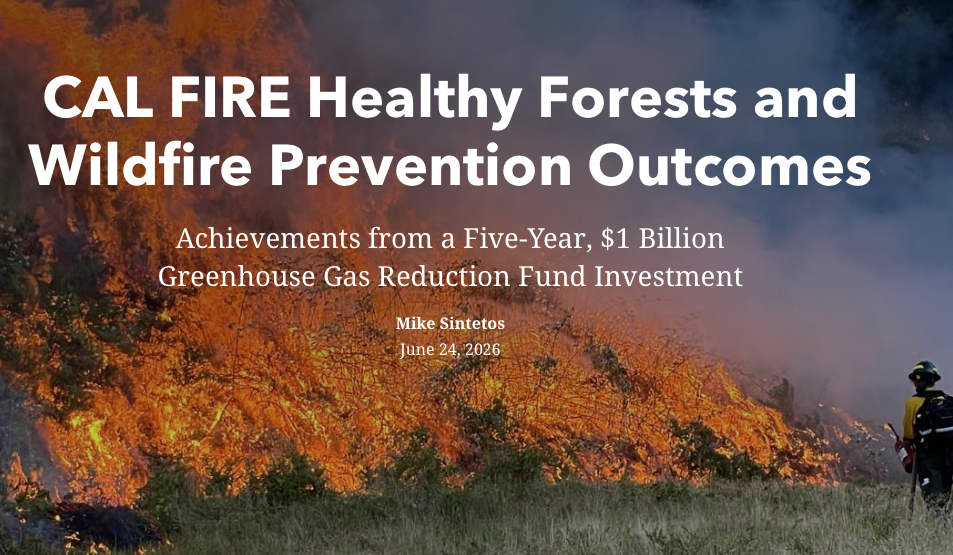
CAL FIRE Highlights Achievements from a Five-Year, $1 Billion Greenhouse Gas Reduction Fund Investment
CAL FIRE Highlights Achievements from a Five-Year, $1 Billion Greenhouse Gas Reduction Fund Investment
September 24, 2026 – CAL FIRE published a report that highlights the outcomes of the state’s $1 billion Greenhouse Gas Reduction Fund investment in wildfire prevention and forest health efforts statewide. The investments funded more than 660 grants through various CAL FIRE programs. Implemented in 56 of California’s 58 counties, the projects had positive impacts, with individual projects contributing to community protection during wildfires, influencing wildfire behavior, strengthening a culture of preparedness, helping communities reduce risk and protect homes, improving the chances of success for residents and firefighters when wildfire strike.
California Fiscal Year 2026 Budget Allocates $448M for Wildfire Resilience Programs
California Fiscal Year 2026 Budget Allocates $448M for Wildfire Resilience Programs
September 2026 – California’s FY 2026-2027 spending plan was passed by the Legislature on September 1 in Assembly Bill 113 and signed by the Governor on September 18. The budget allocates $329.5 million from Proposition 4 and $118 million from GGRF. Prop 4, passed by voters in 2025, is a $10 billion general obligation bond funding climate resilience and natural resource management programs, including $1.5 billion for wildfire and forest resilience. After the enactment of AB 113, approximately $929.5 million of the $1.5 billion total for wildfire resilience will have been appropriated, or roughly 61%.

Governor Newsom Signs Landmark Package of Wildfire Bills

Governor Newsom Signs Landmark Package of Wildfire Bills
September 2026 – The 2026 legislative session resulted in a package of new laws designed to significantly strengthen California’s ability to prevent, prepare for, and respond to wildfire. Signed by Governor Gavin Newsom in September, these measures advance several Task Force priorities, including landscape-scale wildfire mitigation, beneficial fire, community and home hardening, regional coordination, innovation, financing, and more efficient implementation of wildfire resilience projects. Together, these measures provide new authorities and tools that can help California increase the pace and scale of wildfire resilience investments while strengthening the connection between statewide policy, regional planning, and community-level implementation.
- AB 706 (Aguiar-Curry) Forest Organic Residue, Energy, and Safety Transformation and Wildfire Prevention Fund Act: Establishes the Forest Organic Residue Energy and Safety Transformation (FOREST) and Wildfire Prevention Fund to maintain and expand biomass power generation in the state, to revitalize idle facilities for biomass power generation, and to support biomass power generation facilities by creating additional capacity for power generation or feedstock utilization in strategically located regions of the state.
- AB 1699 (Rogers) Good Fire Act: Indefinitely extends the Prescribed Fire Liability Program, the pilot program which is currently active only until January 1, 2028. Expands the use of prescribed fire and cultural burning as wildfire resilience and ecosystem management tools; extends burn bosses’ certification from one year to three years, requires the Office of the State Fire Marshal (OSFM) to explore ways to expand the pool of burn boss instructors, and codifies Governor Newsom’s 2025 executive order to expand tools to safely deploy beneficial fire projects.
- AB 1934 (Bennett) Home Hardening Certification Program: Requires the OSFM to develop an implementation plan for a voluntary home-hardening certification program that identifies an appropriate combination of home hardening products, techniques, and defensible space measures to reduce the risk of home loss during wildfire.
- AB 1960 (Bennett) Wildfire Mitigation Validation: Requires CAL FIRE, in consultation with the OSFM’s Wildfire Mitigation Advisory Committee, to establish a framework for validating wildfire mitigation activities undertaken by communities that achieve specified levels of home hardening and defensible space. Authorizes CAL FIRE to provide Wildfire Prevention Grant funds (beginning FY28/29) to recognized communities that partner with fire safe councils or other eligible organizations.
- AB 1964 (Bennett) State Fire Marshal: home hardening. Requires OSFM to develop statewide home hardening standards and compile a report estimating the number of homes in moderate, high, and very high fire hazard severity zones that meet those standards and the number that require additional home hardening.
- AB 2513 (Petrie-Norris): Regional Forest and Fire Capacity Program: Authorizes the Department of Conservation to directly award regional landscape grants to regional entities to implement the regional priority strategies that contribute to the achievement of the goals of California’s Wildfire and Forest Resilience Action Plan. Expands wildfire prevention grant eligibility to include shrublands and other non-forested landscapes and expands eligible activities to include vegetation modification and ignition prevention.
- SB 894 (Allen) California Wildfire Resilience Loan Program: Establishes the California Wildfire Resilience Loan Program to provide, upon appropriation, financial assistance for projects and activities that reduce wildfire-related risks and losses, including home hardening and defensible space improvements.
- SB 973 (Becker) Wildfire County Coordinator Program: Codifies and expands the Wildfire County Coordinator Program within CAL FIRE and the California Fire Safe Council and mandates standardized county-level risk assessment tools.
- SB 1079 (Stern) CAL FIRE Fire Innovation Unit: Establishes a Fire Innovation Unit within CAL FIRE to advance wildfire technology research, coordination, procurement, and deployment. The unit is intended to support technologies that improve community risk reduction and ecosystem- and landscape-scale resilience.
- SB 1370 (Stern) Covered Wildfire Mitigation Projects: consolidated and expedited review. Establishes a permanent consolidated and expedited state environmental and permitting review process for covered wildfire mitigation projects, administered jointly by the California Natural Resources Agency and the California Environmental Protection Agency. The law builds on temporary executive actions that streamlined review for hundreds of priority wildfire prevention projects and is intended to expedite authorization procedures, while maintaining specified environmental protections and requirements.