
Recap of Sacramento 8/29 Task Force Meeting
SACRAMENTO TASK FORCE MEETING RECAP
August 29, 2023
The Task Force held its quarterly meeting at the California Natural Resources Agency in Sacramento and live on Zoom. Recordings of the sessions are available on the Task Force website. Some of the highlights include:
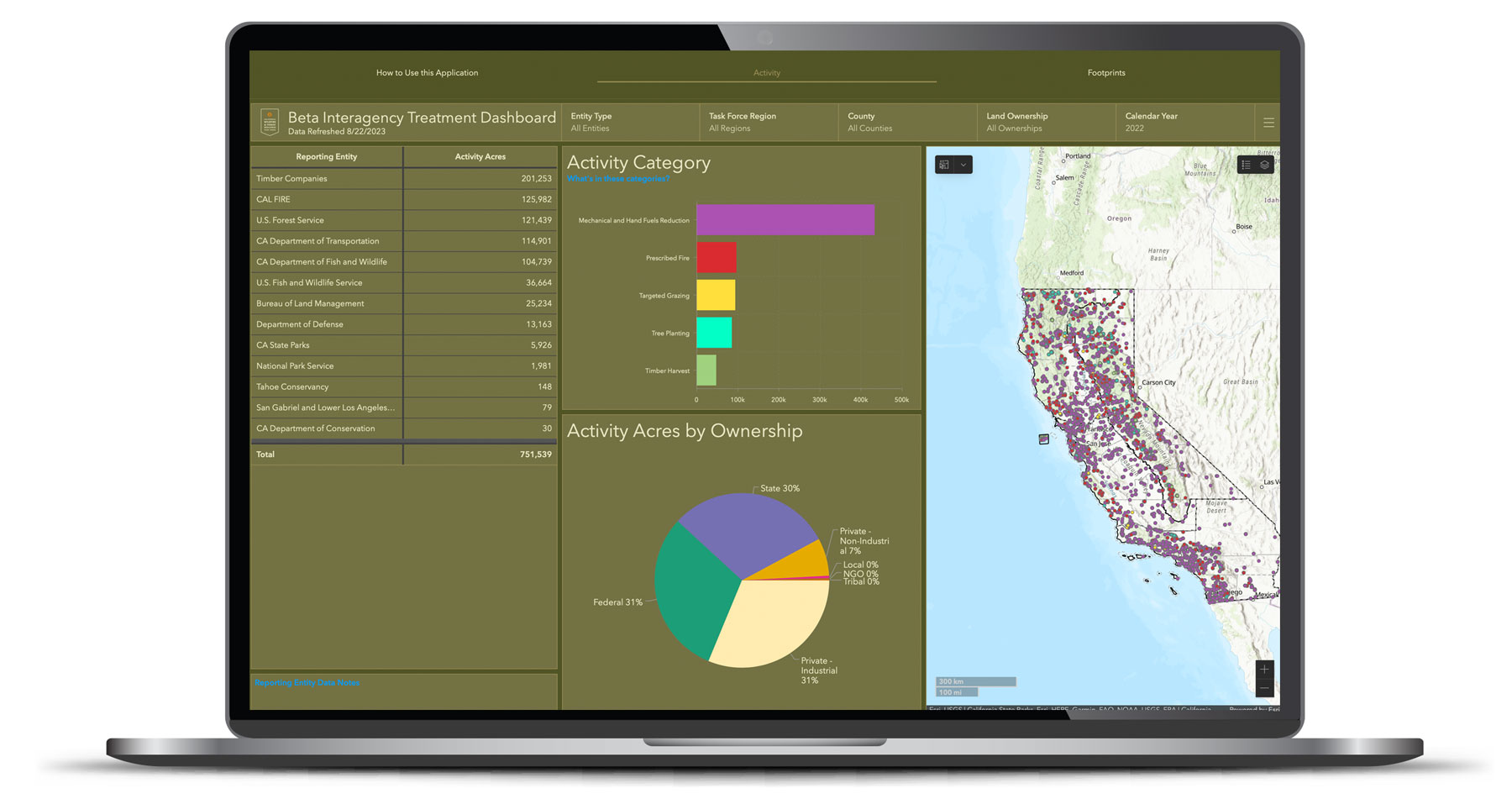
- Interagency Treatment Dashboard: The Task Force formally announced the beta release of the Interagency Treatment Dashboard. CAL FIRE’s Alan Talhelm demonstrated how the highly interactive online tool will allow users to sort treatments by region, county, land ownership, and more.
- Agency Spotlight – Bureau of Land Management: Karen Mouritsen from the BLM provided updates on a new Statewide Wildland-Urban Interface Fuels Treatments Programmatic EA which accelerates fuels treatments on 930,000 acres of public lands as well as a new Good Neighbor Authority Agreement with CAL FIRE which makes it easier to work across land jurisdictions.
- Regional Frameworks Panel: Forest Schafer from the Task Force moderated a panel of regional leaders discussing how they are organizing regionally to support both capacity building and large-scale implementation.
- Regional Investment Highlights: A panel of regional funders offered overviews of how they are aligning investments on the ground.
Welcome & Executive Remarks
Acting Co-chairs
- Joe Tyler, Director, CAL FIRE
- Sherry Hazelhurst, Director of State & Private Forestry, USFS Region 5
Task Force Executive Committee
- Katy Landau, CalEPA
- Richard Barhydt, Pacific Southwest Research Station
- Don Hankins, Indigenous Stewardship Network
- Sam Assefa, OPR
- Doug Teeter, RCRC
Director’s Report
Director’s Report
Patrick Wright, Director, Wildfire and Forest Resilience Task Force
Interagency Treatment Dashboard
Interagency Treatment Dashboard
Alan Talhelm, Assistant Deputy Director, Climate & Energy, CAL FIRE
Agency Spotlight: Bureau of Land Management
Agency Spotlight: Bureau of Land Management
Karen Mouritsen, California State Director, Bureau of Land Management
Regional Frameworks Panel
Moderator: Forest Schafer, Task Force
• Angela Avery, Sierra Nevada Conservancy
• Karen Gaffney, North Coast Resource Partnership
• Mary Small, State Coastal Conservancy
• Michael O’Connell, Irvine Ranch Conservancy
Regional Investment Highlights
- Jonathan Birdsong, National Fish & Wildlife Foundation
- Kate Dargan & Marion Whitman, Moore Foundation
- Jacy Hyde, CA Fire Safe Council
Closing Remarks
Task Force Executive Committee

New Online Treatment Dashboard to Track Wildfire Resilience Projects
New Online Treatment Dashboard to Track Wildfire Resilience Projects
On August 29, the Governor’s Wildfire and Forest Resilience Task Force launched the beta version of a first-of-its-kind Interagency Treatment Dashboard beta that displays the size and location of state and federal forest and landscape resilience projects in California.
The dashboard offers a one-stop-shop to access data, provide transparency, and align the efforts of more than a dozen agencies to build resilient landscapes and communities in California. It reports treatment activities such as prescribed fire, targeted grazing, uneven-aged timber harvest, mechanical and hand fuels reduction, and tree planting. Users can sort treatments by region, county, land ownership and more.
The beta version of the dashboard will continue to be refined to include additional data, including projects by local and tribal entities, along with revisions based on public feedback. An official launch is expected in spring 2024 with more complete data on projects implemented in 2022.
Governor's State Budget Allocates $690 Million to Forest Health and Wildfire Resilience
Governor's State Budget Allocates $690 Million to Forest Health and Wildfire Resilience
Governor Newsom recently signed a budget bill that provides more than $690 million over the year to accelerate forest health and wildfire resilience projects throughout the state. With these new investments, the Newsom Administration has committed more than $2.8 billion to the programs and priorities in the CA Wildfire and Forest Resilience Action Plan including:
- $237 million for forest health and fire prevention grants
- $135 million to state conservancies for forest health projects
- $65 million for stewardship of state-owned lands
- $50 million for post-fire reforestation
- $35 million for prescribed fire and hand crews
- $20 million for the Regional Forest and Fire Capacity Program
- $20 million for conserving working forests
- $15 million for forest and fire workforce training at community colleges
Recap of The Central Coast Regional Meeting
CENTRAL COAST REGIONAL MEETING RECAP
May 11, 2023
Over 300 people came together in Santa Cruz (with over 200 joining online) for the regional meeting of the California Wildfire & Forest Resilience Task Force focused on the Central Coast region and ongoing efforts to create more resilient communities and landscapes in the face of wildfires and climate change. The meeting brought together a wide range of experts and agency partners for updates and in-depth panel discussions on the State’s progress on wildfire and forest resilience. Hosted by the California State Coastal Conservancy and San Mateo Resource Conservation District, discussions focused on the unique landscapes and land management issues of California’s Central Coast, with updates and panel discussions about real progress being made on the ground, and opportunities to network with partners from around the state.
If you couldn’t make it in person, or missed the real-time webinar, video recordings are available below.
REGIONAL MEETING AGENDA HIGHLIGHTS
- Director’s Report: Director Wright provided an update on the status of the 99 key actions outlined in the Wildfire and Forest Resilience Action Plan, outlined the Task Force’s mulita-pronged “Roadmap to Resilience,” and highlighted Task Force partners’ achievements on the Central Coast.
- The Central Coast Mosaic: A panel of experts discussed the Central Coast’s unique ecosystems, safeguarding communities in the WUI, and indigenous land use practices of tribal communities in the region. The Task Force Interagency Science Team then introduced the new data tools for practitioners available in the Task Force’s Regional Resource Kits.
- From Local Collaboration to Regional Action: Two panels of regional leaders discussed 1) the value of collaborative efforts for delivering on Central Coast resource priorities and, 2) how project implementors are navigating complex regulatory requirements.
- Moving Towards A Regional Investment Strategy: A panel of Task Force partners discussed the challenges and opportunities for state-wide funding programs to align programmatically to support locally identified regional priorities.
- Keynote address by Senator John Laird: Senator Laird (CA-17) is a champion of natural resources and authored SB 456 which codified the CA Wildfire and Forest Resilience Task Force. Among his accomplishments, Laird served as Secretary of the California Natural Resources Agency under Governor Jerry Brown (2011-2019) and two-term mayor of Santa Cruz. In his keynote, Senator Laird reflected on the Central Coast as “ground-zero” in recent times for the effects of climate change.
Welcome
• Amy Hutzel, CA Coastal Conservancy
Opening Remarks
• Wade Crowfoot, CNRA
• Jennifer Eberlien, USFS
• Valentin Lopez, Amah Mutsun Tribal Band
• Task Force Executive Committee
Director’s Report
Director’s Report
• Patrick Wright
The Central Coast Mosaic
The Central Coast Mosaic
• Moderator: Steven Ostoja, USDA California Climate Hub
• Virginio Matzek, Santa Clara University
• Chris Dicus, Cal Poly SLO
• Peter Nelson, UC Berkeley
• Peter Stine, Climate & Wildfire Institute
From Local Collaboration to Regional Action
From Local Collaboration to Regional Action
• Moderator: Kellyx Nelson, San Mateo RCD
• Anne Crealock, Marin Wildfire Prev. Authority
• Dylan Skybrook, Santa Cruz Stewardship Network
• Devii Rao, UC ANR
• Steve Auten, Auten Resource Consulting
• Madeline Cavalieri, CA Coastal Commission
• Len Nielson, CAL FIRE
• Paul Hann, State Water Board
Moving Towards a Regional Investment Strategy
Moving Towards a Regional Investment Strategy
• Moderator: Lisa Lurie, Santa Cruz RCD
• Valentin Lopez, Amah Mutsun Land Trust
• Brian Newman-Lindsay, DOC
• Robin Bellows, CAL FIRE
• Chris Zimny, NRCS
• Sherry Hazelhurst, USFS
Keynote Presentation
• Senator John Laird, CA 19th District
Closing Remarks
• Task Force Co-Chairs
California Climate Investments Program Publishes Annual Report
California Climate Investments Program Publishes Annual Report
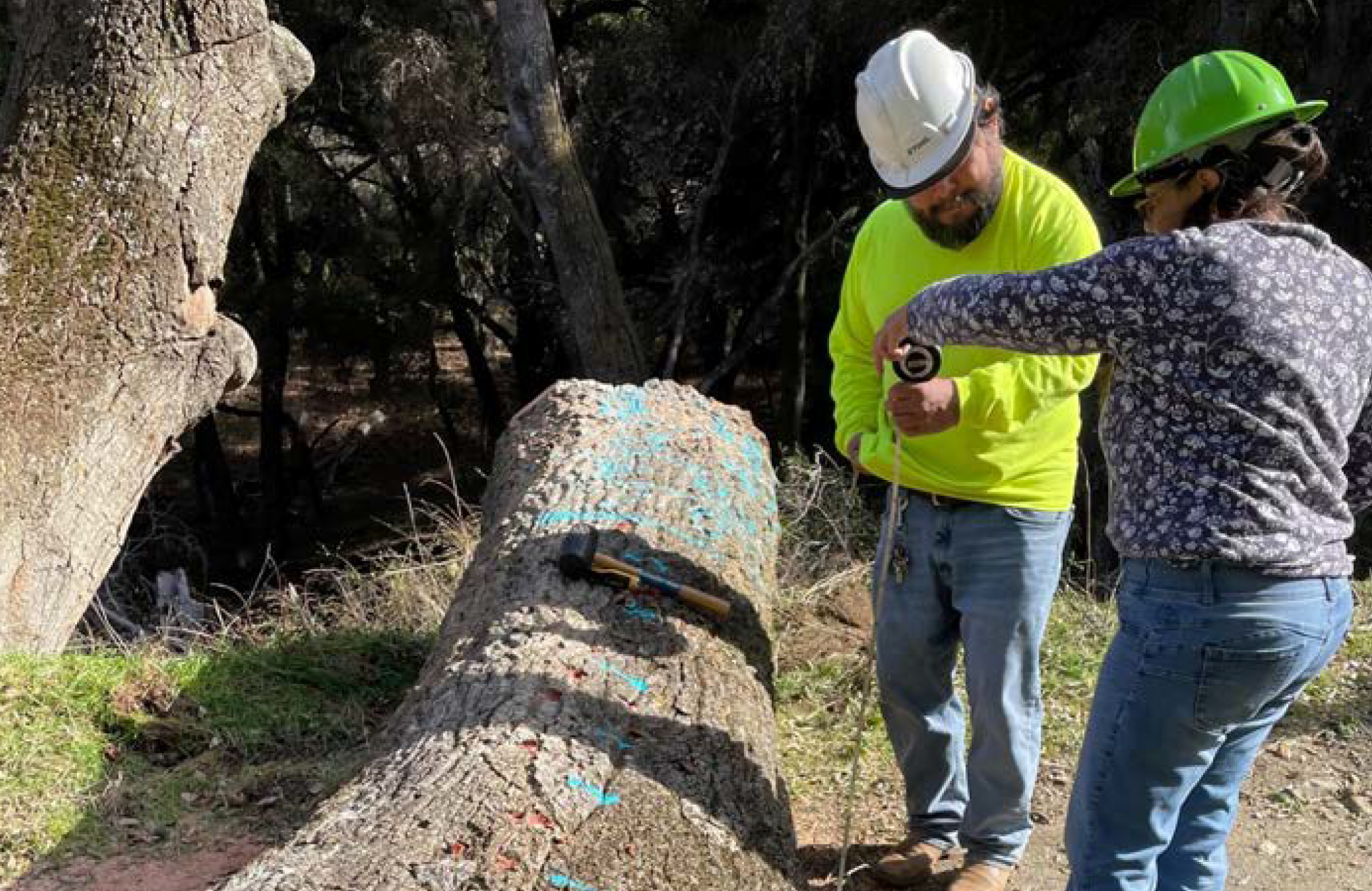
The 2023 Annual Report to the Legislature from California Climate Investments tracks the impact of California Climate Investments, including estimates of greenhouse gas emissions reductions, benefits from project investments, and data on the benefits to priority populations, and program achievements.
As of November 2022, California Climate Investments programs have implemented over $9.3 billion in addition to $4.3 billion in expenditures by the High-Speed Rail Project for a total of $13.6 billion. Investments are delivering major economic, environmental, and public health benefits for Californians, including meaningful benefits to disadvantaged communities and low‑income communities and households. Roughly half of these implemented funds address concerns faced by priority populations by providing cleaner air, enhanced mobility options, access to clean energy sources, and new employment opportunities.
CAL FIRE Forest Health Awards
CAL FIRE Awards $142 Million For Critical Wildfire Resilience Projects Statewide
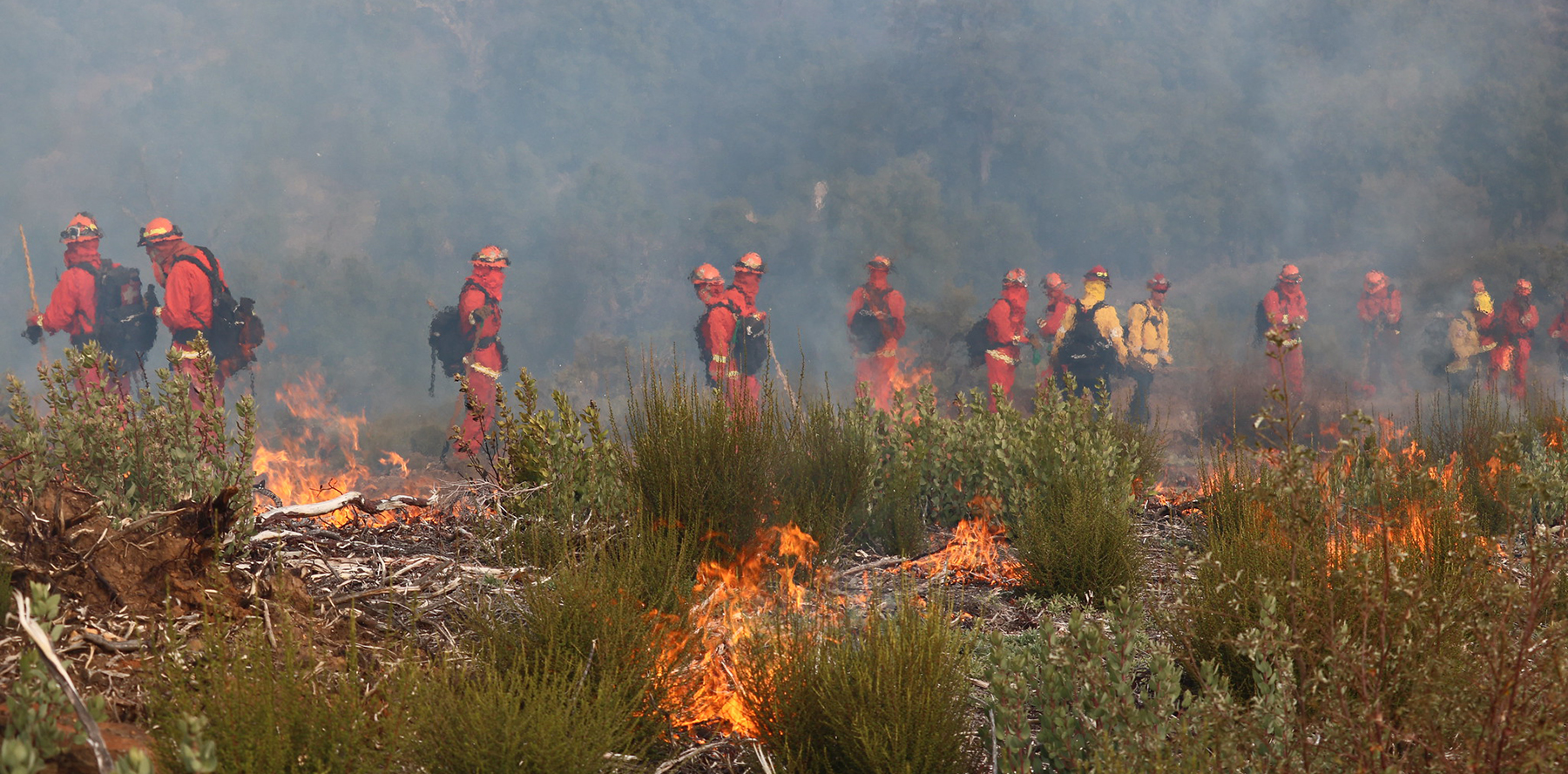
CAL FIRE recently announce that $142.6 million has been awarded for statewide investments in projects intended to enhance carbon storage while restoring the health and resilience of existing and recently burned forests throughout California.
CAL FIRE’s Forest Health Program awarded 27 grants to local and regional partners implementing projects on state, local, tribal, federal, and private lands spanning over 75,000 acres and 24 counties. Fuels reduction and prescribed fire treatments funded under these grants are aimed at reducing excess vegetation and returning forest and oak woodlands to more fire, drought, and pest-resilient conditions.
“These investments demonstrate CAL FIRE’s ability to deliver on the Governor’s Action Plan and are vital to protect the health of our forests and the safety of our communities.”
– Patrick Wright, Director, California Wildfire & Forest Resilience Task Force
CDPH Publishes Air Pollution Health Burden Mapping Dashboard
CDPH Publishes California Wildfire Smoke and Air Pollution Health Burden Mapping Dashboard
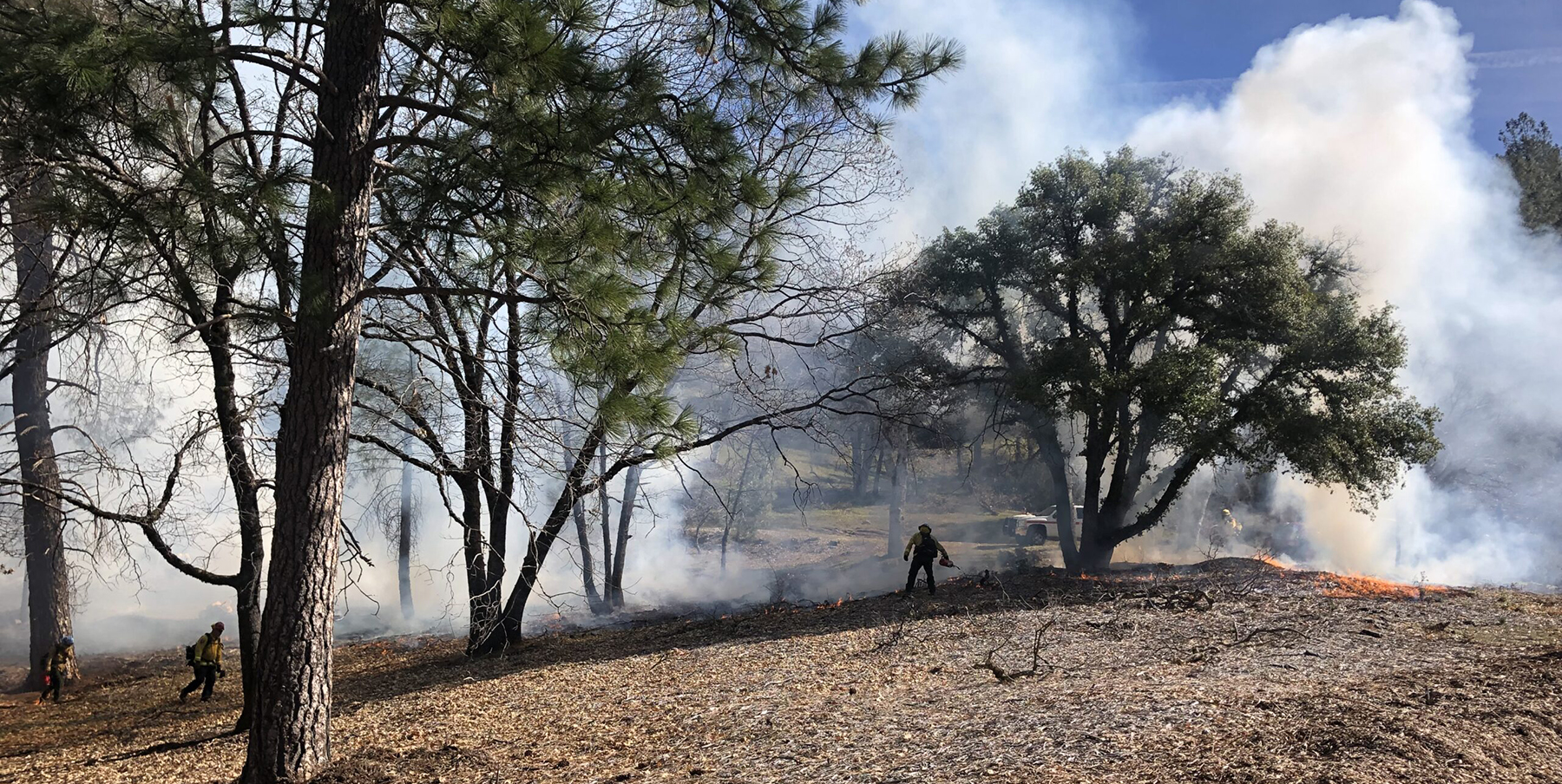
California Department of Public Health’s dashboard shows the health burden related to air pollution and wildfire smoke. By mapping excess respiratory or cardiovascular-related emergency room visits, the dashboard allows users to visualize the burden in any zip code, as well as how the burden is distributed among races and ages, and proximity to medical facilities, schools, historical wildfires and Air Quality readings. The dashboard is based on data in the publication, Wildfires and the Changing Landscape of Air Pollution-related Health Burden in California. The dashboard was supported in part by a grant from the CAL FIRE’s Forest Health Research Program, as part of California Climate Investments.
Recap of Sacramento Task Force Meeting
SACRAMENTO TASK FORCE MEETING RECAP
March 30, 2023
The California Wildfire & Forest Resilience Task Force held its quarterly meeting at the California Natural Resources Agency in Sacramento and live on Zoom.
The agenda and video recordings are available below.
MEETING AGENDA HIGHLIGHTS
- Looking Back: Members on this panel highlighted major accomplishments from state and federal agencies in 2022, shared preliminary results from California’s Year in Fire analysis, discussed what field monitoring reveals about the effectiveness of fuels treatments, and what recent wildfires reveal about the effectiveness of defensive space and home hardening. Subjects covered include:
– What have we accomplished?
– How do we measure the impacts of fires? California’s Year in Fire
– Are treatments working?
- Moving Forward: Presentations covered the questions that components of the Regional Resource Kits are meant to address: What are our goals and how do we define them? What is the current condition of our landscapes? How do we most effectively plan and prioritize projects? Where are we currently investing? How do we measure the effectiveness of those investments? The Monitoring and Reporting Work Group unveiled the Interagency Treatment Tracker, and Google.org provided an update on the decision support tool, Planscape. Subjects covered include:
– Where is management most beneficial?
– How do we more effectively plan & prioritize projects? Planscape
– Where are we investing? Interagency Treatment Tracker
– How do we measure the effectiveness of our investments?
- Wood Utilization Work Group: The Work Group provided an overview of preliminary proposed actions in future joint strategy for wood utilization. Panelists discussed the importance of private sector investments in a vibrant wood products market that advances the state’s sustainable forest management strategy. Subjects covered include:
– Overview of Proposed Action
– Panel Discussion with Industry Representatives
Welcome & Opening Remarks
• Wade Crowfoot, CNRA
• Jennifer Eberlien, USFS
• Task Force Executive Committee
Director’s Report
Director’s Report
• Patrick Wright
Looking Back
Looking Back
Moderator: John Battles, UC Berkeley
• Patrick Wright, Task Force
• Leana Weissberg, UC Berkeley, Center for Law, Energy & the Environment
• Scott Stephens, UC Berkeley
• Yana Valachovic, UC Cooperative Extension
Moving Forward
Moving Forward
Moderator: John Battles, UC Berkeley
• Pat Manley, USFS Pacific SW Research Station
• David Saah, Spatial Informatics Group
• Mickey Kataria, Google.org
• Alan Talhelm, CARB
• Loretta Moreno, CNRA
• Stephanie Coppeto, USFS.
Wood Utilization Work Group Report
Wood Utilization Work Group Report
Moderator: Steve Frisch, Sierra Business Council
• Elizabeth Betancourt, Dept. of Conservation
• Helena Murray, USFS
• Matt Dias, California Forestry Association
• Julia Levin, Bioenergy Association of California
• Dan Porter, The Nature Conservancy
• Matt Sjoholm, Blue Forest Conservation.
Final Remarks
• Task Force Co-Chairs
California Releases Extreme Heat Action Plan
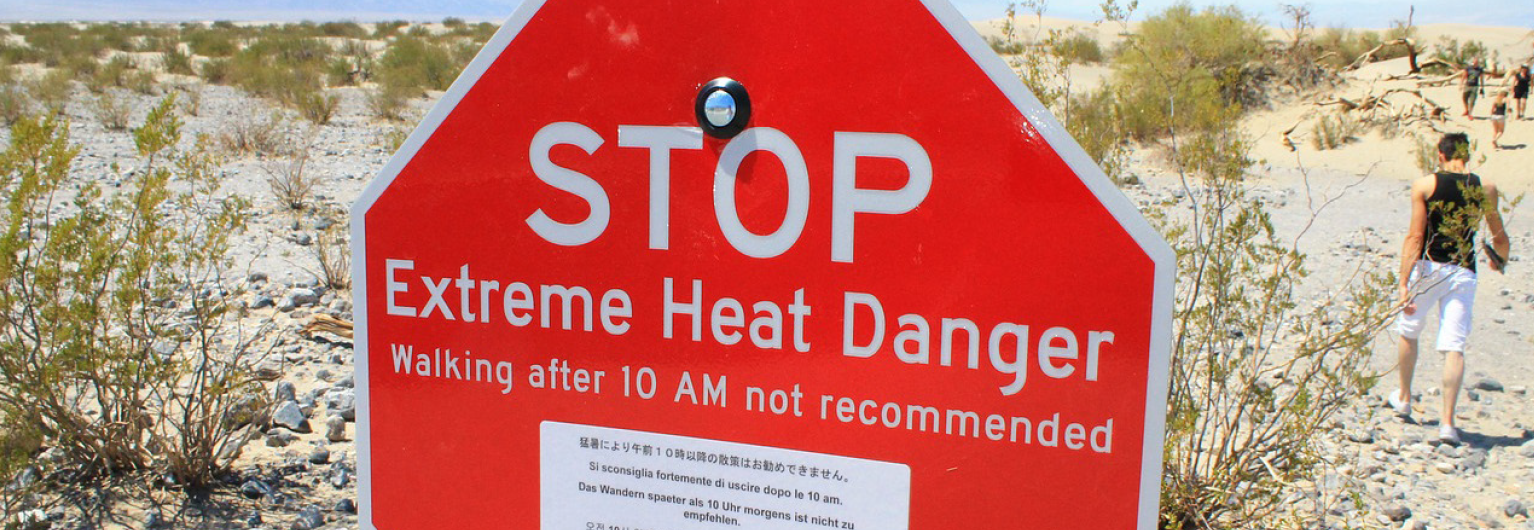
California Releases Extreme Heat Action Plan
To protect communities from rising temperatures, the plan outlines a strategic, all-of-government approach to building resilience to extreme heat and mitigating its health, economic, ecological and social impacts.