
Sustainable Recreation
Wildfire and climate impacts are disrupting access to California’s public lands and water, threatening the rural and gateway communities whose economies depend on outdoor recreation. Landscape health, wildfire resilience, and recreation are mutually dependent priorities. The Task Force’s Joint Strategy for Sustainable Outdoor Recreation and Wildfire Resilience, developed in December 2022, provides a roadmap for sustaining recreation access and strengthening the resilience of recreation systems, communities, and economies.
“Getting people out into nature is the most effective way to inspire public support for climate and wildfire resilience efforts. The Task Force has provided the Joint Strategy for Recreation and the key actions needed to safeguard California’s world-class recreational opportunities from wildfires, and to empower communities to expand sustainable outdoor recreation for all.”
– John Wentworth, CEO, The Mammoth Lakes Trails & Public Access Foundation
Key Accomplishments:
California continues to be a national leader in prioritizing projects that not only promote landscape resilience but also ensure access to recreational opportunities.
-
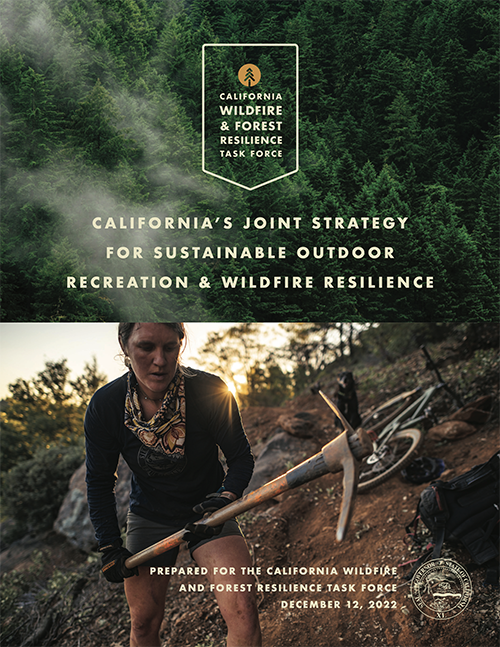
California’s Joint Strategy for Sustainable Outdoor Recreation and Wildfire Resilience provides key actions to advance the integration of sustainable recreation into wildfire and landscape resilience planning.
-
In November 2023, CNRA released the Outdoors for All Strategy to increase access to California’s forests.
-
The Task Force’s Sustainable and Outdoor Recreation/CALREC Vision Work Group (Recreation Work Group) was awarded Partnership of the Year by the U.S. Forest Service in recognition of its efforts.
Key Actions:
- 4.30 Implement California’s Joint Strategy for Sustainable Outdoor Recreation and Wildfire Resilience: The Sustainable Recreation/CALREC Vision Key Working Group will partner with CNRA, DOC, the USDA Forest Service, Bureau of Land Management (BLM), and state and local recreation managers, to deliver multi-benefit recreation and wildfire resilience projects in and near the wildland urban interface. Where appropriate, they will embed these priorities in RFFC Regional Priority Plans.
- 4.31 Leverage California Jobs First to Implement Multi-benefit Programs and Projects: Recreation and tourism Industry sector coordinators from California Jobs First regions will develop best practices for job creation in the sector. This includes leveraging opportunities identified in the Joint Strategy and in both the Jobs First Sierra Recommendations for Implementation and Collaborative Action and the State Cohort Recommendations for Implementation and Collaborative Action.
- 4.32 Support Multi-Benefit Recreation Facilities Projects in and Near the WUI: Federal, state, and local land managers will seek to build projects in or adjacent to WUI areas that provide both wildfire risk reduction and outdoor recreation benefits. Examples include trails and campgrounds that can be used during fires as staging areas for personnel and equipment. This includes approaches like the Fire-Hardened Trails Prescription, which removes fuels along trail corridors to protect trail system investments, mitigates wildfire risk by trail users, and provides strategically placed, tactically feasible trails for wildland fire operations.