
State and Federal Investments Conserve Forestlands in Perpetuity
State and Federal Investments Conserve Forestlands in Perpetuity
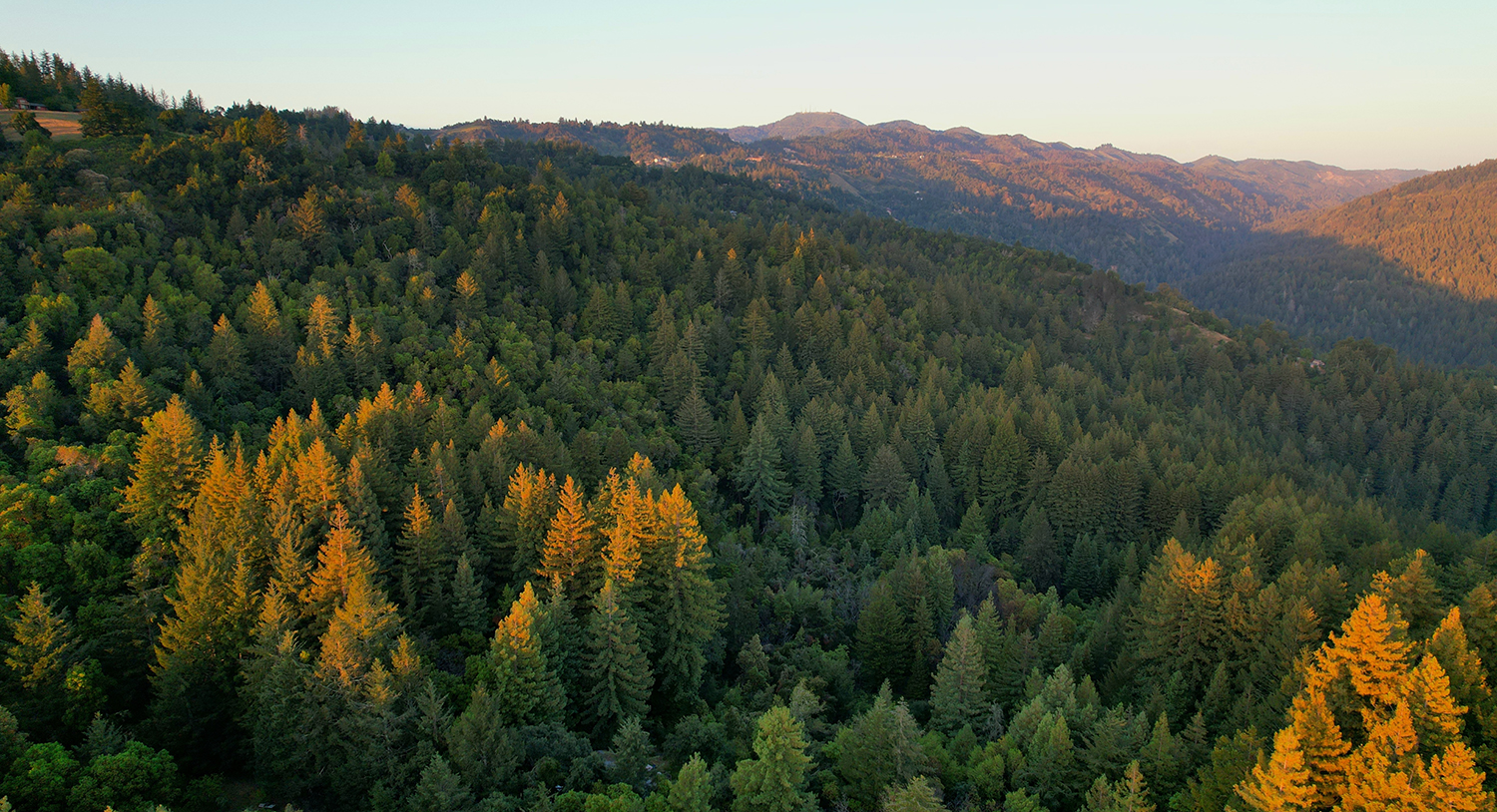
October 29, 2024 – CAL FIRE and the U.S. Forest Service have announced grant awards to protect forestlands threatened with conversion to non-forest uses. Together, these investments improve forest health and reduce wildfire risk throughout the state.
CAL FIRE awarded $8.5 million through California Forest Legacy to four projects that ensure long-term land stewardship on properties that will continue to provide, in perpetuity, such benefits as sustainable timber production, wildlife habitat, recreation opportunities, carbon sequestration, watershed protection, and open space. One funded project will enable the Colfax-Todds Valley Consolidated Tribe to acquire the Owl Creek property in Placer County; while Placer Land Trust will hold a conservation easement to ensure protection of the property, the Tribe will manage the land using Indigenous management practices.
The USFS awarded more than $265 million to 21 projects nationwide through the federal Forest Legacy program to conserve nearly 335,000 acres of private forestlands. In California, a $1.5 million grant will conserve 94 acres of unique montane mixed-conifer forest in the recreation destination of Lake Arrowhead, east of Los Angeles. The property provides habitat for 7 federal and 4 state species of concern.

CA State Parks and Partners Treat Over 900 Acres with Beneficial Fire
photo by: Richard Rappaport
CA State Parks and Partners Treat Over 900 Acres with Beneficial Fire
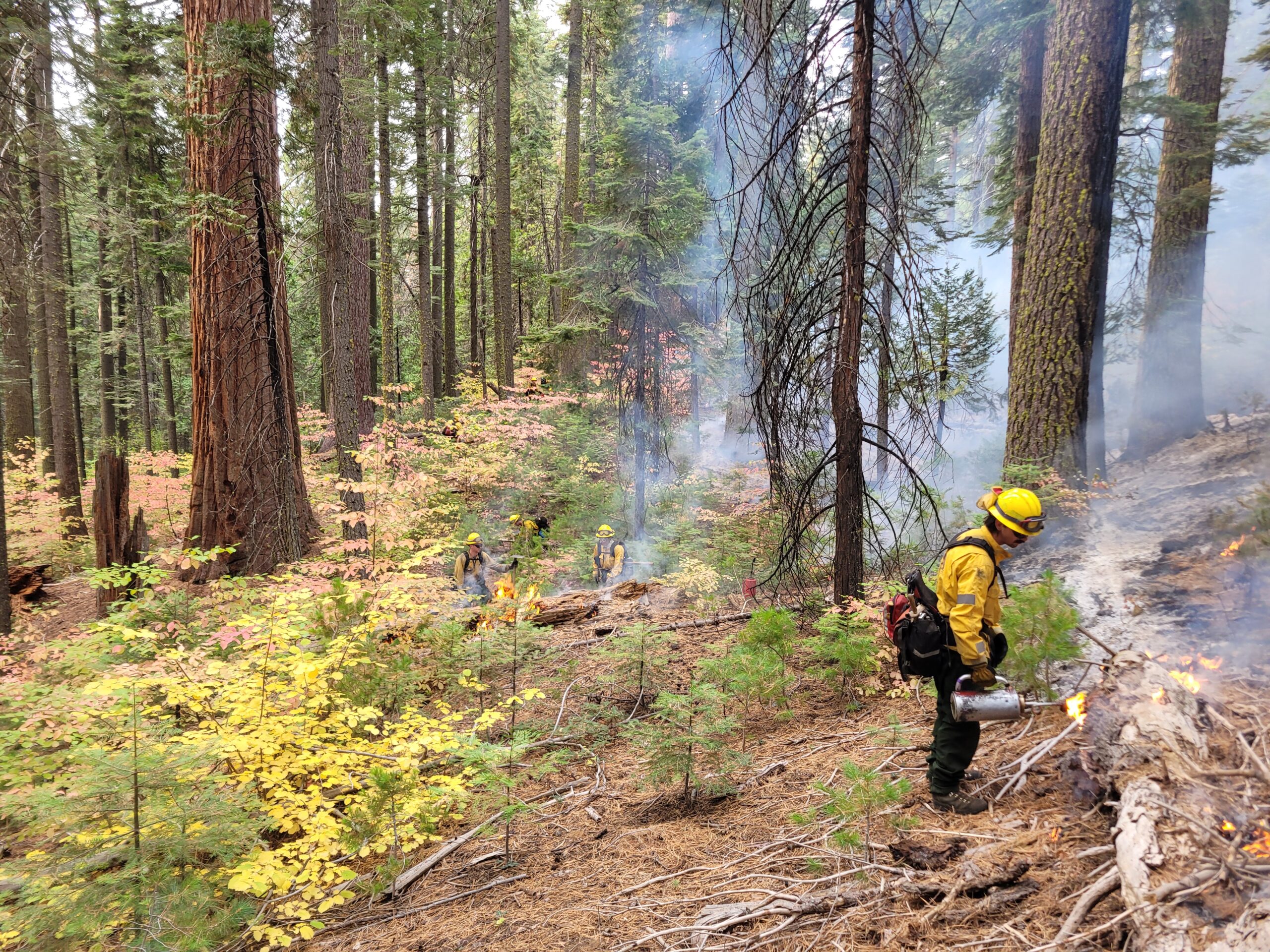
From October 29 to November 1, California State Parks with the assistance of CAL FIRE and the USFS treated 914 acres in the South Grove Natural Preserve at Calaveras Big Trees State Park with prescribed fire.
State Parks, CAL FIRE, USFS and contractors spent years organizing interagency collaboration and preparing the perimeter along with the giant sequoia trees for beneficial fire. Preparation included using mechanical treatments appropriate for State Parks Natural Preserves to remove large fuels from the surrounding fire road and using hand tools to remove large material from the base of over 700 mature giant sequoias.
The entire South Grove Natural Preserve is over 1,300 acres. Critical to giant sequoia stewardship and regeneration, State Parks will continue to be prepared to treat the remaining acres and bring fire back to the entire landscape in regular intervals. This project restores and maintains a complex forest community, promotes giant sequoia regeneration and wildfire resilience, reduces hazardous fuel loads, improves wildlife habitat, and protects park infrastructure.
CAL FIRE & USFS Investments Confront California’s Wildfire Crisis & Expand Urban Forests
CAL FIRE & USFS Investments Confront California’s Wildfire Crisis & Expand Urban Forests
October 17 – USFS Invests $15 Million to Confront California’s Wildfire Crisis
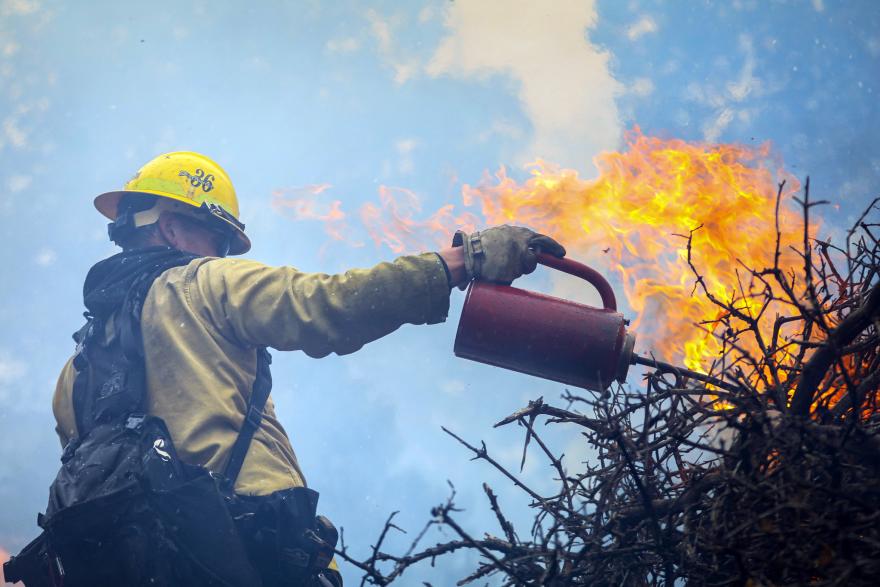
The U.S. Forest Service (USFS) announced $100 million will be invested in 21 new projects to expand work on the USFS Wildfire Crisis Strategy to reduce the threat of wildfire in high-risk areas across the country. $15 million will fund three projects in California helping further Task Force goals of protecting communities in the Wildland Urban Interface.
- Sequoia National Forest – $5 million to reduce wildfire risk to the Breckenridge and Pine Flat communities through thinning and prescribed fire, with wood byproducts going to a biomass facility or the local sawmill when viable.
- Eldorado National Forest – $5 million for hazardous fuels reduction, strategic fuels breaks, and prescribed fire on the Georgetown Divide. The project will also create strategic fuel breaks near residential and commercial infrastructure in Volcanoville and Georgetown, including a high-powered electric transmission line.
- Tahoe National Forest – $5 million to reduce hazardous fuels, create defensible space around six communities, create safe ingress and egress along 6.3 miles of road, and engage at least seven partner groups, including local tribes.
September 20 – CAL FIRE and USFS Award $31 million to 22 Urban Forestry Projects in California
CAL FIRE and USFS announced nearly $31 million in Urban and Community Forestry grants in California focused on urban forestry topics of management, expansion and improvement, education, workforce development, capacity building, and green schoolyards. The projects are intended to reduce greenhouse gas emissions, improve the functionality of urban forests, arrest the decline of urban forest resources, address climate change resilience, improve the quality of the environment in urban areas, and increase access to environmental career pathways. All funded projects will directly serve priority populations within one or more defined disadvantaged and/or low-income communities in an urban area.
CAL FIRE Forest Health Research Grant Program: Applications are now open for the Forest Health Research Program which is offering $4 million in research funding through its FY 2024-2025 grant solicitation. These grants will support research that directly benefits landowners, resource agencies, fire management organizations, and decision-makers throughout the state.

CAL FIRE Dashboard Shows Effectiveness of Fuels Treatments on Recent Wildfires
New CAL FIRE Dashboard Shows Effectiveness of Fuels Treatments
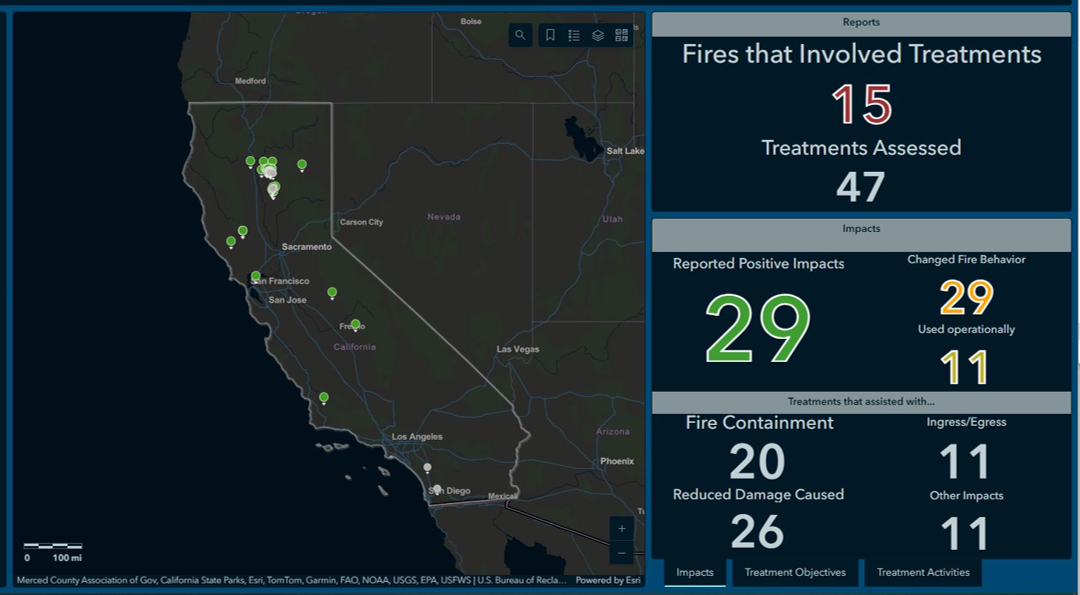
On October 10, 2024, CAL FIRE launched its Fuels Treatment Effectiveness Dashboard to show how on-the-ground projects are protecting communities and landscapes when wildfire strikes, a key initiative of the Task Force. The dashboard displays Fuels Treatment Effectiveness Reports which evaluate the impacts vegetation management treatments have on fire behavior and highlight how fuel reduction activities not only assist in suppression efforts but also protect life, property, and the natural resources of California.
Fuels Treatments are areas where fuel reduction activities have been conducted, with the primary objective of reducing fuel loading. Treatments that are considered for evaluation include:
- Treatments that have been completed or have had activities in the last seven years.
- Objectives of:
- Broadcast Burn
- Fuel Reduction
- Fuel Break
- Right of Way Clearance
- California Forest Improvement Program (CFIP) projects with fuel reduction activities (e.g. thinning, pruning, piling).
- Fire plan, Vegetation Management Program (VMP) and California Vegetation Treatment Program (CalVTP) activities completed by CAL FIRE or Contract Counties.
- Wildfire Prevention and Forest health grant-funded projects including work performed by grantees and contractors.
Treatment Effectiveness is the effect a fuel reduction treatment has on fire behavior, ingress or egress, and fire suppression.
Examples of Positive Impact include: assisted with fire containment, ingress/egress, reduced property damage, or changing fire behavior.
Examples of treatments that Changed Fire Behavior include: halted rate of spread, slowed rate of spread, or reduced fire intensity.
Examples of treatments that Contributed to Control of Fire include: used as a primary or secondary containment line, provided ingress/egress for fire suppression personnel.
CAL FIRE Funds 94 Wildfire Projects
CAL FIRE Funds 94 Wildfire Projects to Build Climate and Community Resilience
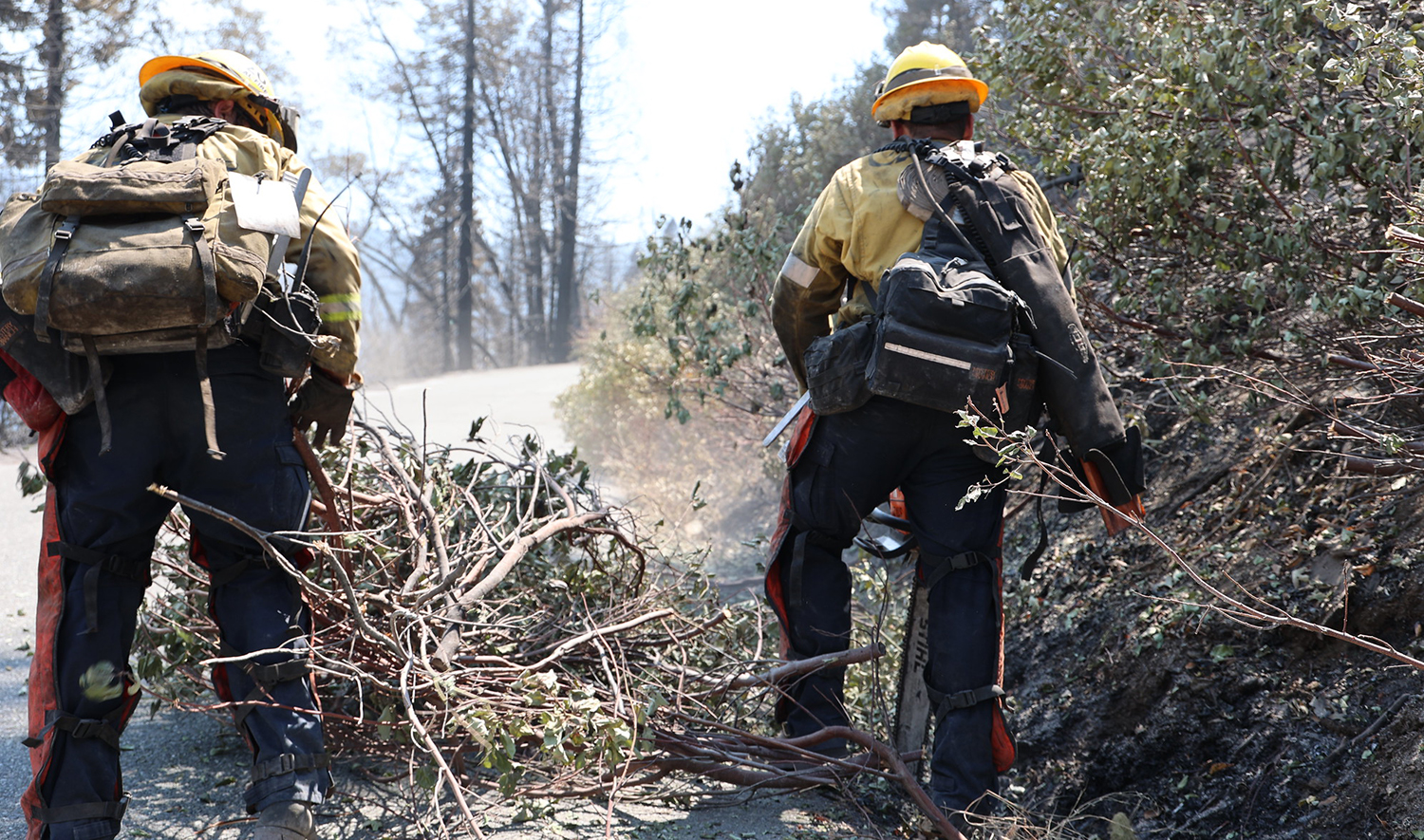
August 20, 2024 – CAL FIRE announced grants with $90.8 million in funding for 94 local wildfire prevention projects across California. Wildfire Prevention Grant projects include hazardous fuels reduction and wildfire prevention planning and education, with an emphasis on improving public health and safety while reducing greenhouse gas emissions.
Over two-thirds of the projects will go to communities that are low-income and disadvantaged. These grants bring CAL FIRE’s Wildfire Prevention Grants Program total funding to $450 million that have supported over 450 projects across the state which have collectively accelerated progress toward the goals of California’s Wildfire and Forest Resilience Action Plan.

CNRA Webinar on the State of Wildfire in California
CNRA Webinar on the State of Wildfire in California
August 8, 2024 – California Natural Resources (CNRA) Secretary Wade Crowfoot hosted a webinar on the state of wildfire in California as part of the Secretary Speaker Series.
Secretary Crowfoot was joined by representatives from the Task Force, CAL FIRE, U.S. Forest Service, the Karuk Tribe, and others for a conversation on current efforts to protect California from dangerous wildfires and restore the health of our landscapes.
New Reports on Post-fire Restoration & Public Health Impacts of Wildfire
New Reports on Post-fire Restoration & Public Health Impacts of Wildfire
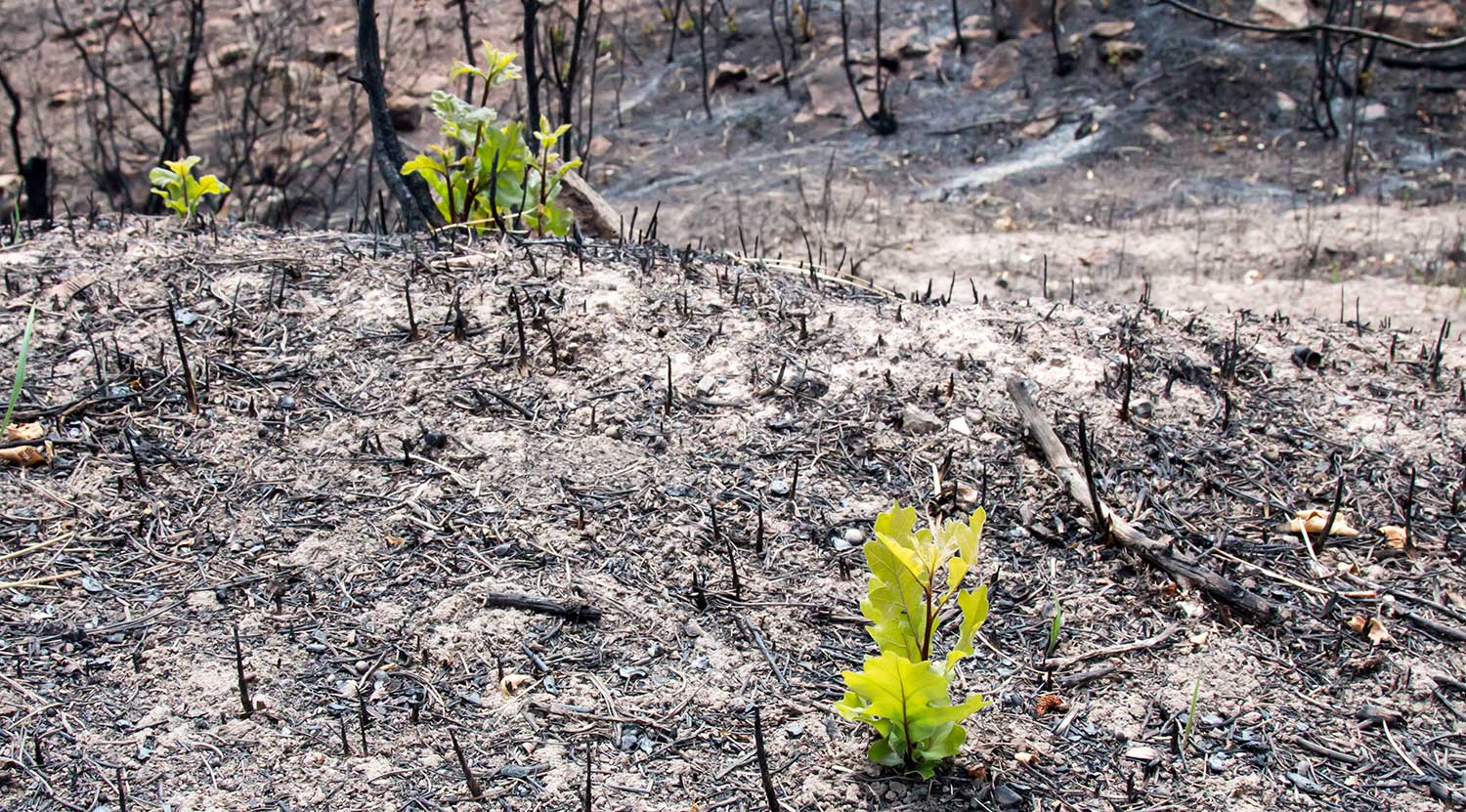
New Report on Emergency Forest Restoration Teams: Small private landowners often lack the funding, expertise, or time to undertake restoration work. To address these barriers, California’s Wildfire and Forest Resilience Action Plan called for the establishment of Emergency Forest Restoration Teams (EFRTs). In June, 2024 a report on lessons learned was released from three pilot EFRTs that were developed in late 2021 in response to the Dixie, Tamarack and Caldor Fires. The report provides key recommendations for future EFRTs to be successful.
New Report on the Public Health Impacts of Wildfire: This new scoping report covers the intersections of wildland fire and public health. Developed by UC Berkeley’s Center for Law, Energy, & the Environment in partnership with the Climate and Wildfire Institute, the report investigates key issues in the physical and mental health impacts of wildfire, provides an overview of the current state and federal policy landscape, and presents key recommendations for future resilience.
California Leads Nation with 800th Firewise USA Community
California Leads Nation with 800th Firewise USA Community
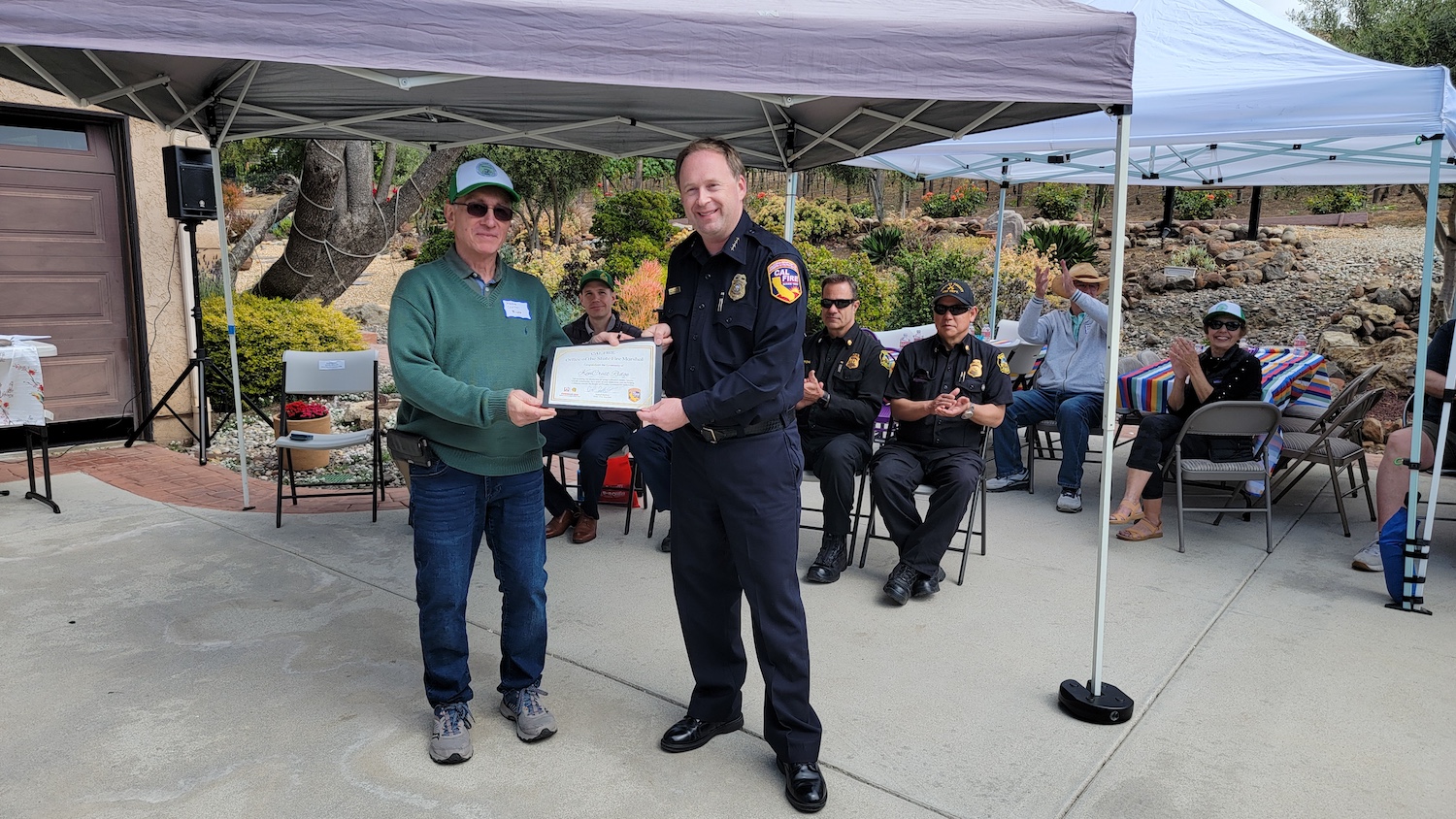
On May 18, KenCrest Ridge community in Ventura County became California’s 800th Firewise USA community. Reaching the 800th Firewise community within a year of the 700th community is a major accomplishment statewide, demonstrating the pace California is taking to create more fire-adapted communities. The recognition by the National Fire Protection Association highlights the steps taken by the community to ensure wildfire risk is reduced in their area and that residents are prepared. The KenCrest Ridge community worked closely with CAL FIRE, the Ventura County Fire Department, and the Ventura Regional Fire Safe Council to reach this recognition.

New Pocket Guide Empowers Communities to Collect Seeds and Support Reforestation
New Pocket Guide Empowers Communities to Collect Seeds and Support Reforestation
Seed collection is a critical first step in successful reforestations projects. The new ‘California Cone Hunter’s Pocket Guide’ serves as an in-the-field reference for those assisting with seed surveys and seed collection in support of post-fire reforestation efforts. The pocket guide was created by seed bank managers, geneticists, seed collectors and Cone Corps members, led by the USDA Forest Service, CAL FIRE, and American Forests. The Pocket Guide is available in both electronic and printed formats and will be distributed at Cone Camp seed collection trainings.
New Online Resources Now Available to Help Prepare for Wildfires
New Online Resources Now Available to Help Prepare for Wildfires
Understanding how best to prepare for wildfire season just got easier with several new, easy-to-navigate online resources that identify low-cost and achievable recommendations to protect yourself, your home and loved ones.
ready.ca.gov: On May 24, Governor Gavin Newsom announced the launch of ready.ca.gov, a new one-stop-shop for Californians to prepare for wildfires and other emergencies. The website is part of Listos California, a state effort that connects communities with resources before, during and after emergencies. The website offers resources and alerts for wildfire and wildfire smoke risks.
firePLANNER: CAL FIRE’s newly updated firePLANNER is a web-based platform that helps residents develop customized readiness plans for wildfire and other emergencies. It also provides information on preparing home and property for wildfire; creating an evacuation plan, including for pets and livestock; and special considerations to keep in mind during a wildfire. Users can also access information on active California wildfires. FirePLANNER is available in both English and Spanish.
wildfirerisk.org: The USDA Forest Service now offers an easy-to-use website to help communities understand, explore, and reduce wildfire risk. It includes interactive maps with the latest data and innovations in vegetation, weather, and fire behavior models, along with updated and improved building footprint datasets, a new funding section to help communities find grants and support for wildfire risk reduction, and a new feature called “Risk Reduction Zones” to help communities see the most effective mitigation activities in different locations.
wildfire defense videos: The Resource Conservation District of the Santa Monica Mountains released a series of wildfire defense videos to serve as an educational hub to provide home-hardening and defensible space information to prepare and defend your property and yourselves against wildfire ignition. The series provides guidance on home hardening, defensible space, fire ecology, and preparedness.