

Governor Newsom Unveils California’s Updated Climate Adaptation Strategy
Governor Newsom Unveils California’s Updated Climate Adaptation Strategy
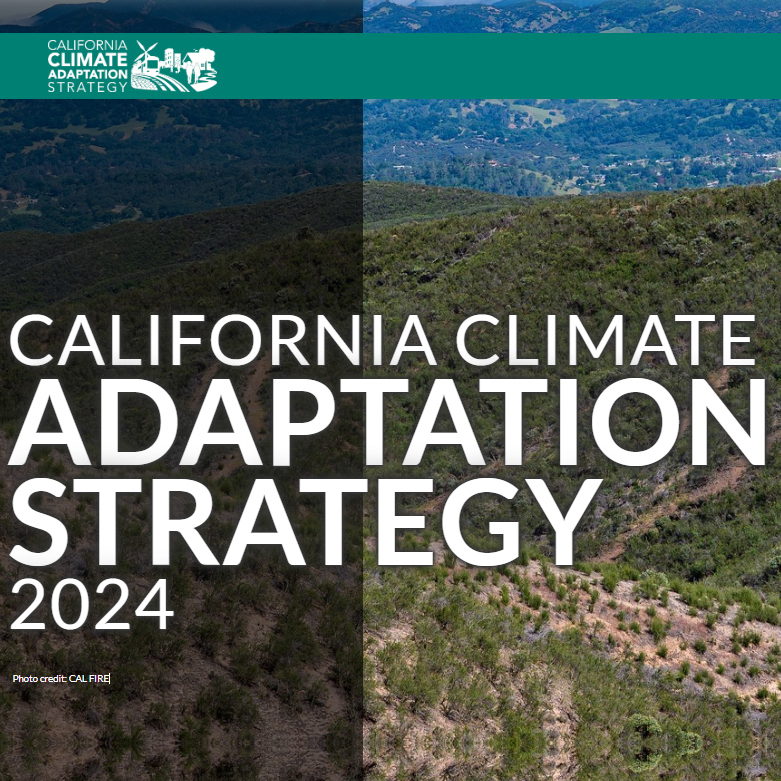
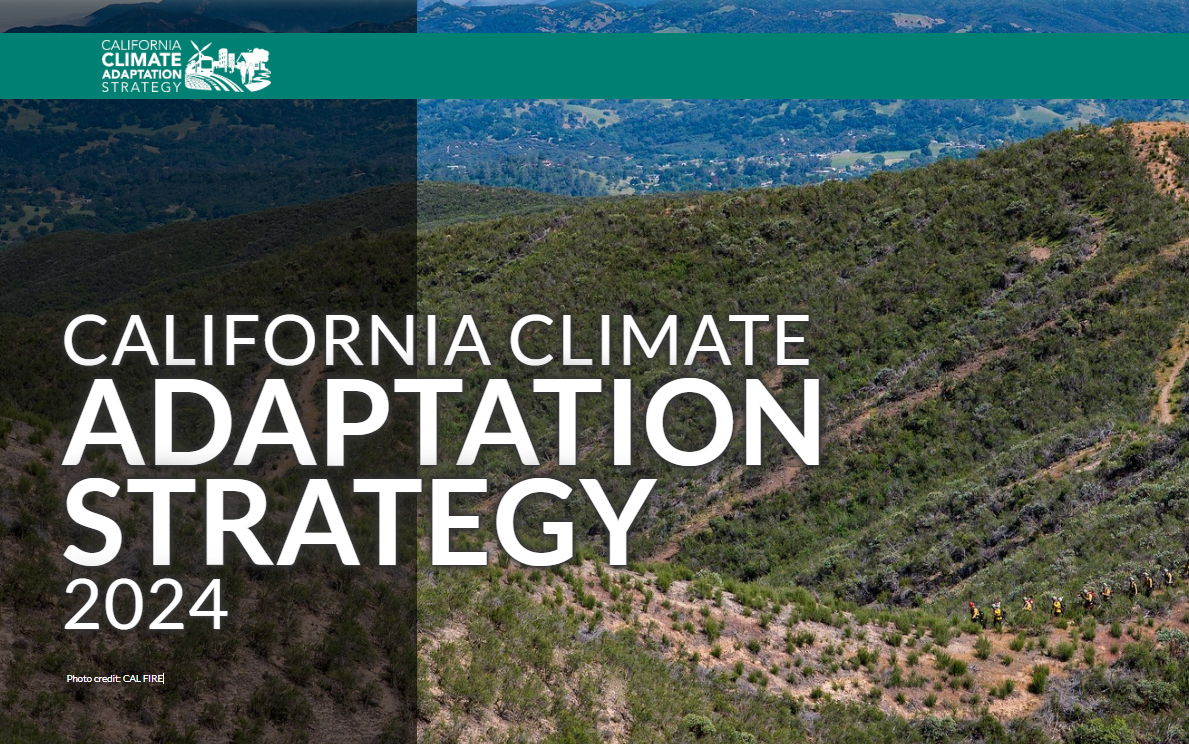
September 4, 2025 – Governor Newsom unveiled California’s updated Climate Adaptation Strategy — the state’s overarching framework to better protect communities and nature from dangerous climate impacts. California last updated the Strategy in 2021. The updated strategy sets strategic direction through six priorities:
- Protecting communities most vulnerable to climate change
- Improving public health and safety to protect against increasing climate risk
- Building a climate-resilient economy
- Expanding nature-based climate solutions and strengthening the resilience of natural systems
- Making decisions based on best available climate science
- Partnering and collaborating to leverage resources
These priorities are supported by cross-cutting climate resilience actions, each with associated success metrics. The strategy aligns with and builds on the goals set forth by California’s Wildfire and Forest Resilience Action Plan and includes the following actions specific to wildfire resilience:
- Prioritize actions that reduce wildfire risks to California Native American tribes and climate vulnerable communities.
- Support wildfire-prone communities by increasing the capacity of local and regional partnerships to build and maintain a pipeline of forest health and fire prevention projects.
- Invest Community Development Block Grant Disaster Recovery funds in long-term disaster recovery and resilience building that targets the unmet housing recovery needs of low and moderate-income households in a way that mitigates disaster risk and reduces future losses among vulnerable communities.
- Reduce health impacts of wildfire and prescribed fire smoke.
- Reduce the risk of energy infrastructure-related ignitions that lead to catastrophic wildfire.
- Bring to scale a thriving forest and wood products market in California that leverages public investments by energizing private capital for sustainable forest management, regional economic recovery, and climate resilience.
- Increase the pace and scale of wildfire resilience and forest health projects.
- Reduce risks of wildfire through increased use of fuel breaks and fuels reduction.
- Assist the federal government in scaling up forest treatments by supporting collaborative forest management and encouraging landscape level planning.
- Coordinate and guide prescribed fire and cultural fire activities and address the key barriers to its widespread use in California.
- Expedite permitting processes for wildfire and forest resilience projects using exemptions or the California Vegetation Treatment program.
- Invest in science-based management focused on climate resilience of California’s fire adapted landscapes.
- Improve wildfire smoke guidance for schools, children, and other vulnerable populations. Develop outreach materials for health care providers and the public on wildfire smoke health effects and ways to decrease exposure.
- Collaborate with federal, state, tribal, and private partners to increase pace and scale of restoration of fire-adapted lands and maximize the climate resilience benefits of these treatments.
- Leverage federal funding to support fire-hardening roads and communities.

Interagency Treatment Dashboard Shows Progress Toward Resilience
FOR IMMEDIATE RELEASE
October 10, 2024
California Unveils First-of-Their-Kind Dashboards Mapping Out Fire-Prevention Work to Protect Communities
New tools created by CAL FIRE and Wildfire and Forest Resilience Task Force simplify data, boost transparency, and help inform wildfire planning and response – adding to the suite of tools the state has created
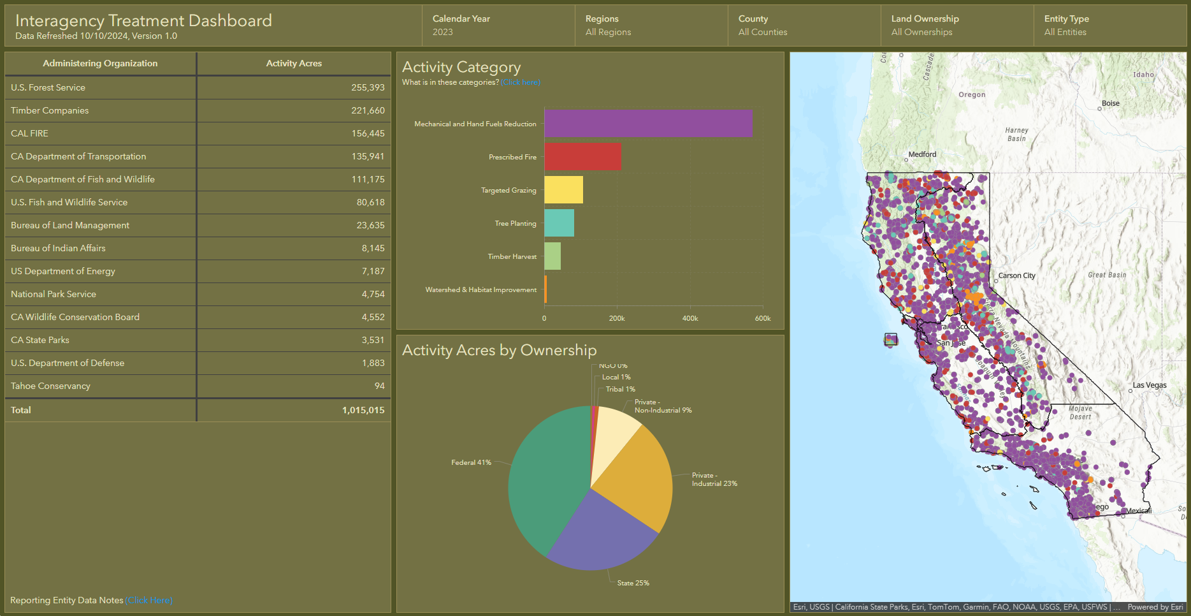
(South Lake Tahoe, CA) – The Governor’s Wildfire and Forest Resilience Task Force and the California Department of Forestry and Fire Protection (CAL FIRE) unveiled several new tools today to help California track and communicate the state’s significant progress in improving wildfire and landscape resilience.
Key takeaways from the Task Force’s Sierra Nevada Regional Meeting in South Lake Tahoe include:
• Interagency Treatment Dashboard updated to show 2021, 2022 and 2023 data.
• Over one million acres of treatments were conducted on about 700,000 footprint acres in 2023.
• Prescribed fire treatments more than doubled between 2021 and 2023.
• CAL FIRE Fuel Treatment Effectiveness Dashboard is showing the impact of treatments impacted by recent wildfires.
“Thousands of wildfire resilience projects have been completed across California to protect our communities and landscapes from catastrophic wildfire in recent years, and more are underway,” said Wade Crowfoot, Secretary of the California Natural Resources Agency and co-chair of the Task Force. “Thanks to historic investments from our state and federal leaders, dozens of local agencies and hundreds of organizations are delivering these projects. Now for the first time, we have a dashboard that tracks all these diverse projects in one place and on one map. This enables us to measure our overall progress toward building wildfire resilience across the state and provides regional leaders valuable information to plan future projects.”
Interagency Treatment Dashboard
The updated version of the Interagency Treatment Dashboard shows wildfire resilience work (or “treatments”) for three calendar years (2021, 2022 and 2023). The data, which was sourced from federal, state, local, tribal, and private entities, is now available in a single hub that allows Californians to easily see where treatments (such as prescribed fire, mechanical thinning, and tree planting) have been completed. This information is used to inform firefighting efforts, ensure transparency to the public, and track progress toward statewide goals.
The Task Force released a Beta version of the Dashboard last year with 2022 data. This updated version now includes data for 2021, revised data for 2022, and new data for 2023.
Over 1 million acres worth of treatment work on 700,000 acres of land
The Dashboard shows significant progress on multiple fronts to bolster wildfire resilience in California. In 2023, more than one million acres of treatments were conducted on about 700,000 acres, with many acres receiving multiple treatments such as thinning, prescribed fire, or other practices to improve forest health and community resilience. The Task Force is tracking both “activity acres” – which reflect the level of effort conducted through various state, federal, and private programs – and “footprint acres” – which show the total geographic area treated in a calendar year.
The 2023 data shows a significant increase in acres treated since 2021. The increase is largely due to a significant expansion of prescribed fire treatments, which more than doubled since 2021. These efforts have put the state on a solid path toward meeting its joint commitment with the U.S. Forest Service to complete treatments on more than a million acres by the end of 2025.
The Task Force is committed to increasing the pace and scale of statewide actions to address California’s wildfire crisis. The Dashboard is part of a larger strategy to connect the various statewide entities committed to this monumental task.
Fuel Treatment Effectiveness Dashboard
CAL FIRE also launched a Fuel Treatment Effectiveness Dashboard, which shows how wildfire prevention projects are helping protect communities and landscapes when wildfire strikes. “Utilizing technology, we can now track in real time when wildfires hit areas where fuel treatments have been conducted. We can then go into an area and see how those treatments affected fire behavior, evacuation routes, firefighting efforts and more,” said CAL FIRE Chief/Director Joe Tyler. “This new dashboard is a tool for the public to see how fuels treatments had a positive impact on the firefight and how this work is making a difference.”
“No other state in the country is tackling wildfire resilience at this scale or with this level of innovation,” added U.S. Forest Service Deputy Regional Forester Kara Chadwick, who co-chaired today’s meeting. “From groundbreaking prescribed fire projects to comprehensive data tracking systems, we’re setting the standard for what it means to protect our landscapes and communities.”
The meeting is supplemented by field tours on October 8 and 11, to showcase wildfire resilience projects in the Tahoe Basin. Tour highlights include recovery efforts following the 2021 Caldor Fire, long-term prescribed burn projects in Sugar Pine Point State Park, meadow restoration at Máyala Wát undertaken by the Washoe Tribe of Nevada and California, and the first new industrial-scale sawmill built in Sierra Nevada in several decades.
“Today’s meeting is a major milestone in our efforts to better document and share our collective progress,” said Task Force Director Patrick Wright. “We will continue to build on our collective momentum to make California more resilient to wildfire.”
The next Task Force meeting will take place in Sacramento on December 13 and will provide a synthesis of the latest scientific findings that are informing California’s approach to address wildfire risks in a changing climate. These findings will be incorporated into the Task Force’s 2025 Action Plan Update.
Sky Biblin, Communications Coordinator
Governor’s Wildfire and Forest Resilience Task Force
916-502-6527

New Online Treatment Dashboard to Track Wildfire Resilience Projects
New Online Treatment Dashboard to Track Wildfire Resilience Projects
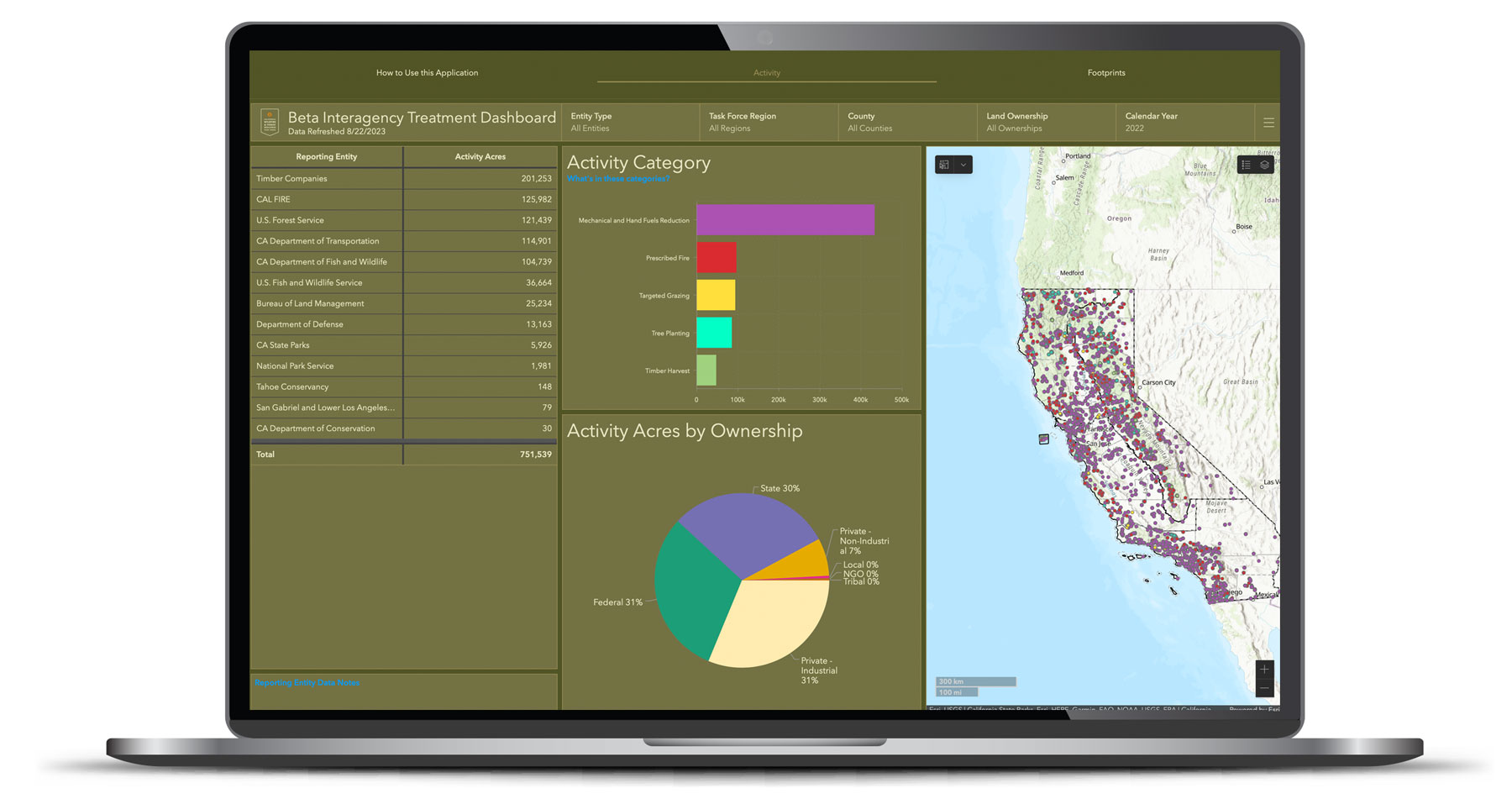
On August 29, the Governor’s Wildfire and Forest Resilience Task Force launched the beta version of a first-of-its-kind Interagency Treatment Dashboard beta that displays the size and location of state and federal forest and landscape resilience projects in California.
The dashboard offers a one-stop-shop to access data, provide transparency, and align the efforts of more than a dozen agencies to build resilient landscapes and communities in California. It reports treatment activities such as prescribed fire, targeted grazing, uneven-aged timber harvest, mechanical and hand fuels reduction, and tree planting. Users can sort treatments by region, county, land ownership and more.
The beta version of the dashboard will continue to be refined to include additional data, including projects by local and tribal entities, along with revisions based on public feedback. An official launch is expected in spring 2024 with more complete data on projects implemented in 2022.

California Launches Online Tool to Track Wildfire Resilience Projects
FOR IMMEDIATE RELEASE
August 29, 2023
California Launches Online Tool to Track Wildfire Resilience Projects
New beta statewide tracking system brings local, state, and federal wildfire resiliency projects into one place to reflect significant progress.
(Sacramento, CA) – Today, the Governor’s Wildfire and Forest Resilience Task Force (Task Force) launched the beta version of a first-of-its-kind Interagency Treatment Dashboard that displays the size and location of state and federal forest and landscape resilience projects in California.
The dashboard offers a one-stop-shop to access data, provide transparency, and align the efforts of more than a dozen agencies to build resilient landscapes and communities in California. It reports treatment activities such as prescribed fire, targeted grazing, uneven-aged timber harvest, mechanical and hand fuels reduction, and tree planting. Users can sort treatments by region, county, land ownership and more.
“Thanks to historic funding from our Legislature and Governor Newsom, over 1,000 wildfire resilience projects are in motion across the state to protect communities and our diverse landscapes from catastrophic wildfire,” said California Secretary for Natural Resources Wade Crowfoot, co-chair of the Task Force. “Now we can track our progress like never before through this public Interagency Dashboard. It identifies where projects are happening, what kind of work is happening in a given location, and how much overall resilience work is being done. It’s one more step forward in building a comprehensive, durable approach to increasing our wildfire resilience in years to come.”
“This dashboard delivers a new tool for collaboration among agencies and communities,” said U.S. Forest Service Regional Forester Jennifer Eberlien, who co-chairs the Task Force with Secretary Crowfoot. “Having access to treatment information in this format will allow us to coordinate landscape scale activities aimed at restoring and enhancing ecosystem resilience.”
The dashboard compiles data from a broad range of organizations and government departments—many of which have different reporting requirements guiding how they capture information. While individual reporting tools and data will sometimes differ from this statewide snapshot, the dashboard brings these different reporting approaches together as a single and streamlined reporting tool. Key differences are addressed in the dashboard website FAQs .
“It takes everyone to create a more wildfire resilient California and this dashboard reflects the strides being made to get us there,” said CAL FIRE Director and Fire Chief Joe Tyler. “This dashboard shows how far we’ve come, the significant efforts underway, and our firm commitment to future work. As our many partners share data and outcomes to a central place, the mission of protecting communities and natural resources will remain the common thread driving our work. This new tool will also provide first responders a snapshot of where treatment has occurred to help inform fire suppression efforts.”
The dashboard is an important step to increase the pace and scale of statewide actions addressing California’s wildfire crisis and is a key deliverable of the Governor’s Wildfire and Forest Resilience Action Plan , issued by the Task Force in January 2021.
The beta version of the dashboard will continue to be refined to include additional data, including projects by local and tribal entities, along with revisions based on public feedback. An official launch is expected in spring 2024 with more complete data on projects implemented in 2022.
Contact Information:
Sky Biblin, Communications Coordinator
Governor’s Wildfire and Forest Resilience Task Force
916-502-6527
Albert Lundeen, Director of Media Relations
California Natural Resources Agency
albert.lundeen@resources.ca.gov
916-606-3990
D’Artanyan Ratley, Public Affairs Specialist
USDA Forest Service