
California Earthquake Authority Publishes Natural Catastrophe Resiliency Report
California Earthquake Authority Publishes Natural Catastrophe Resiliency Report
April 7, 2026 – The California Earthquake Authority, in their capacity as Administrator of the California Wildfire Fund, delivered their report, Enhancing California’s Resiliency to Natural Catastrophes as required under SB 254. The legislation required the Authority to evaluate policy options to reduce damages to life and property, accelerate post-disaster recovery, and equitably allocate the costs of natural catastrophes in California, including catastrophic wildfires. The report identifies three overarching Policy Pathways, each of which are supported by multiple strategies and actions.
-
- Commit to community wildfire risk reduction: Focuses on greater state coordination, guidance, and resources for local governments; increased capacity at the community level, developing shared data and information to support local mitigation planning, and setting some new requirements that further support existing priorities related to electric utility safety, accountability, and reporting.
- Equitably allocate catastrophe burdens: Addresses existing cost-sharing structures that are not fit-for-purpose to manage the extreme wildfires, including issues such as investor-owned utilities being burdened with inverse condemnation, disproportionate contributions to wildfire mitigation from residential ratepayers, access to property insurance, and delivery of post-disaster compensation payments.
- State roles for addressing catastrophe resiliency: Focuses on financing strategies to respond to catastrophic events as well as new public and private financing strategies to facilitate wildfire mitigation, such as home and community hardening, defensible space, and vegetation management.
- Commit to community wildfire risk reduction: Focuses on greater state coordination, guidance, and resources for local governments; increased capacity at the community level, developing shared data and information to support local mitigation planning, and setting some new requirements that further support existing priorities related to electric utility safety, accountability, and reporting.

USDA Announces Over $61 Million to Process Forest Biomass and a New Facility Opens in Tuolumne County
USDA Announces Over $61 Million to Process Forest Biomass and a New Facility Opens in Tuolumne County
USDA Announces $61.25 Million for California Projects from the Timber Production and Expansion Guaranteed Loan Program
March 23, 2026 – The U.S. Department of Agriculture (USDA) announced $115.2 million in loans through the Timber Production and Expansion Guaranteed Loan Program to support projects in eight states that will help sawmills and other wood processing facilities establish, reopen, expand, or improve their operations. $61.24 million was allocated to three companies in California:
- Blue Mountain Electric Company, LLC ($25M) to support the construction and operation of a 3MW gasification plant in Wilseyville in Calaveras County, which plans to convert forestry biomass waste into synthetic natural gas.
- Alpenglow Timber, LLC ($18.5M) to establish a new sawmill in the North Tahoe/Truckee area, which is expected to create new jobs in a community with a 4.7% unemployment rate.
- Sierra Forest Products Holdings, Inc. ($17.75M) to expand and modernize operations, improve efficiency, and increase timber processing capacity.
New Biomass Facility Opens in Tuolumne County
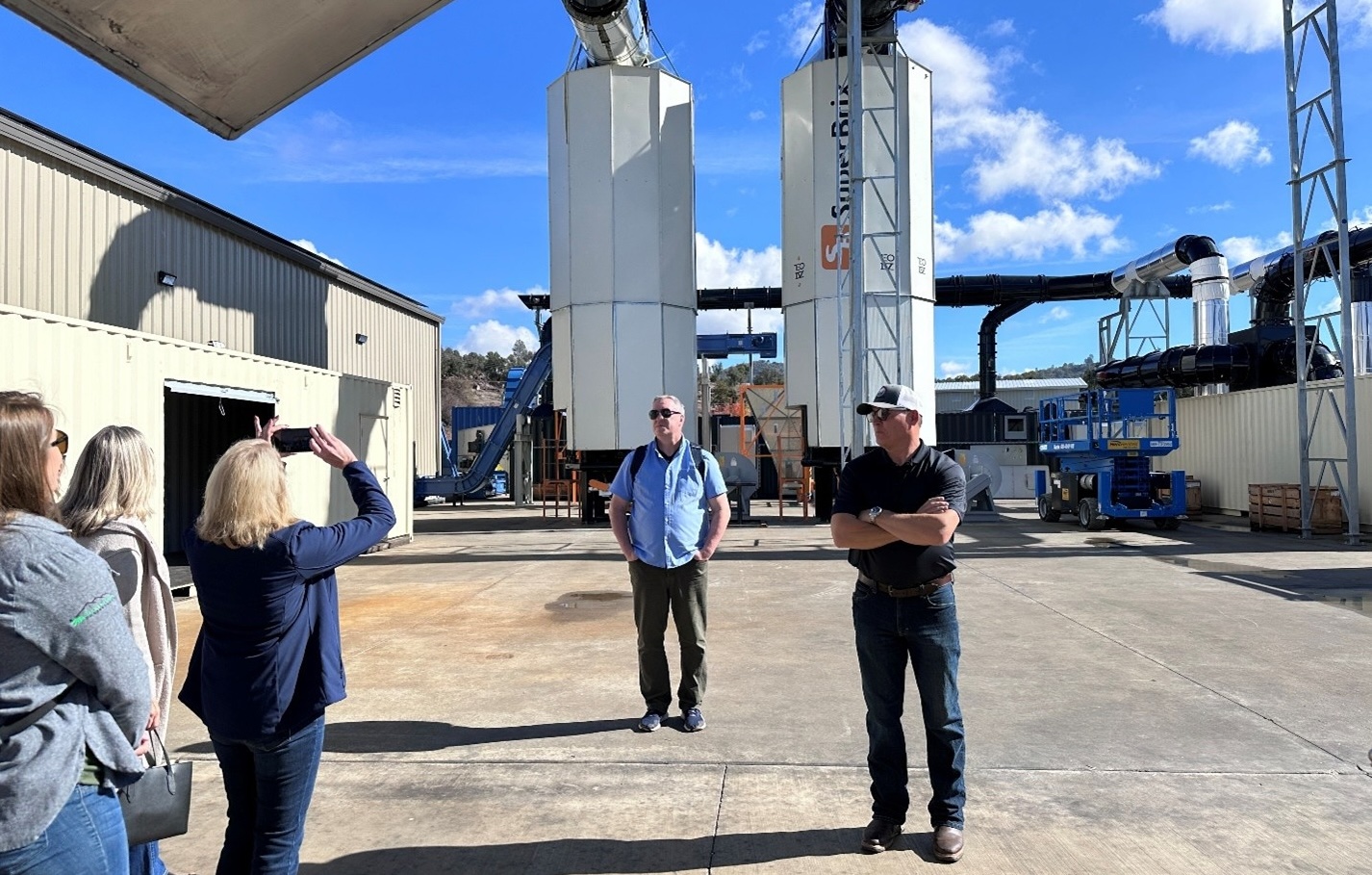
March 12, 2027 – The Sierra Nevada Conservancy (SNC) announced the completion of the federally funded Community and Watershed Resilience Program with the opening of the Tuolumne BioEnergy facility in Sonora, which, alongside the Tuolumne Biomass facility, utilizes forest-restoration material to create jobs and produce wood products while reducing wildfire fuels. The program, funded through a $70.4 million National Disaster Resilience Competition grant following the 2013 Rim Fire, included forest- and watershed-health projects on 14,000 acres, creation of two community resilience centers, and strategic fuel breaks to protect communities and landscapes. By converting excess biomass into usable products and supporting large-scale fuels reduction, these facilities enhance forest resilience, lower wildfire risk, and provide long-term economic and ecological benefits to Tuolumne County.

CNRA Launches Policy to Expand Tribal Stewardship for at Least 7.5 Million Acres in California
CNRA Launches Policy to Expand Tribal Stewardship for at Least 7.5 Million Acres in California
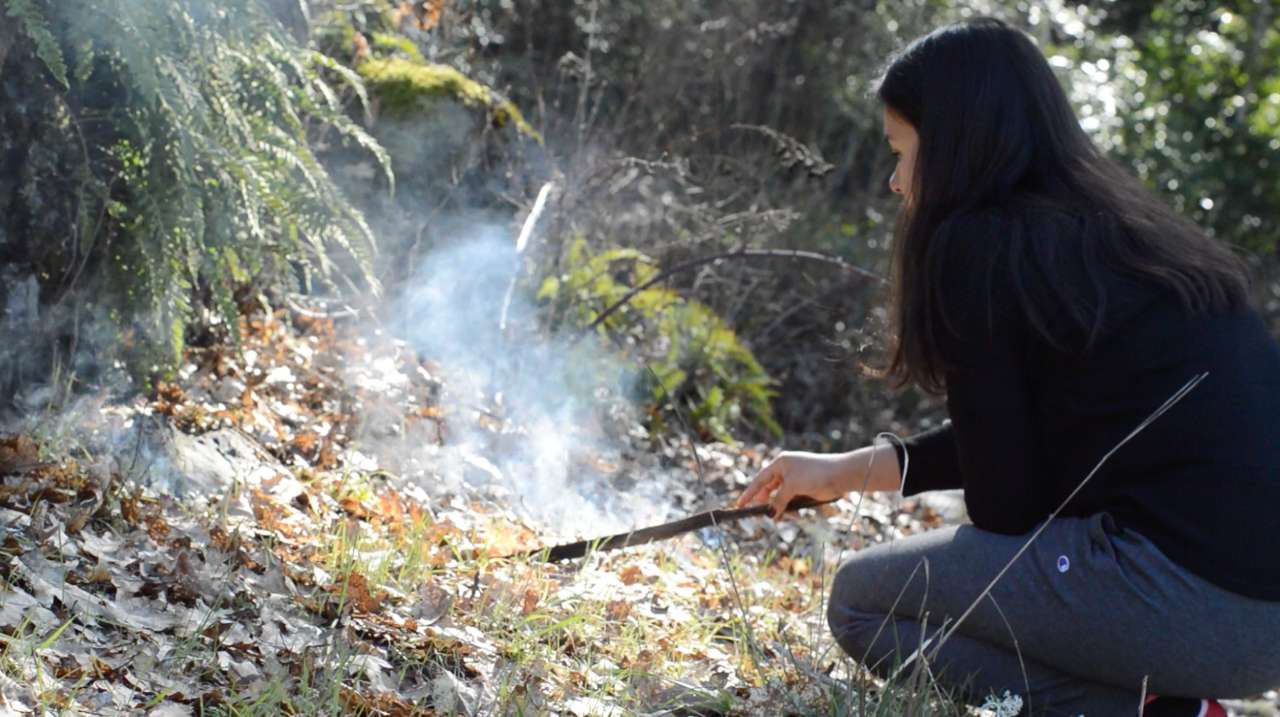
March 17, 2027 – The California Natural Resources Agency (CNRA) launched the state’s first-ever Tribal Stewardship Policy, establishing a statewide goal of expanding tribal stewardship over at least 7.5 million acres of lands and coastal waters in California. The Policy sets clear standards for all CNRA departments, conservancies, commissions, boards, and many other non-tribal partners to institutionalize meaningful and durable tribal-state partnerships and advance tribal stewardship through tribal access, collaboration, and ancestral land return. The Policy is supported by a companion toolkit containing training materials, templates, webinars, and technical resources designed for tribes, agency staff, and partners. The forthcoming 2026 California Wildfire and Landscape Resilience Action Plan will support, build upon, and align with CNRA’s Tribal Stewardship Policy.

Giant Sequoia Lands Coalition Releases 2025 Progress Report, Showing Accelerating Restoration Efforts
Giant Sequoia Lands Coalition Releases 2025 Progress Report, Showing Accelerating Restoration Efforts
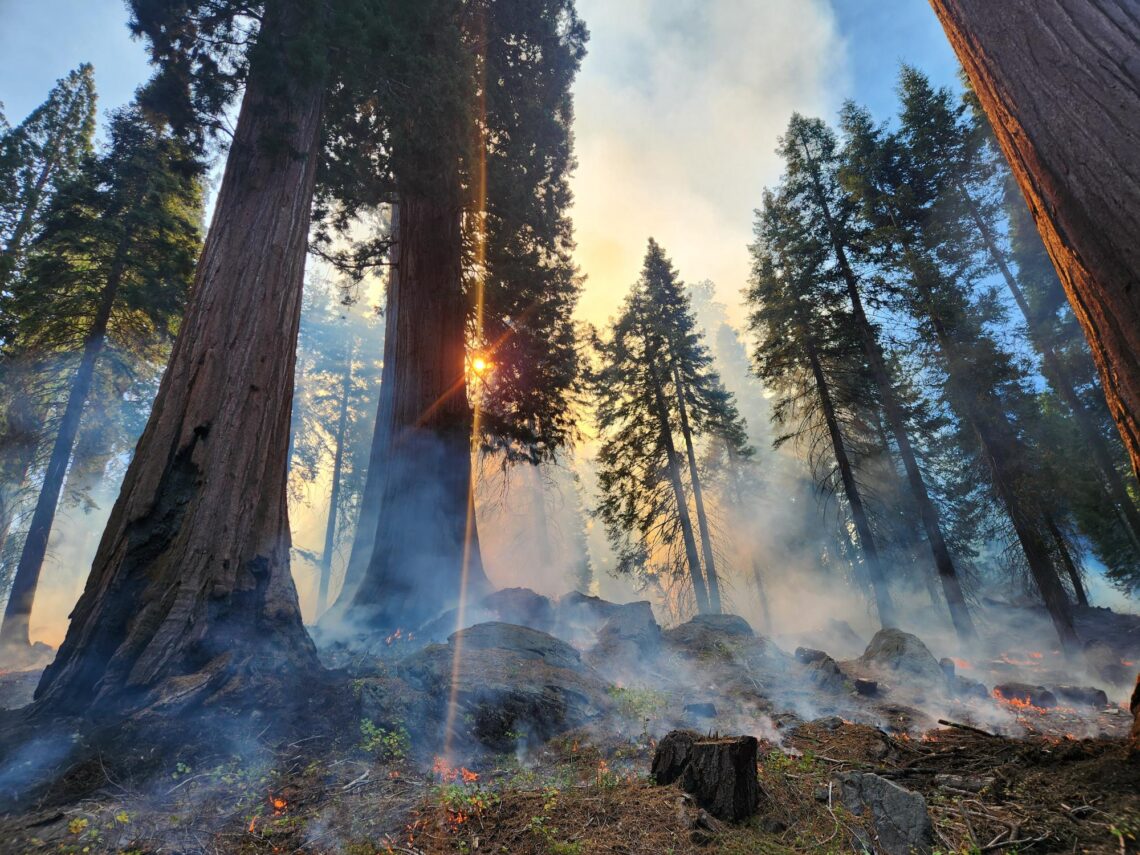
April 3, 2026 – The Giant Sequoia Lands Coalition (GSLC) released its 2025 Progress Report, showcasing significant advances in protecting the world’s remaining giant sequoia groves from shifting climates, catastrophic wildfire and emerging threats such as bark beetles. GSLC partners have conducted restoration activities in 44 of the world’s 94 sequoia groves since 2022, reducing the risk of extreme wildfires and improving overall forest health. In 2025, Coalition members conducted forest resilience treatments on 4,508 acres across 25 groves, advancing the momentum of this collaborative effort. Since its formation following the devastating 2020 and 2021 fire seasons—when the Castle Fire, KNP Complex Fire and Windy Fire killed thousands of ancient sequoias—the Coalition has treated a total of 23,251 acres and planted more than 682,000 native trees.
Additionally, a new scientific study from the GSLC reveals the current state of California’s giant sequoia range and quantifies the alarming extent of damage caused by extreme wildfires over the last decade. More than 17% of all mature giant sequoias have been killed by wildfire since 2015, while less than 1% perished in the 30 prior years. Most of the losses since 2015 occurred during the megafires of 2020 and 2021.
U.S. Forest Service Announces Reorganization with New Headquarters in Salt Lake City, UT and State Office in Placerville, CA
U.S. Forest Service Announces Reorganization with New Headquarters in Salt Lake City, UT and State Office in Placerville, CA
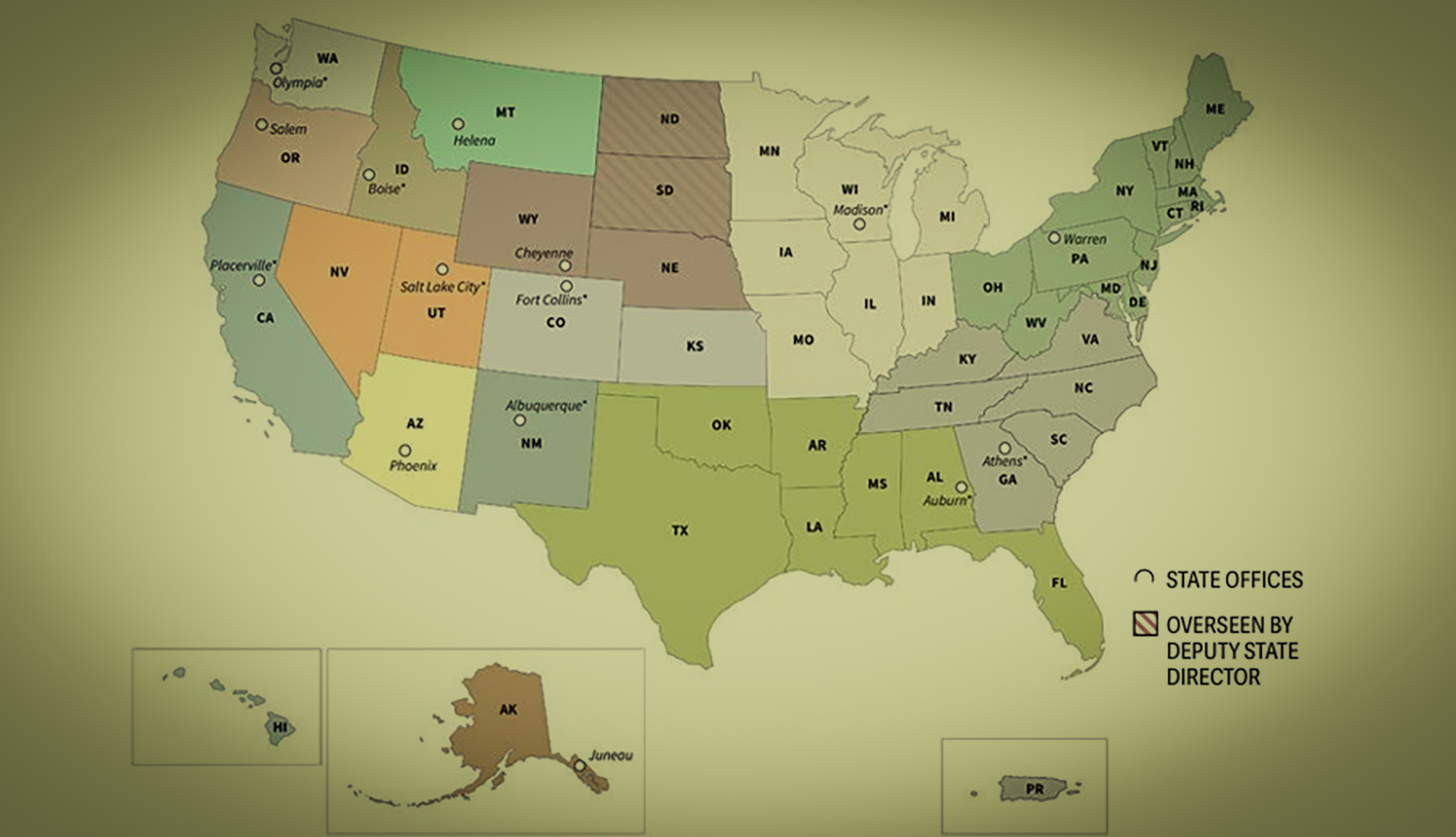
March 31, 2026 – The U.S. Forest Service announced it will move its headquarters to Salt Lake City, Utah, and begin a restructuring of the agency. Alongside the relocation of its headquarters, the Forest Service will begin transitioning to a state-based organizational model supported by shared operational service centers and a unified national research enterprise.
For California, the state office will be located in Placerville. Nationwide, 15 state directors will replace the previous 9 regional foresters and oversee forest supervisors, operational priorities, and relationships with states, tribes, and partners. Each state office will include a small leadership team responsible for legislative affairs, communications, and intergovernmental coordination. The Forest Service’s current facilities in Vallejo, CA will be repurposed as a national training center.
Additionally, the Forest Service will shift many functions currently housed in regional offices to a network of operational service centers to be established in Placerville, CA; Albuquerque, NM; Athens, GA; Fort Collins, CO; Madison, WI; and Missoula, MT. The Forest Service will also reorganize the various research stations into one in Fort Collins, CO. In California, six of the eight Forest Service research facilities will be shut down with facilities in Placerville and Riverside remaining open.
California Fast-tracks 300 Critical Wildfire Projects in 300 Days
California Fast-tracks 300 Critical Wildfire Projects in 300 Days
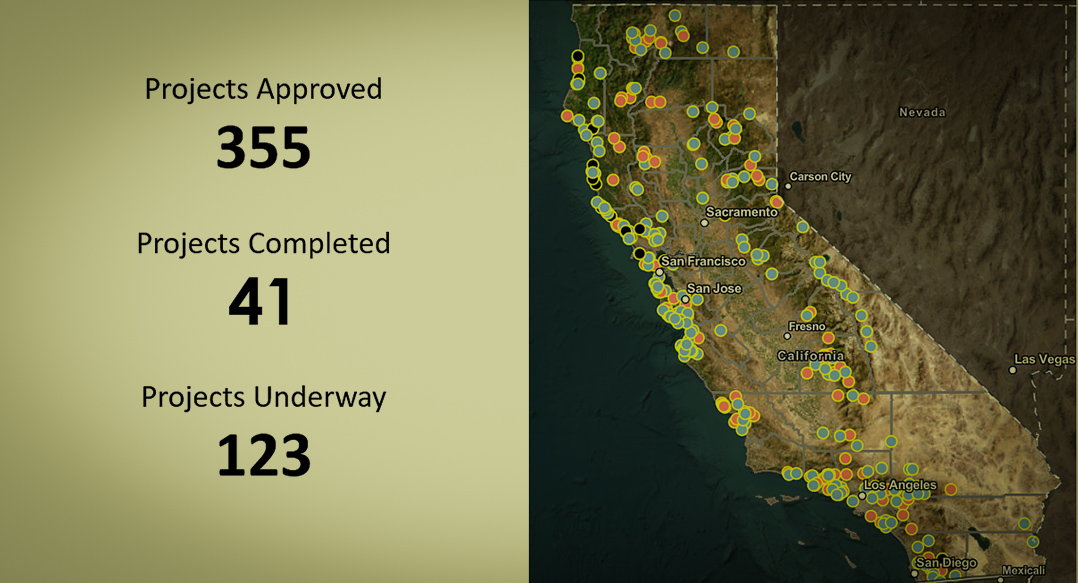
March 19, 2026 – Following Governor Newsom’s emergency proclamation on wildfire, State agencies including the California Natural Resources Agency (CNRA) and California Environmental Protection Agency (CalEPA), have coordinated to cut red tape and fast-track critical wildfire safety projects across the state, all while maintaining vital environmental safeguards. Through this streamlined process, projects are now being approved in as little as 30 days, saving a year or more of review and red tape for more complicated projects.
Thanks to these efforts, over 350 projects across nearly 80,000 acres have been approved in all reaches of the state. This streamlining process has been a game changer for a wide range of state and federal agencies, tribes, resource conservation districts, firesafe councils, private landowners and more, to get critical work done faster. Fast-tracked projects are protecting vulnerable communities, improving defensible space, creating evacuation routes, and restoring ecosystems. We are already seeing a major impact on the ground with notable projects including:
- a collaborative 600+ acre fuels reduction project protecting communities in the Los Angeles area near the Palisades footprint led by the Mountains Recreation and Conservation Authority;
- the 450 acre Prosper Ridge Community Wildfire Resilience Project that is incorporating cultural burning and prescribed fire for community protection in Humboldt County;
- the nearly 3,000-acre Scott Valley/Callahan Fuels Reduction Project to restore ecosystem health and protect vulnerable rural communities in Siskiyou County; and
- a project offering defensible space assistance for seniors and at-needs residents in Tuolumne County.
Thanks to the Governor’s extension of the emergency proclamation, project streamlining applications are being accepted through May 1, 2026. Visit the Task Force’s Project Streamlining webpage to learn more, view all approved projects and submit your application.