

Defensible Space Inspectors
Defensible Space Inspectors
Department: CAL FIRE
Program Description: Defensible space coupled with home hardening is essential to improve a home’s chance of surviving a wildfire. By removing flammable vegetation and material around a home, defensible space provides a safe space for firefighters to defend a home and reduces direct flame and heat on a home during a fire. The CAL FIRE Defensible Space Inspection Program has been in place for more than 60 years.
Inspectors not only enforce California’s defensible space rules, but the inspectors also work with residents to help them understand what specific steps they need to take to create defensible space for their home. Wildfire resilience funding is essential to the program and adds inspectors to CAL FIRE’s base program of nearly 95 Defensible Space Inspectors for 3 months each fiscal year.
Program Impact: In 2022, the legislature tasked the Board of Forestry to enhance and deploy the defensible space laws to include the new ember-resistance zone within the first 5 feet immediately surrounding the home.
Outreach and education to homeowners about these new standards has been crucial to helping homeowners implement the new requirements on their property. With the importance of defensible space inspections and home hardening assessments increasing, this funding allows CAL FIRE to hire each Defensible Space Inspector for a full 9-months, the maximum amount allowed for a temporary help Forestry Aide position. Coupled with other funding, CAL FIRE has added an additional 24 permanent Forestry Technicians and 28 Limited-term Forestry Aide positions to the field.
Resilience in Action: Statistics showed that during the 2022 Oak fire in Mariposa County, homes which were compliant with defensible space standards were 6 times more likely to survive an advancing wildfire. CAL FIRE inspected 83,714 homes for defensible space in 2021 and 194,176 in 2022. This number is a great representation of what additional resources can accomplish. By working the seasonal Defensible Space Inspectors for a full 9-months and adding permanent staff, CAL FIRE more than doubled the properties inspected. This engagement with homeowners gives them the opportunity to learn about the importance of defensible space and home hardening, and how to implement those mitigation strategies for their particular property. It also allows the property owner to ask a fire professional about other wildfire preparedness measures to take. It cannot be underestimated how important it is to have one-on-one in person collaboration between the property owner and the Defensible Space Inspector.
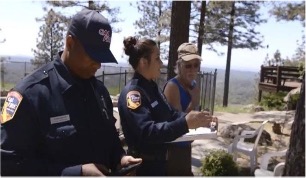
CAL FIRE Defensible Space Inspectors discussing defensible space and home hardening with homeowner.
RESOURCES

CAL FIRE Unit Fire Prevention Projects
CAL FIRE Unit Fire Prevention Projects
Department: CAL FIRE
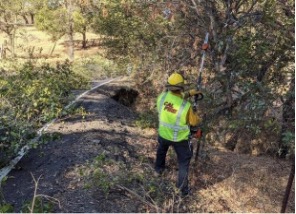
Program Description: Building on the success of past fuel reduction work, CAL FIRE continues working on strategically located fuel reduction projects in high wildfire prone communities throughout the State. New projects are started as soon as other projects are complete. CAL FIRE resources are committed to these projects that are vital to slow the spread of fires and provide anchor points for firefighters to implement suppression actions. Using the 2018 Strategic Fire Plan to guide CAL FIRE unit and contract counties, specific fuel reduction projects are formulated into a plan and implemented using the Unit Fire Prevention Projects funding.
Program Impact: These strategic fuel breaks and reduction in hazardous fuels reduce the severity of wildfires, while reducing the fire risk to vulnerable communities. Fuel breaks enable firefighters to approach a fire, take a stand, establish containment lines, and create safer evacuation routes for the public.
Resilience in Action: In 2022 the Santa Barbara County Fire Department completed 1,011 acres of fuel reduction as part of this program. This was accomplished through three projects including 969 acres of broadcast burning on the Spaulding-Midland project, a 30 acres of right-of-way clearance on the Alisal Road Project, and 12 acres of pile burning on the Painted Cave Community Defensible Space Project.
Electra Fire: Pine Acres Fuel Break is a 180-acre fuel break in the 2,544-acre Pine Acres VMP. Located near Jackson on the north rim of the Mokelumne River which divides Amador and Calaveras counties. The fuel break was initially completed in 2003-2004 as a 300-foot wide shaded fuel break and then was developed into a Vegetation Management Plan in 2005. It was maintained and improved again in both 2006 and 2011. It was expanded and maintained again in 2015 and 2019. The primary goal of the project was to create a shaded fuel break intended to support fire suppression and structure defense operations in the event of a wildfire coming out of the Mokelumne River Canyon. On the first four days of the 2015 Butte Fire it did just that. Due to recent maintenance in 2021, it once again was able to be used to stop the fire from progressing into the communities during the 2022 Electra Fire.
Lake Shastina Fuel Break
RESOURCES
Home Hardening Assistance
Home Hardening Assistance
Department: CAL FIRE/OES
Program Description: California is developing the first home hardening assistance program, designed to help low-income high fire risk communities, collectively achieve home hardening and defensible space. The program is currently funded 75 percent through FEMA Hazard Mitigation Grant Program funds and matched 25 percent with state appropriated funds.
Assembly Bill 38, (Wood, 2019) directed the Office of Emergency Services (Cal OES) to enter into a joint powers agreement (JPA) with the Department of Forestry and Fire Protection (CAL FIRE) to develop and administer the California Wildfire Mitigation Program. The program is designed to encourage cost-effective structure hardening and retrofitting and facilitate vegetation management, the creation and maintenance of defensible space, and other fuel modification activities. The legislation directed the JPA to develop criteria and a scoring methodology to prioritize financial assistance to areas and community based on vulnerability to fire, the impact of future climate risk and factors that lead some populations to experience a greater risk to wildfire, adverse health outcomes, or and inhibited ability to respond to a wildfire, including socioeconomic characteristics of the areas or communities that would be protected by financial assistance. Areas eligible for financial assistance under the CWMP include State Responsibility Areas (SRA) located within any Fire Hazard Severity Zone and Local Responsibility Areas (LRA) located within a very high fire hazard severity zone.
Program Impact: The California Wildfire Mitigation Program is currently in the demonstration phase, being piloted in three select areas, Whitmore in Shasta County, Dulzura in San Diego County and Kelseyville-Riviera in Lake County. New pilot communities are also being considered for Tuolumne and El Dorado Counties. The lessons learned working with these pilot communities under the demonstration phase are being used to refine the program and build the program framework before expanding to additional areas within demonstration counties, and ultimately, across the state.
Resilience in Action: The California Wildfire Mitigation Program Joint Powers Authority has been actively updating the program framework based on lessons learned while working with the initial pilot communities. A wildfire home assessment application and training program has been developed and input from the pilot communities has instigated added features and improvements to the application and training program. The pilot communities have been actively conducting environmental review for their project areas. Procurement procedures for contracting for home retrofitting work are actively being developed. The target time frame for retrofitting the first homes in each of the pilot communities is anticipate for later this year.
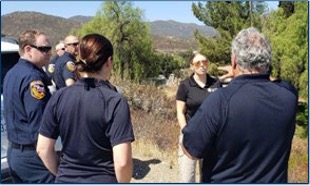
Interagency staff from CAL FIRE and Cal OES discussing home hardening needs.
RESOURCES
Wildfire Prevention Grants
Wildfire Prevention Grants
Department: CAL FIRE
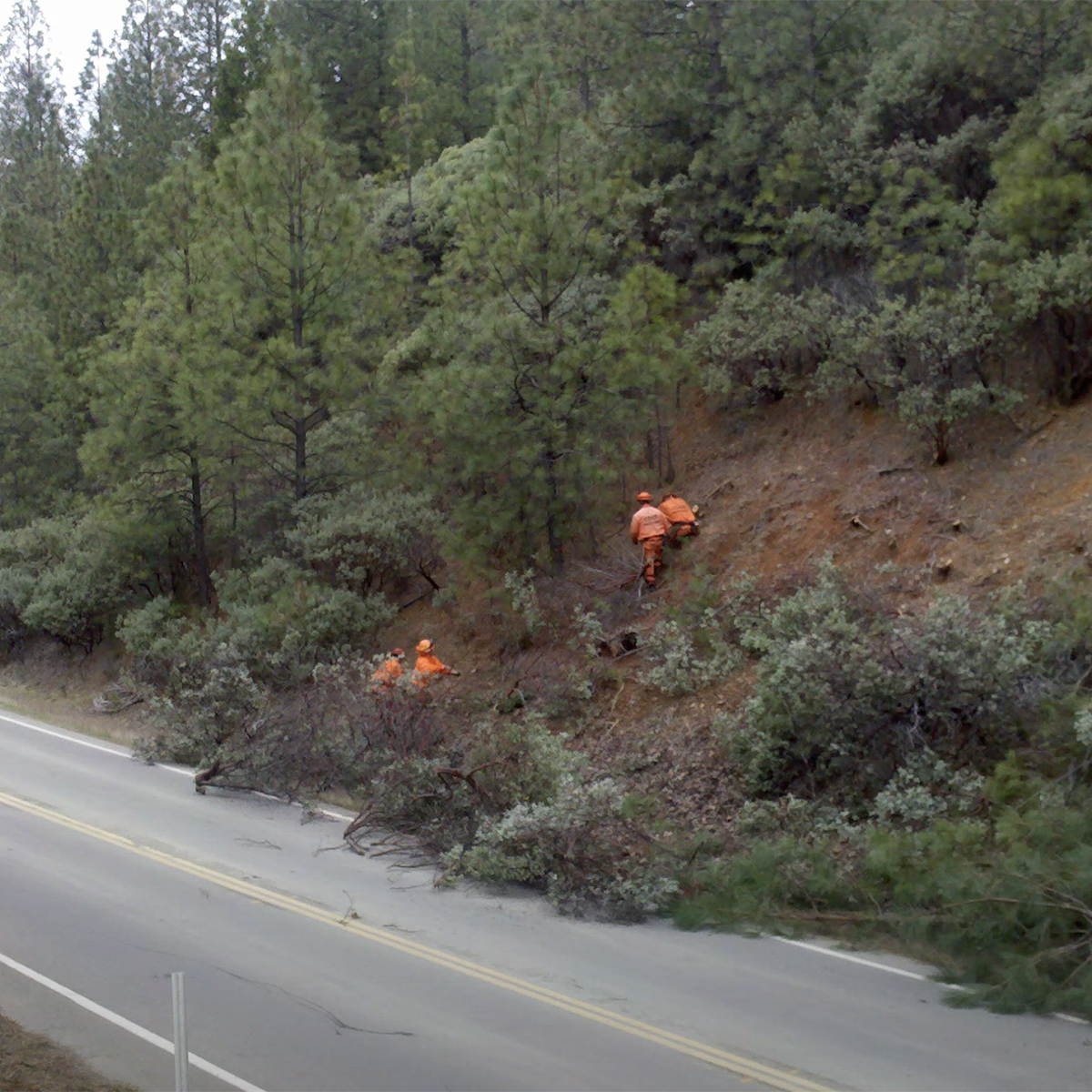
Program Description: CAL FIRE’s Wildfire Prevention Grants Program provides funding for fire prevention projects and activities in and near fire threatened communities that focus on increasing the protection of people, structures, and communities. Funded activities include hazardous fuel reduction, wildfire prevention planning, and wildfire prevention education with an emphasis on improving public health and safety while reducing greenhouse gas emissions.
Building on the success of past fuel reduction work CAL FIRE works with grantees on strategically located fuel reduction projects in high wildfire prone communities throughout the State. These projects provide valuable education on wildfire mitigation action, preparedness planning, and hazardous fuel reduction projects that enhance public safety and slow the intensity of wildfires to provide firefighters an anchor point for suppression actions. CAL FIRE, with grantees, will complete these projects on a continuous basis, ensuring at least 45,000 acres are treated annually through this program. Wildfire prevention grants support the wildfire preparedness and mitigation activities of federal, state, and local agencies, Native American tribes, and private nonprofit partners.
Program Impact: CAL FIRE awarded nearly $117 million in funding for 144 wildfire preparedness and mitigation projects across the State in FY 2021-22 appropriations. CAL FIRE is currently soliciting applications for the FY 2022-23 solicitation period which closed on March 15, 2023, where CAL FIRE will award up to $115 million from the FY 2022-23 appropriations.
Resilience in Action: The Wildfire Prevention Grants Program funded the South Eagle Lake Fuel Treatment project that was instrumental in protecting the Lake Forest Estates community during the Hog Fire. Lake Forest Estates is a mountain community surrounded primarily by private timberlands and has been recognized as a “threatened development” in the Lassen County Community Wildfire Protection Plan. It is situated upslope of Highways 44 and 36, with both heavily travelled corridors being the source of numerous fire ignitions. The prevailing wind pattern comes from the Southwest, leaving the community vulnerable to fire starts along the highways. The treatment area extended from the community’s western edge to Highway 44, or approximately 1.5 miles from the intersection of Highway 36.
The Hog Fire burned approximately one mile into the treated area before it was contained. The fuel reduction treatment in this area allowed firefighters to safely attack the fire from the ground with fire crews, fire engines, and bulldozers. The size of the fuel treatment (almost two miles long) allowed it to be effective not just to mitigate fire starts along the Highway 44 corridor, but also to contain this wind-driven fire that blew across the highway corridor.
RESOURCES

Vegetation Treatment Water Quality Permitting
Vegetation Treatment Water Quality Permitting
Department: Water Boards
Program Description: In July 2021, the State Water Resources Control Board developed and began implementing a streamlined statewide waste discharge permit (Order WQ 2021-0026-DWQ) for projects covered by the Board of Forestry’s Vegetation Treatment Program (CalVTP) Programmatic Environmental Impact Report. Projects that are found to be within the scope of the environmental impact report are automatically enrolled in the water board’s permit without additional application process and at no-cost to the permitees. Water Board staff have also added guidance for permitees and the public to the Water Board’s program webpage. State water board staff are continuing to improve implementation by developing guidance information for the Regional Water Control Boards, template communications for permittees and by providing technical support to permitees.
Program Impact: The waste discharge permit leverages the CalVTP Programmatic Environmental Impact Report. This made the CalVTP a fully streamlined permit with no additional paperwork or fees, while still providing critical protection to California’s water resources.
Resilience in Action: The Water Boards: The State and Regional Water Boards were able to provide recommendations to the San Jose Water Company (SJW) about their CalVTP project called the San Jose Water Company Forest Health Program – P1. This project is designed to improve forest health, increase climate resiliency, and reduce the risk of wildfire. Lack of vegetation management, climate change, periods of successive drought, and development in the wildland urban interface have contributed to substantial change in forested landscapes across Santa Clara County. This project is one component within a series of projects in the area as part of a landscape-scale wildfire resiliency effort.
The Water Boards advised SJW about specific Standard Project Requirements related to water quality based on the project’s planned vegetation treatment activities. This project has now become certified under the CalVTP process with just over 1,900 acres to be treated. The comment review process allowed the Water Boards to work together and share regional expertise, leading to sensible recommendations that contribute to both wildfire prevention and water quality protection.
RESOURCES

California Vegetation Treatment Program (CalVTP) Environmental Impact Report
California Vegetation Treatment Program (CalVTP) Environmental Impact Report
Department: Board of Forestry and Fire Protection
Program Description: Communities raised concerns that the CEQA environmental review process was slowing down their ability to launch critical wildfire fuel reduction projects. The California Vegetation Treatment Programmatic Environmental Impact Report (CalVTP) is an environmental impact review covering 20-million-acres of the non- federal, fire-prone land in California. The CalVTP enables efficiencies in the CEQA process that can reduce review timelines from multiple years to just months.
This approach reduces redundancies without sacrificing environmental quality by allowing project sponsors to build on known and verified environmental analysis as they begin their site-specific environmental review for individual projects.
Partner departments like the State and Regional Water Boards and California Department of Fish and Wildlife collaborated with the Board of Forestry and Fire Protection to ensure their environmental standards are reflected in the CalVTP, creating a streamlined environmental review process for approvals needed from those agencies.
CEQA exemptions are still used for projects that qualify. Large or more complex use the CalVTP to achieve their environmental compliance.
Once the site-specific environmental analysis is complete and approved under the CalVTP, it is valid for up to ten years, allowing multiple rounds of vegetation treatment and maintenance using the same environmental document.
Program Impact: To help ensure consistent and easy use of the new streamlined CalVTP process, the State hired an environmental consulting firm to conduct the Project Specific Analysis (the application required by the CalVTP). This helps ensure that local foresters have support as they get acquainted with a new environmental process. These completed examples will help future applications be prepared faster and more efficiently at a reduced cost.
As of April 2023, 46 CalVTP projects have been approved and another 47 are underway, totaling 93 projects utilizing this expedited tool. These environmental reviews have been coordinated with five CDFW regions and four USFWS field offices as well and the California Coastal Commission and the State Water Resources Control Board and various Regional Water Quality Control Boards; each agency coordination effort was approached with the objective of streamlining consultation with that agency for future CalVTP projects.
Resilience in Action: The Alder Creek Sequoia Resilience and Post-Fire Restoration Project PSA/Addendum, proposed by the Sierra Nevada Conservancy and Save the Redwoods League, exemplifies the usefulness of the program EIR, even for very complex and multi-jurisdictional projects.
In addition to vegetation treatment, the project included road repair and road decommissioning, which were related to vegetation treatment, but not covered in the CalVTP. These activities were addressed in an addendum, which was efficiently integrated with the project specific analysis. Consultation with USFWS and CDFW was accelerated by leveraging the education that had been provided and processes that had been established for other approved CalVTP projects. In total, the project specific analysis and addendum were finalized within 3 months, a process that previous would have taken at least a year.
RESOURCES
Wildfire Resilience Block Grants
Wildfire Resilience Block Grants
Department: CAL FIRE
Program Description: CAL FIRE created Wildfire Resilience Block Grants in 2022 to build local capacity while providing financial and technical forestry assistance to nonindustrial forest landowners. The power of this program comes from the regional partner’s ability to set parameters for assistance that directly meet the unique needs of the landowners in their local region. As part of these grants, CAL FIRE also created and funded Emergency Forest Restoration Teams (EFRT) to quickly restore forestlands burned by wildfires, often funding them while the fire is still ongoing.
Projects under this grant:
- Make funding available through agreements with landowners to pay for specific, non-commercial ecological forest improvement and wildfire resilience practices.
- Provide technical assistance to promote information sharing and education on the full range of effective forest management practices and opportunities as well as forest management education and management planning.
Program Impact: This support for small forest landowners includes:
- Eleven grant funded projects awarded, totaling more than $30 million.
- More than12,000 acres planned for treatment.
- More than 500 individual landowners assisted.
- More than 500,000 seedlings to be planted.
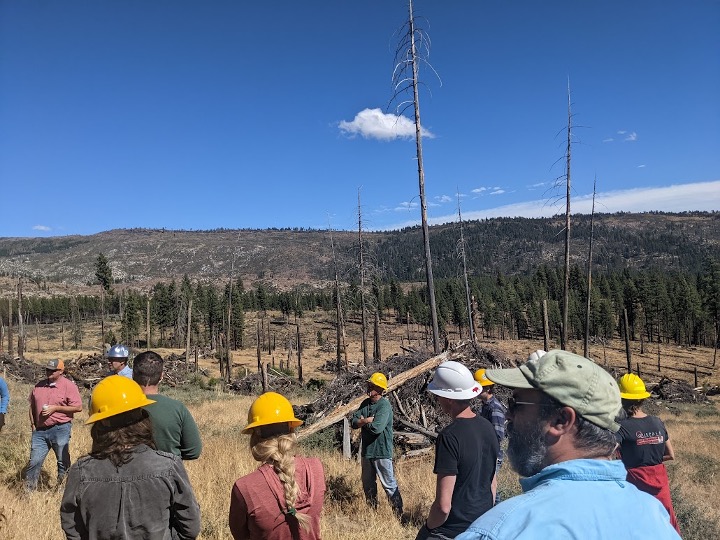
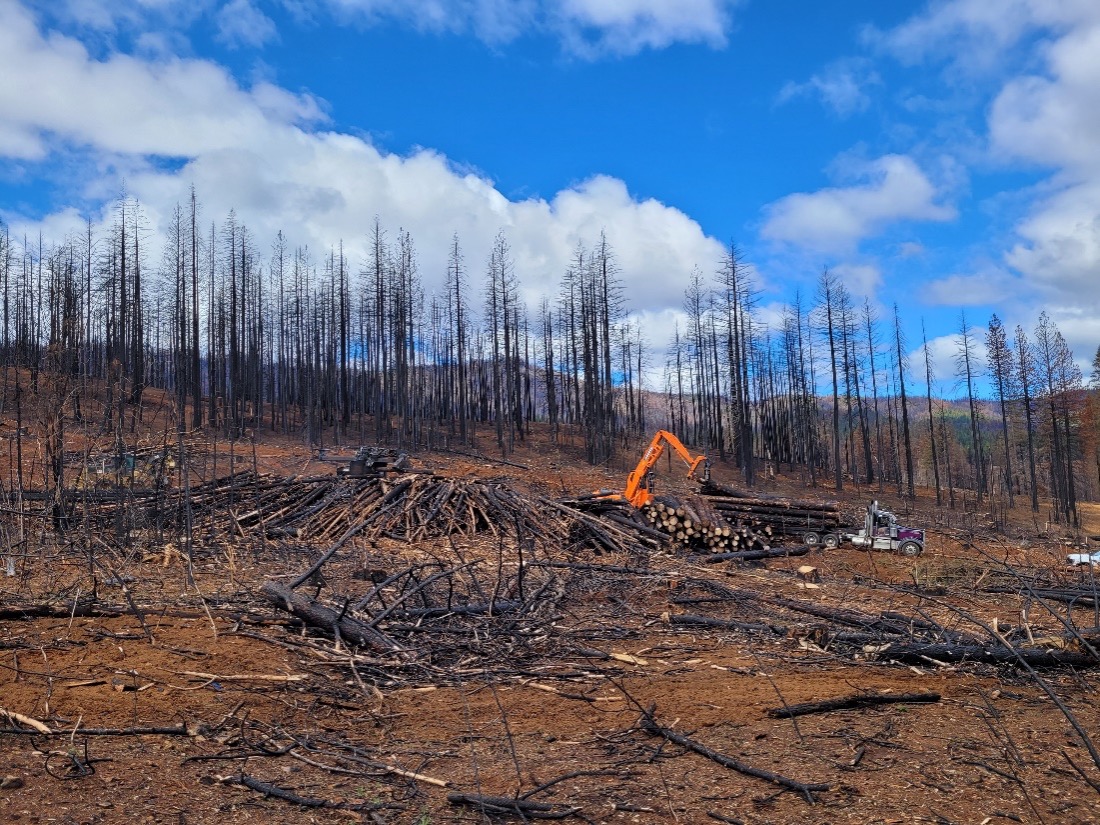
Resilience in Action: The Dixie Fire ignited on July 13th 2021, eventually burning 963,309 acres in Plumas, Butte, Lassen and Tehama Counties. The fire caused significant damage and the destruction of communities and ecologies. Half the fire burned with a tree mortality of 90 percent, creating landscape conditions without the potential for natural regeneration, susceptible to type conversion, erosion, and with residual hazardous fuels.
CAL FIRE awarded an $8M grant to the Feather River Resource Conservation District to formulate an Emergency Forest Restoration Team (EFoRT) in early 2022 to address this unprecedented need. The EFoRT is working with NIPF landowners to provide technical assistance and implement post-fire restoration activities across 2,558 acres. They are providing rapid assessments, securing permitting, and creating an implementation plan to satisfy restoration goals. EFoRT will ultimately implement these forest management plans.
Nursery - Lewis A. Moran Reforestation Center
Nursery - Lewis A. Moran Reforestation Center
Department: CAL FIRE
Program Description: Seedbanks and reforestation are at maximum capacity in California. The demand for tree-growing operations have expanded dramatically over the last few years due to California’s drought, tree mortality and devastating wildfires sweeping through the state. Originally established in 1921, The Lewis A. Moran Reforestation Center is being revitalized and expanded to play a prominent role in meeting California’s reforestation needs.
The nursery makes seedlings available to state and private forestland owners as part of a long-term venture to support statewide reforestation needs, including the California Forest Improvement Program. In the state’s continuing mission to meet growing needs, we are expanding operations to meet long- term vision for the state’s restoration efforts.
This facility also holds the State Seedbank. This long-term repository contains more than 42,000 pounds of seed native to a broad range of areas and elevations in California. This seedbank contains the highest quality seedstock available and provides seed storage for a small fee, both to public and private landowners.
Program Impact: In the last two years, the Lewis A-Moran Reforestation Center has:
- Upgraded facilities to expand seedling greenhouses.
- Funded grants to expand greenhouse space throughout the state, making room for the increasing demand for seedlings.
- Improved cones and seed collection by establishing a Seed Cooperative to share seed/cone and reforestation resources across State, Federal, private and non-profit organizations.
- Established a long term survey of cones.
Resilience in Action: Climate Adapted Seed Tool (CAST) — The Reforestation Center has been working with climate scientists and forest biologists to help better align planting stock with the expected climate stressors at the planting locations. Forest trees, even within the same species, are genetically different from each other and are historically catalogued by geographically mapped areas called seed zones. Seed transfer rules specify a geographic distance beyond which populations should not be moved. In an era of rapidly changing climatic conditions, foresters must match the climatic adaptability of seedlings to the climatic conditions of restoration sites. The Climate Adapted Seed Tool will greatly expand California’s ability to match expected climatic conditions with the seedlings planted, to ensure forests are healthy and productive into the future.
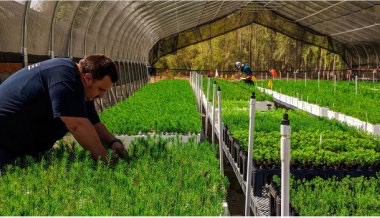
Lewis A. Moran Reforestation Center forester tending to seedlings
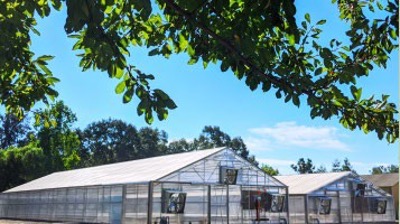
Lewis A. Moran Reforestation Center seedling greenhouses.
Post-Fire Reforestation and Regeneration
Post-Fire Reforestation and Regeneration
Department: CAL FIRE
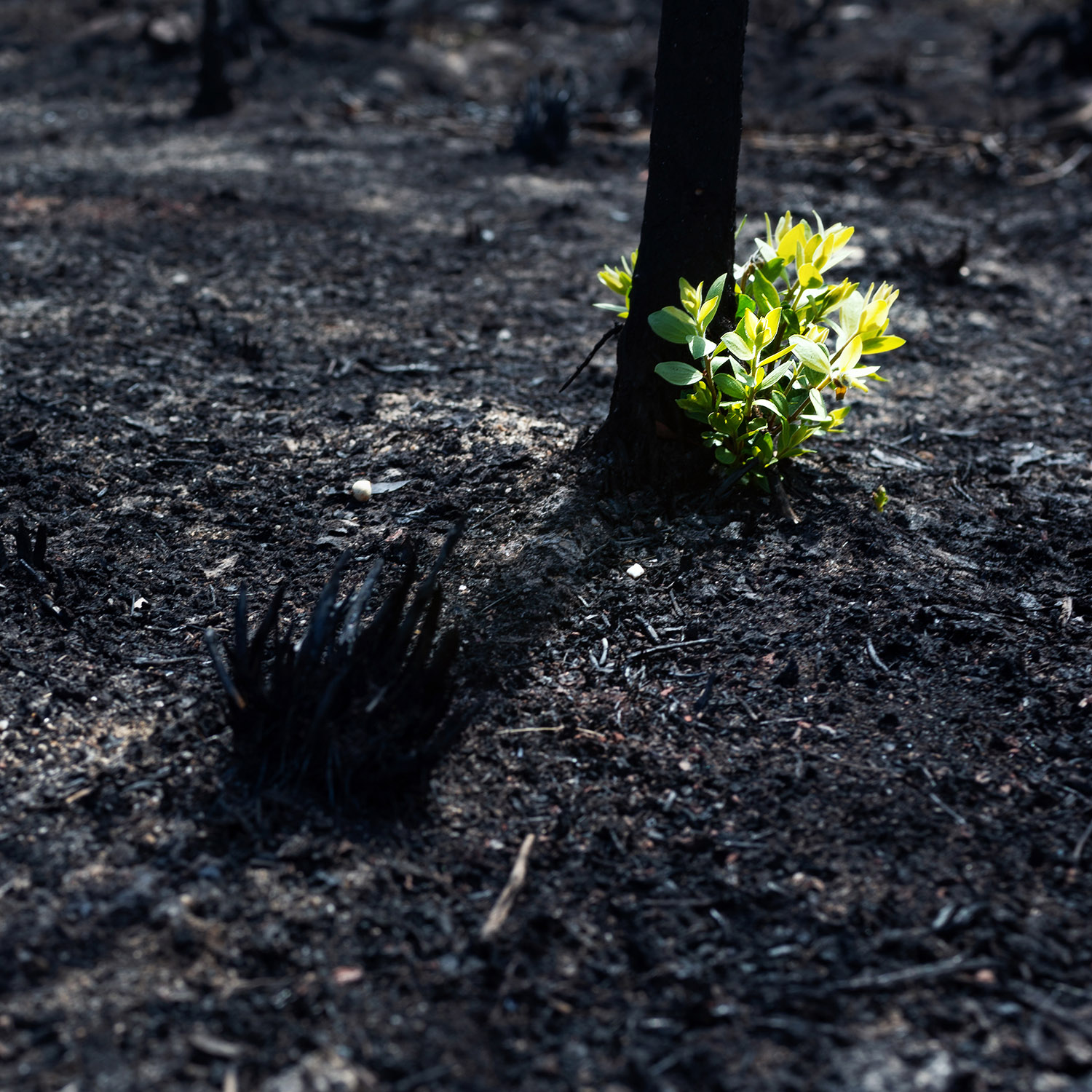
Program Description: CAL FIRE’s grant program will support forest health activities for post-fire reforestation and regeneration. This program was developed to meet the recommendations of the Forest and Wildfire Resilience Task Force’s Reforestation report. Post-fire reforestation treatments include site preparation and post-planting maintenance that are directly related to reforestation. The intent of post-fire reforestation treatments is to reforest or restore forestland following catastrophic fire. Reforestation treatments include tree planting, installing tree shelters, site preparation, oak woodland restoration, invasive plant removal, and herbicide.
Program Impact: The projects will restore climate-resilient natural conditions prioritizing native species and a density and distribution of seedlings that address emergency climate conditions including increased fire and drought, consistent with the Governor’s Wildfire and Forest Resilience Task Force’s Reforestation Working Group.
Resilience in Action: CAL FIRE has developed the Post-Fire Reforestation and Regeneration grant guidelines and awards are anticipated in the spring of 2023.
RESOURCES
Forest Legacy Program
Forest Legacy Program
Department: CAL FIRE
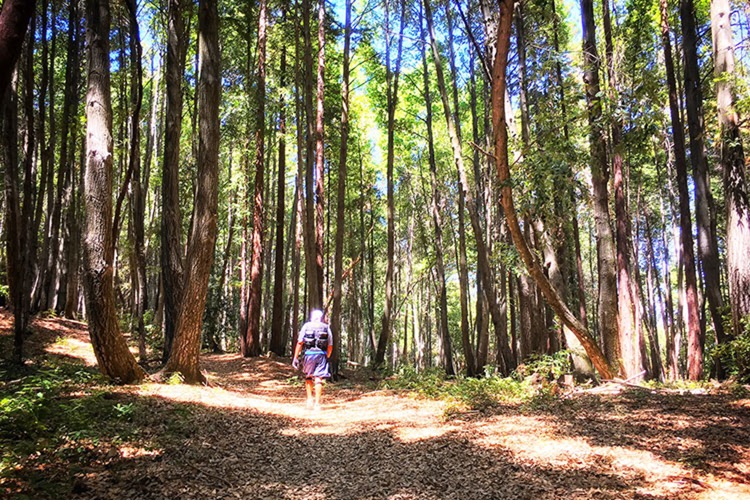
Program Description: The Forest Legacy Program protects important forest lands threatened with conversion to non-forest uses, like development. Protection of California’s forests protects wildlife habitat, recreation opportunities, watershed protection, open space, and sustainable timber production. Intact forests also contribute significantly to the storage and sequestration of carbon.
Under this competitive grant program, CAL FIRE purchases or accepts donations of conservation easements or fee title of forest lands. The primary tool CAL FIRE uses to conserve forest lands in perpetuity is permanent Working Forest Conservation Easements. These conservation easements do more than just restrict development on a property, they protect forest values by concentrating on sustainable forest practices that provide both economic value from the land and long-term land stewardship.
Program Impact: Since the early action funding of 2021 and subsequent fire resilience budgets in 2021 and 2022 Forest Legacy has:
- Entered into eight grant agreements worth $22.8 m with private forestland owners.
- Protected 36,358 acres of forestland.
Resilience in Action: Pacific Union College, CAL FIRE and Land Trust of Napa County Working Together to Protect Angwin Forestland
Pacific Union College (PUC), CAL FIRE and the Land Trust of Napa County announced a joint effort to permanently protect and manage more than 1,750 acres of forestland in Angwin, adjacent to the college’s campus. This forest is part of a larger ownership in the Angwin area held by Pacific Union College for more than 100 years. It is one of the most significant forests in Napa County.
The land is owned by Pacific Union College (PUC) near its Angwin campus in the mountains northeast of St. Helena. The forest abuts Las Posadas State Forest and a preserve which supports significant wildlife habitats and rare plants.
Pacific Union College was considering selling its forest lands, but changed course when it learned about the conservation easement through the State’s Forest Legacy Program. The conservation easement permanently eliminates the potential for residential, commercial and agricultural development on the land and creates a continuous corridor of protected land along the entire length of the eastern ridge above Napa Valley.