

Beneficial Fire V2
Beneficial Fire
Many of California’s fire-adapted ecosystems now sit outside their historical fire regimes, fueling destructive wildfires. “Beneficial fire,” including prescribed fire, managed wildfire, and cultural burning, restores fire to these landscapes, reducing extreme wildfire risk and supporting tribal stewardship and ecosystem health.
“California’s landscapes are, and always have been, shaped by fire. It’s not a question of whether these places will burn; it’s a question of when and how. Now is the time to elevate the voices of California's Indigenous and local communities—the original stewards of fire—and to work together to bring beneficial fire back to California's landscapes and people.”
– Lenya Quinn-Davidson, Director, UC ANR Fire Network
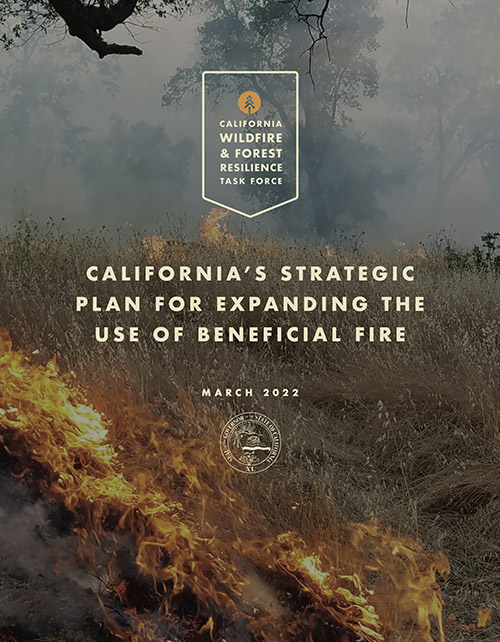
California’s Strategic Plan for Expanding the Use of Beneficial Fire
The Task Force published California’s Strategic Plan for Expanding the Use of Beneficial Fire in 2022, the nation’s first comprehensive roadmap with acreage targets across all land ownerships.
Key Accomplishments:
California continues to remove barriers and expand tools to dramatically increase the use of prescribed and cultural fire across the state.
- Developed a nation-leading framework for expanding beneficial fire: California’s nature-based solution targets call for significantly scaling beneficial fire across the state. California’s Strategic Plan for Expanding the Use of Beneficial Fire provides a vision and framework for rapidly expanding beneficial fire, and Executive Order N-35-25 directs a suite of actions to support tribes, local governments, and fire practitioners to maximize use of beneficial fire. State agencies have moved quickly to deliver on-the-ground results.
- Expanded prescribed fire: Task Force partners have nearly doubled prescribed fire statewide since 2021, treating roughly 200,000 acres annually. In May 2025, CAL FIRE, for the first time, met and exceeded its 50,000-acre goal for beneficial fire.
- Advanced cultural fire: Governor Newsom signed SB 310, which reduces barriers for tribes to conduct cultural burns in their ancestral territories. The Karuk Tribe and CNRA signed the first SB 310 Cultural Fire agreement in February 2025.
- Reduced liability barriers: CAL FIRE established a first-in-the-nation Prescribed Fire Liability Claims Fund with $20 million in state funding to cover losses from prescribed and cultural burns that escape control.
CASE STUDY:
A Landmark Cultural Burn Agreement
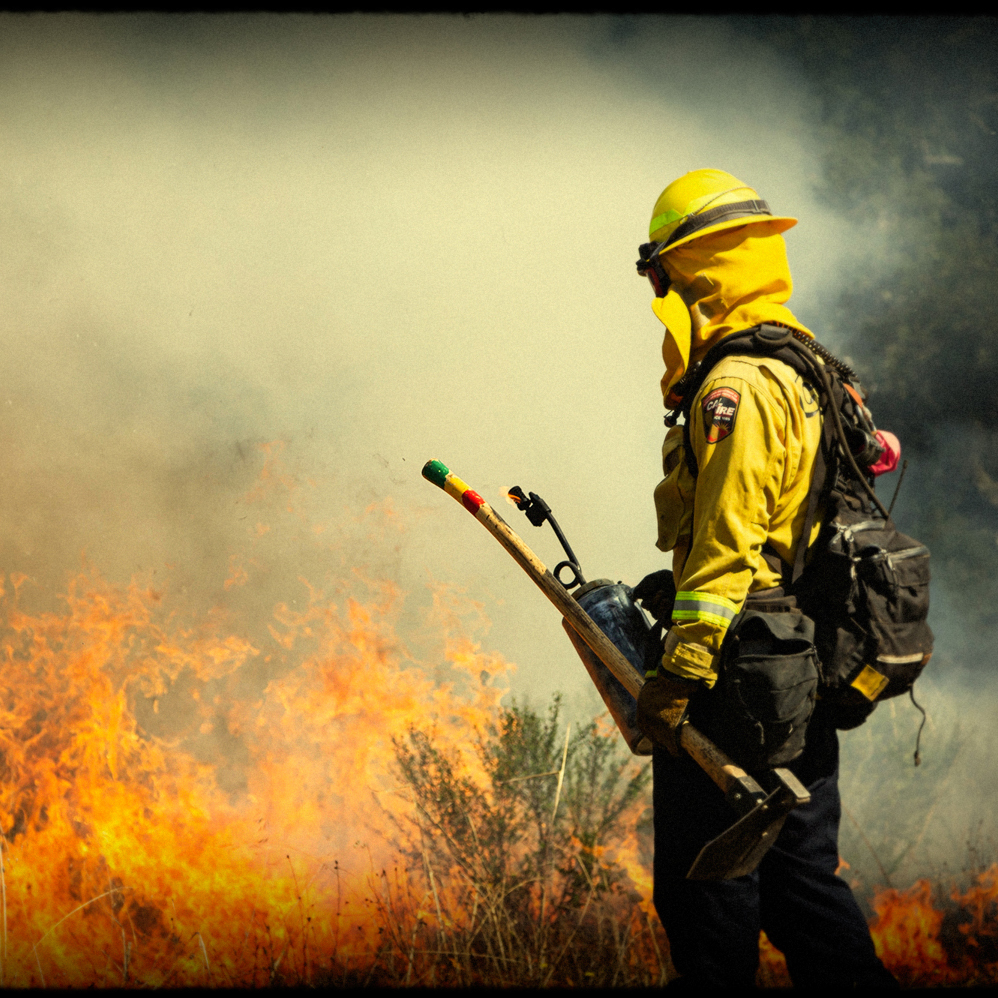
In March 2025, The Karuk Tribe and the California Natural Resources Agency (CNRA) signed the first cultural burning agreement under SB 310. This landmark legislation and agreement acknowledge tribal sovereignty and addresses historical injustices while contributing to the mitigation of catastrophic wildfire by enabling CNRA and local air districts to enter into agreements with federally recognized California Native American tribes to support them in conducting cultural burns in their ancestral territories.

Regional Considerations:
Beneficial Fire is essential to landscape resilience
While Beneficial Fire is essential to landscape resilience across much of California, beneficial fire may not be an appropriate tool in areas that are already experiencing fires more frequently than they did historically. For example, in Southern California shrublands, too much fire can lead to conversion of native vegetation to more flammable non-native grasses, resulting in even greater fire risk.
Key Actions:
California’s Wildfire and Landscape Resilience Action Plan identifies key priorities for the state to restore shrublands and forests that have been devastated by wildfire.
- 1.06 Enhance training and workforce capacity: CAL FIRE and CARB will collaborate with partners to accelerate the launch of the Beneficial Fire Training Network, expanding training opportunities for practitioners, air districts, local health jurisdictions, and regulators. Additionally, CAL FIRE, CNRA, and CARB are partnering with the University of California Agriculture and Natural Resources (UC ANR) Fire Network to expand beneficial fire outreach, education, research, capacity building and training.
- 1.07 Expedite implementation and streamlined permitting: Pursuant to AB 1699 (Rogers, 2026), CAL FIRE will provide direct assistance to local agencies and beneficial fire practitioners. Additionally, CAL FIRE will continue to streamline elements of the state burn permit process for eligible projects, and utilize template agreements to enable beneficial fire on state owned lands to better support burns led by non-CAL FIRE entities. CAL FIRE and the UC ANR Fire Network will share prescribed fire guidebooks. Consistent with SB 310 (Dodd, 2024), CNRA and local air districts will work collaboratively with federally recognized tribes to develop government-to-government agreements for cultural burning. CNRA and CalEPA will fast-track beneficial fire projects, pursuant to SB 1370. See Action 3.14 for more details on SB 1370 (Stern, 2026).
- 1.08 Expand local participation and reduce liability barriers Pursuant to AB 1699 (Rogers, 2026), CAL FIRE will continue administering the Prescribed Fire Claims Fund and expand eligibility for coverage to include public entities outside of CAL FIRE and the federal government, including resource conservation districts, volunteer fire departments, colleges and universities, and others in addition to the existing non-public user base. Permanent and expanded coverage will reduce liability barriers and increase the pace and scale of prescribed fire and cultural burning across private and public lands.
- 1.09 Expand and support cultural burning: CNRA, CalEPA, and their affiliated agencies will prioritize tribal consultation across the work of the agencies to support tribal leadership and incorporate tribal priorities into beneficial burning activities. Additionally, these agencies will strengthen partnerships with tribes through the creation of meaningful and durable access and collaboration agreements to enable cultural burning pursuant to the CNRA Tribal Stewardship Policy. CARB, in collaboration with air districts, will continue to collaborate with tribes to honor SB 310 air district agreements pursuant to Public Resources Code Section 4505. Also see Key Actions 4.01 through 4.05 on supporting tribal stewardship.
- 1.10 Improve smoke management consistency and coordination: CARB, with CAL FIRE support, will standardize early and frequent collaboration practices between practitioners and air districts. Together, they will identify best practices for smoke management plans that balance achieving beneficial fire objectives with reductions in public smoke exposure. They will also develop guidance to support longer burn authorization windows where feasible while improving public communication regarding smoke impacts and mitigations.
- 1.11 Strengthen modeling, technology, and reporting tools: CARB will develop and make available new modeling and related technologies, including updating the Prescribed Fire Information Reporting System (PFIRS), to support air districts and practitioners and promote faster, more efficient permitting.
- 1.12 Establish a Beneficial Fire Capacity Program: Subject to the availability of funds, CAL FIRE will establish a Beneficial Fire Capacity Program to expand training, organizational capacity, and support for community-led beneficial fire programs. CAL FIRE will also, subject to the availability of funds, continue to support these capacity-building initiatives through the Business & Workforce Development, Tribal Wildfire Resilience, and Forest Health Programs.
- 1.13 Use recent wildfires to expand beneficial fire: State, federal, local, tribal, and private land managers will evaluate how to incorporate recent wildfire burn areas into management plans, using wildfire edges as control lines to introduce beneficial fire to adjacent areas and reapply fire to lightly or moderately burned areas to maintain and reinforce landscape resilience.
- 1.14 Use Recent Wildfires to Expand Beneficial Fire: Public and private land managers will seek to incorporate recent wildfire burn areas into management plans, using wildfire edges as control lines to introduce beneficial fire to adjacent areas.
Work Group: Beneficial Fire
Work Group: Beneficial Fire
Partnering Organizations
Work Group leads
CAL FIRE – Frank Bigelow, Key Action Lead
CAL FIRE — John Morgan
Fire Restoration Group – Craig Thomas
U.S. Forest Service – Stephen Fillmore
CAP COA – Larry Greene
CSU Chico – Don Hankins
Len Nielson, CAL FIRE
Lance Noxon, U.S. Forest Service
Work Group Facilitator
Hannah Hepner, The Watershed Center
resources
Programs
Tools
Videos
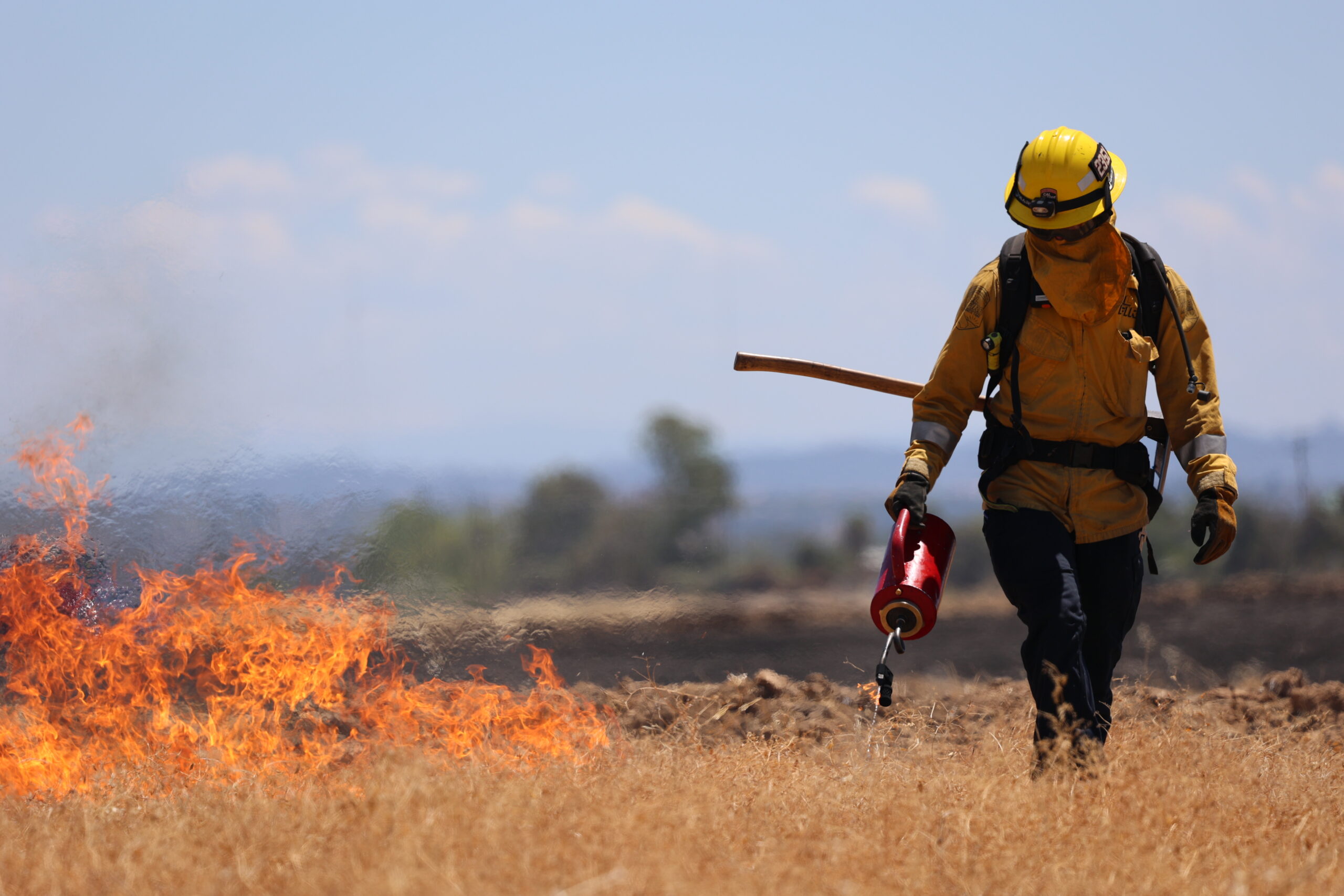
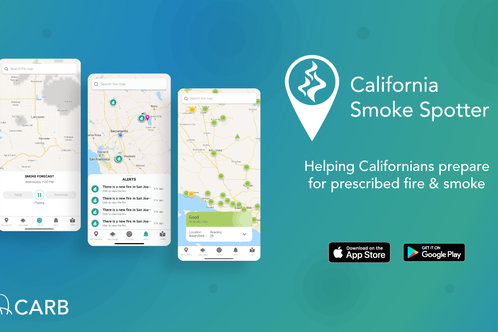
Smokespotter app: The California Smoke Spotter app provides a comprehensive overview of the latest information on prescribed fires, projected smoke impacts, current air quality and educational material.
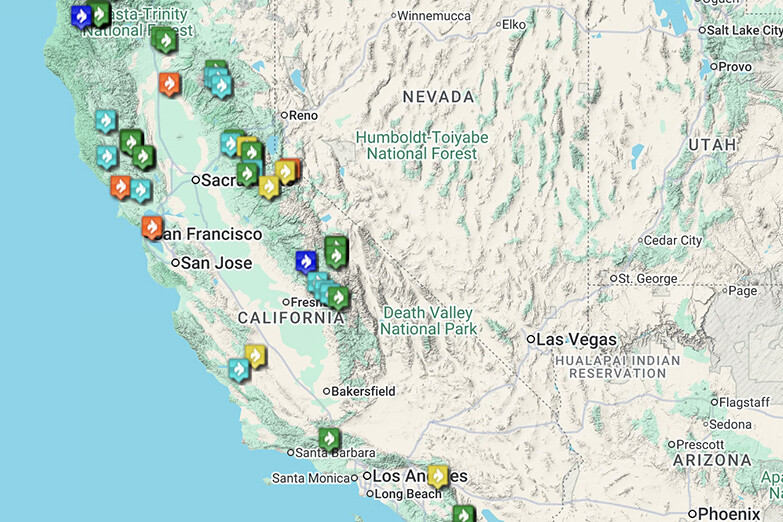
Prescribed Fire Information Reporting System (PFIRS) shows current ignitions across California.


Sustainable Recreation
Sustainable Recreation
Wildfire and climate impacts are disrupting access to California’s public lands and water, threatening the rural and gateway communities whose economies depend on outdoor recreation. Landscape health, wildfire resilience, and recreation are mutually dependent priorities. The Task Force’s Joint Strategy for Sustainable Outdoor Recreation and Wildfire Resilience, developed in December 2022, provides a roadmap for sustaining recreation access and strengthening the resilience of recreation systems, communities, and economies.
“Getting people out into nature is the most effective way to inspire public support for climate and wildfire resilience efforts. The Task Force has provided the Joint Strategy for Recreation and the key actions needed to safeguard California’s world-class recreational opportunities from wildfires, and to empower communities to expand sustainable outdoor recreation for all.”
– John Wentworth, CEO, The Mammoth Lakes Trails & Public Access Foundation
Key Accomplishments:
California continues to be a national leader in prioritizing projects that not only promote landscape resilience but also ensure access to recreational opportunities.
-
California’s Joint Strategy for Sustainable Outdoor Recreation and Wildfire Resilience provides key actions to advance the integration of sustainable recreation into wildfire and landscape resilience planning.
-
In November 2023, CNRA released the Outdoors for All Strategy to increase access to California’s forests.
-
The Task Force’s Sustainable and Outdoor Recreation/CALREC Vision Work Group (Recreation Work Group) was awarded Partnership of the Year by the U.S. Forest Service in recognition of its efforts.
Key Actions:
- 4.30 Implement California’s Joint Strategy for Sustainable Outdoor Recreation and Wildfire Resilience: The Sustainable Recreation/CALREC Vision Key Working Group will partner with CNRA, DOC, the USDA Forest Service, Bureau of Land Management (BLM), and state and local recreation managers, to deliver multi-benefit recreation and wildfire resilience projects in and near the wildland urban interface. Where appropriate, they will embed these priorities in RFFC Regional Priority Plans.
- 4.31 Leverage California Jobs First to Implement Multi-benefit Programs and Projects: Recreation and tourism Industry sector coordinators from California Jobs First regions will develop best practices for job creation in the sector. This includes leveraging opportunities identified in the Joint Strategy and in both the Jobs First Sierra Recommendations for Implementation and Collaborative Action and the State Cohort Recommendations for Implementation and Collaborative Action.
- 4.32 Support Multi-Benefit Recreation Facilities Projects in and Near the WUI: Federal, state, and local land managers will seek to build projects in or adjacent to WUI areas that provide both wildfire risk reduction and outdoor recreation benefits. Examples include trails and campgrounds that can be used during fires as staging areas for personnel and equipment. This includes approaches like the Fire-Hardened Trails Prescription, which removes fuels along trail corridors to protect trail system investments, mitigates wildfire risk by trail users, and provides strategically placed, tactically feasible trails for wildland fire operations.
resources

Wood Utilization
Wood Utilization
California must expand its wood and biomass processing capacity alongside treatment acreage, or it risks missing its targets. The 2025 American Forests Report estimates that viable markets could recover 33% to 50% of treatment costs, but treating one million acres a year would require 29 to 31 new average-sized mills and 8 to 9 large bioenergy facilities. Without outlets, an estimated 80% of biomass residues stay on the landscape, adding emissions and fire risk. Expanding the forest products sector, which already supports about 5,200 jobs and $3.4 billion in annual sales, would also strengthen rural economies.
“By mobilizing investments in forest health projects and tying funds to the movement of forest thinning material, downstream wood product markets can flourish."
– Andy Miller, Chief Executive Officer, Loamist
Key Accomplishments:
California is expanding wood utilization by investing in forest product businesses, biomass and biofuel innovation, and market development programs that create productive uses for forest residues and support the scale of forest restoration.
- Since 2021, the U.S. Forest Service has awarded over $43 million in Wood Innovation Grantsin California to spur wood products manufacturing, expand active forest management, and accelerate energy innovation across America’s timber-producing communities.
- Since 2022, CAL FIRE has awarded more than $75 million Business Development Grants, to non-profits, new business startups, and existing forestry and forest product businesses.
- In September 2024, the IBank Climate Catalyst Revolving Loan Fund announced approval of $25 million to support financing for projects in the biomass utilization sector.
- In 2023, DOC’s Forest Biomass to Carbon-Negative Biofuels Pilot Program awarded $4 million for projects that convert sustainably sourced forest waste to carbon-negative biofuels.
- The Governor’s Office of Land Use and Climate Innovation (LCI)’s Feedstock Aggregation Pilot Program launched five pilot projects to develop regional strategies to establish reliable access to sustainably sourced woody feedstock.
- LCI’s Forest Sector Market Development Program diverts forest residues for productive use, which can help increase the pace and scale of forest restoration.
- The California Public Utilities Commission’s Bioenergy Renewable Auction Mechanism (BioRAM) program requires California’s investor-owned utilities to procure bioenergy from High Hazard Zone (HHZ) fuel to aid in mitigating the threat of wildfires.
- In March 2025, the President issued an executive order directing the U.S. Forest Service and BLM to accelerate ongoing federal programs to increase timber production in California by 25 percent over five years and streamline federal policies to enhance forest management, reduce wildfire risks, and decrease reliance on imported timber.
- In October 2025, the U.S. Environmental Protection Agency issued policy guidance directing regional offices to work with local, state, tribal, and federal partners to remove barriers in State Implementation Plans that discourage prescribed fires.
- In 2026, The U.S. Environmental Protection Agency (EPA) awarded a $14.7 million grant to the Tule River Tribe to construct a biochar production plant in California’s Central Valley that will also have the capacity to generate renewable electricity and process up to 31,500 tons of woody residue annually.
Key Actions:
- 4.15 Organize a Nimble State Governance Structure: Building on recent efforts, CNRA will work with the Board of Forestry and Fire Protection, CAL FIRE, California Strategic Growth Council (SGC)’s energy investments team and others to identify options to coordinate, elevate and deliver state initiatives to advance wood utilization.
- 4.16 Develop a Comprehensive Wood Utilization Strategy: The Board of Forestry and Fire Protection and CAL FIRE, in coordination with SGC’s Factory Built Housing Program, will coordinate with key public and private partners to develop a comprehensive wood utilization strategy by the end of 2027.
- 4.17 Activate Climate Bond Funding to De-Risk Investment in Biomass Facilities: DOC will establish a loan program to catalyze private sector investments in non-combustion facilities and create a sustainable funding cycle supporting multiple rounds of economic development.
- 4.18 Implement the Forest Organic Residue Energy and Safety Transformation (FOREST) Program: Consistent with Assembly Bill (AB) 706 (Aguiar-Curry, 2026), the Board of Forestry and Fire Protection will establish and implement the FOREST program to support biomass power generation in strategically located regions while long-term markets for low-value wood are developed.
- 4.19 Increase the Reliability of Wood and Biomass Supply: The USDA Forest Service and CNRA will partner to formalize commitments to expand its use of 20-year contracting mechanisms to increase supply certainty for projects seeking to utilize wood fiber from California’s national forests.
- 4.20 Establish Regional Woody Biomass Partnerships: Subject to the availability of funds, LCI will continue supporting the development of regional woody biomass partnerships to centralize the collection and contracting of biomass feedstock, and to serve as a broker for long-term contracts.
- 4.21 Expand Wood and Biomass Processing Capacity: Subject to available funds, CAL FIRE, DOC, and the USDA Forest Service will continue awarding grants to support facility development. LCI will evaluate the feasibility of creating a streamlining pathway for certain projects that utilize forest biomass on properties zoned as industrial and outside areas of extreme air quality nonattainment as part of the 2027 California Environmental Quality Act Guidelines update. GO-Biz will offer technical assistance to individual wood utilization businesses.
- 4.22 Establish a California Mass Timber Strategy: With California’s newly created Mass Timber Coalition, the Board of Forestry and Fire Protection, in coordination with the USDA Forest Service, will coordinate with GO-Biz, other state and federal agencies, local and regional governments, educational and research institutions, and the private sector to develop a strategy to advance the use of mass timber and other engineered wood building products.
- 4.23 Support Wood Product Procurement for New State-Funded Buildings: The Board of Forestry and Fire Protection, in coordination with the California Department of General Services, will explore strategies to support increased use of California wood products, including mass timber, for use in state-funded projects involving building construction, with a priority on utilizing wood products that achieve goals for low-embodied carbon.
- 4.24 Incorporate California Wood Products in Housing Grant Programs: The California Housing and Homelessness Agency and SGC will explore and report on the use of mass timber and California wood products in developments funded by state housing programs.
- 4.25 Increase Communication and Promotion of Wood Products in California: The Board of Forestry and Fire Protection and the Joint Institute for Wood Products Innovation will amplify messaging regarding wood products and related issues in California. Increasing awareness will help support the industry development necessary to advance state forest restoration and climate goals.
- 4.26 Support Small-Scale, Behind-The-Meter Facilities in Strategic Locations: CNRA and the California Public Utilities Commission will explore options for supporting small-scale, behind-the-meter biomass facilities (up to 2 megawatts) in locations that advance wildfire safety and local jobs.
- 4.27 Support Emerging Markets for Biochar: Subject to the availability of funds, CARB will assess the feasibility and science of biochar as a method of carbon sequestration, and the Joint Institute will develop a biochar market strategy, including a producer and consumer guidebook.
- 4.28 Maintain State Support for Forest Biomass to Bioenergy Grant Programs: Through funds made available through Proposition 4, DOC will continue to support projects utilizing forest biomass to make less carbon-intensive energy and other products.
- 4.29 Improve Forest Product Transportation Efficiency: The California Department of Transportation, California Highway Patrol, and other appropriate state agencies will explore adjustments to truck weight requirements on non-federal transportation routes. Potential adjustments would increase biomass volume per trip, reduce fuel use and emissions per ton removed, and improve the economic feasibility of moving lower-value forest restoration byproducts to processing or bioenergy facilities.
resources
Publications
Workforce & Career Development
Workforce & Career Development
Partners across California are building career pathways through training, apprenticeships, grants, and college programs, yet workforce capacity remains a major constraint on scaling wildfire resilience work, with demand outpacing talent and turnover high. Success depends on good jobs that are well-compensated, accessible, and safe. The 2025 Workforce and Career Development Recommendations, published by the Sierra Business Council and the Watershed Research and Training Center with the Task Force, will guide efforts to build and retain this workforce alongside the Key Actions below.
"The ambitious suite of actions set forth by the Task Force require an empowered and trained workforce to back them. By providing training opportunities and supporting employee well-being, satisfaction, performance, and growth, we can build the workforce necessary to confront California’s wildfire crisis."
– Allison Jolley, Watershed Research and Training Center
Key Accomplishments:
California is strengthening forest-sector workforce development and wood product markets to support restoration and rural economies.
- Invested in workforce and business development: Since 2022, CAL FIRE has awarded approximately $55 million in Workforce Development Grants and $130 million in Business and Workforce Development Grants to educational institutions, Tribes, nonprofits, startups, and forestry and forest products businesses. In 2024, IBank invested $25 million in the California Wildfire Innovation Fund to accelerate forest restoration and wood utilization.
- Identified pathways to advance workforce development: In 2025, the Sierra Business Council and The Watershed Center released Advancing Wildfire Resilience Workforce and Career Development in California, outlining recommendations to build and retain the workforce needed to scale wildfire resilience while creating good jobs and strengthening local economies.
Key Actions:
- 4.10 Expand Wildfire Resilience Career Pathways: Building on efforts by CAL FIRE, DOC, and CNRA, State wildfire resilience agencies will collaborate to modernize and expand access to careers across the sector. This includes reducing barriers to job discovery and hiring processes; reviewing and updating classification requirements; expanding recruitment; supporting experiential training and tribally led workforce development; and embedding career navigation support. In parallel, a work group of trainers, educators, certifying bodies, and funders will convene to align traditional and non-traditional education pathways, address sector-wide bottlenecks, and improve entry-level access, credential transferability, and advancement opportunities.
- 4.11 Design a Centralized, Accessible Human Resources Development: The Watershed Research and Training Center, with support from DOC and in partnership with potential end-users, will continue to scope a service model for providing standardized Human Resources development resources for wildfire resilience employers, including tribes and tribally led organizations, nonprofits, small businesses, government agencies, and special districts.
- 4.12 Leverage Grant Programs to Stabilize and Invest in Workforce and Career Development: When updating grant guidelines, CNRA and wildfire resilience funding entities will consider integrating workforce related eligible costs, and evaluation criteria that advance workforce objectives while incentivizing grantees to leverage external funding sources to cover these costs where appropriate.
- 4.13 Expand State Hiring Pathways: CAL FIRE and other departments will seek to expand hiring pathways for state-certified community conservation corps (Local Corps) graduates into CAL FIRE and state service, building on the existing streamlined hiring process for California Conservation Corps graduates.
- 4.14 Convene Key State Leaders and Partners: Task Force partners, Sierra Business Council, and the Watershed Research and Training Center will convene leaders of state agencies and non-state partners to identify short and long-term opportunities address the Workforce and Career Development Recommendations.
resources

Private Landowner Stewardship
Private Landowner Stewardship
Non-industrial private forestlands make up about 8 million of California’s 32 million forested acres, and along with private shrublands, oak woodlands, and rangelands, they are essential to an all-lands approach to resilience. Small landowners often struggle with limited technical knowledge, high treatment costs, complex regulations, and hard-to-navigate assistance programs. To deliver help at scale, state and federal agencies are shifting from individual grants to block grants for regional partners like Resource Conservation Districts, Fire Safe Councils, and Prescribed Burn Associations. These networks connect landowners with support and tie their work into larger projects on adjacent public lands, benefiting both landscape resilience and community wildfire preparedness.
“Private forest landowners are often the missing link in connecting wildfire treatments across fragmented landscapes. The Task Force and its partners have been critical in aligning landowner assistance programs to deliver real results, often in partnership with resource conservation districts (RCDs), which serve as the local boots on the ground.”
– Sophia Lemmo, Forestry and Fire Director, California Association of Resource Conservation Districts
Key Accomplishments:
California is delivering technical, financial, and educational support to empower small forest landowners to implement wildfire resilience and post-fire recovery projects.
- Expanded financial assistance: Since 2021, CAL FIRE has assisted 2,398 private forestland owners across 12,615 acres through Wildfire Resilience Block Grants and California Forest Improvement Program (CFIP).
- Accelerated post-fire recovery: Since 2021, CAL FIRE and federal partners working with RCDs and UCCE have established 15 Emergency Forest Restoration Teams (EFRTs) to rapidly restore forests after wildfire, including helping small private landowners. Three pilot teams responding to the Dixie, Tamarack and Caldor fires have treated more than 9,000 acres and enrolled more than 2,300 landowners.
- Expanded landowner education and resources: The University of California Cooperative Extension (UCCE) established Forest Stewardship Workshops continues offering educational resources to assist residents manage forestlands for wildfire resilience. In November 2025, California Association of Resource Conservation Districts (CARCD) launched an interactive dashboard to help non-industrial private forest landowners find educational, technical, and financial assistance programs available in their area.
Key Actions:
- 4.06 Sustain and Expand Landowner Assistance and Incentive Programs: State and federal agencies, along with RCDs and non-governmental partners will seek to sustain and expand technical, financial, and market-based assistance programs for private landowners. This includes expanding landowner education and technical assistance through RCDs and programs like University of California Agriculture and Natural Resources (UC ANR)’s Forest Stewardship Workshops. It also includes broadening participation in incentive and market-based programs including CAL FIRE’s California Forest Improvement Program (CFIP) and the Natural Resources Conservation Service’s (NRCS) Environmental Quality Incentives Program; exploring sustainability certification to promote California-grown wood products through the Timber Regulation and Forest Restoration Program and related partnerships; and developing tailored assistance pathways for underserved shrublands, oak woodlands, and rangelands.
- 4.07 Align Funding and Strengthen Regional Delivery: State and federal agencies will continue to coordinate their assistance programs—including CFIP, NRCS programs, USDA Forest Service assistance, Regional Forest and Fire Capacity (RFFC) Program, and Wildfire Resilience Block Grants—to better leverage available funding, reduce cost-share burdens and support regional priorities. Additionally, CAL FIRE, NRCS-CA, USDA Forest Service, and other partners will assist the Department of Conservation (DOC) with supporting the long-term capacity of regional partners and private non-industrial forest landowners.
- 4.08 Increase Outreach and Education to Small Private Landowners: CAL FIRE and the USDA Forest Service will continue to support, as funding allows, regular forest stewardship workshops for landowners through sustained funding to the UC ANR Forest Stewardship Education Initiative to continue offering forest stewardship and post-fire forest resilience workshops. Additionally, the California Association of RCDs Private Forestlands Committee, in coordination with the Task Force Communications Work Group, will seek to finalize an outreach plan focused on underserved landowners.
- 4.09 Provide Assistance for Rapid Post-Fire Restoration: As described in Action 1.19, CAL FIRE, the USDA Forest Service, and local agencies such as RCDs, will seek to expand EFRTs to rapidly assist private forest landowners impacted by wildfires.
resources
Mobilizing Regional Action
Mobilizing Regional Action
Historically, land management agencies planned at their own scales and within their own boundaries, so the USDA Forest Service, the Department of Conservation’s Regional Forest and Fire Capacity (RFFC) Program, CAL FIRE, and Caltrans all operate within different footprints. To address this fragmentation, the Task Force and its partners are establishing a statewide network of regions and subregions, largely aligned with existing RFFC partnerships and national forests.
“Quote”
– Person

Key Accomplishments:
Intro?
- Capacity: DOC has invested in 20 regional planning efforts covering almost all fire-prone regions of the state, resulting in durable partnerships and expanded project pipelines.
- Common tools: The Task Force launched the Interagency Treatment Dashboard and California Landscape Metrics giving regional partners shared data to plan faster and report results consistently.
- Financing: CAL FIRE, DOC, and the State’s conservancies piloted landscape-scale funding approaches based on proven models like Department of Water Resources’ (DWR) Integrated Regional Watershed Management, Office of Land Use and Climate Innovation’s Regional Climate Collaboratives, and the USDA Forest Service’s (USFS) Collaborative Forest Landscape Restoration Program (CFLRP).
- In 2021 CAL FIRE established a new Community Wildfire Preparedness and Mitigation Division to collaborate with federal, state, and local agencies; tribes; nonprofit entities; and other stakeholders to better prepare California communities for wildfire.
- The Department of Conservation’s Regional Forest and Fire Capacity (RFFC) Program has awarded more than $140 million to communities across the state to build local and regional capacity for creating fire-adapted communities and landscapes.
- The Task Force has published Regional Profiles and Regional Resource Kits for California’s four regions. These resources bring together the scientific data needed to help regional entities more rapidly and effectively plan, prioritize, and monitor projects.
- In 2021, the California Fire Safe Council (CFSC) established the Wildfire County Coordinator Program to educate, encourage, and develop countywide collaboration and coordination among wildfire mitigation groups. With support from CAL FIRE, the program has expanded to 47 counties.
- The Task Force is partnering with the U.S. Forest Service, CNRA, University of California, and Google.org to develop and expand Planscape, a free, open-source decision-support tool that helps land managers maximize the wildfire resilience and ecological benefits across programs and projects.
Key Actions:
Intro?
- 3.01 Expand Regional Priority Plans & Partnerships. DOC, in coordination with CAL FIRE, USDA Forest Service, Bureau of Land Management (BLM), California Native American tribes, regional and subregional partnerships, private landowners, and others, will continue to invest in the development, maintenance, and implementation of Regional Priority Plans. These Plans will:
- Describe and assess the landscape conditions within their region;
- Define the governing structures that steer decision-making and implement wildfire and fire-adapted landscape priorities within their jurisdictions;
- Establish science-based processes for planning and setting priorities; and
- Develop pipelines of public and private priority projects.
- 3.02 Develop County-Level Community Wildfire Protection Plans: Building upon the CFSC Wildfire County Coordinators Program, CAL FIRE will establish a County Wildfire Preparedness Program to expand county capacity and support the development of county-level Community Wildfire Protection Plans (CWPPs). Under this program, counties will create or update their CWPPs on a five-year cycle. See Actions 2.06 through 2.17 for related community-wide preparedness strategies.
- 3.03 Develop Interagency 5-year Plans of Work. Task Force partners will work with DOC, the National Forest Foundation, the USDA Forest Service, and their partners to develop interagency five-year plans of work for each subregion. These five-year plans will include rolling project pipelines drawn from Regional Priority Plans, USDA Forest Service five-year work plans, utility plans, CWPPs, and other local projects, all dynamically tracked within the California Wildfire Commons. Each 5-yr plan of work will include:
- Spatially explicit portfolios of projects, planned across agency boundaries, over five to ten years, backed by decision-support tools or other science-based methods for planning and priority-setting, such as those developed through the Regional Priority Plan process;
- Projected costs for planned projects and related activities;
- Project objectives and benefits;
- Project timeline and status;
- Project points of contact and partners; and
- Expected/modeled outcomes that can inform adaptive management.
resources
Community Wildfire Preparedness
Community Wildfire Preparedness
California communities face escalating wildfire risk from climate change, expanding development, and extreme fire behavior. In 2020, nearly 2.8 million homes sat in designated Fire Hazard Severity Zones, and the Task Force’s Science Advisory Panel found that direct wildfire exposure is growing faster in California than in any other continental state. The 2025 Los Angeles fires showed that dense urban areas are vulnerable too, destroying over 16,000 structures, claiming 31 lives, and projecting $10 billion in economic losses through 2029. The impacts reach far beyond burn zones: smoke exposure, billions in economic impacts, and indirect damages to healthcare, education, agriculture, and labor often exceed direct fire losses tenfold.
“Wildfire knows no boundaries. The Task Force’s cross-jurisdictional approach to advancing public health, safety, evacuation, and recovery is making communities safer, healthier, and more resilient before, during, and after wildfire.”
– Mark Brown, Executive Officer, Marin Wildfire Prevention Authority
Key Accomplishments:
California is advancing local wildfire resilience planning by helping communities assess risks, coordinate mitigation strategies, and implement actions that enhance safety, preparedness, and long-term resilience.
- In 2021 CAL FIRE established a new Community Wildfire Preparedness and Mitigation Division to collaborate with federal, state, and local agencies; tribes; nonprofit entities; and other stakeholders to better prepare California communities for wildfire.
- The Department of Conservation’s Regional Forest and Fire Capacity (RFFC) Program has awarded more than $140 million to communities across the state to build local and regional capacity for creating fire-adapted communities and landscapes.
- The Task Force has published Regional Profiles and Regional Resource Kits for California’s four regions. These resources bring together the scientific data needed to help regional entities more rapidly and effectively plan, prioritize, and monitor projects.
- In 2021, the California Fire Safe Council (CFSC) established the Wildfire County Coordinator Program to educate, encourage, and develop countywide collaboration and coordination among wildfire mitigation groups. With support from CAL FIRE, the program has expanded to 47 counties.
- The Task Force is partnering with the U.S. Forest Service, CNRA, University of California, and Google.org to develop and expand Planscape, a free, open-source decision-support tool that helps land managers maximize the wildfire resilience and ecological benefits across programs and projects.
- In 2025, the Task Force launched an online resource to serve as a one-stop shop for local project planners to identify and access technical assistance for wildfire projects in their counties.
- In December 2025, the California Natural Resources Agency in partnership with the California Air Resources Board, NASA Ames Research Center, and the Wildfire and Forest Resilience Task Force released the state’s first-ever statewide LiDAR maps, providing data on forest and vegetation conditions, enabling tribes, researchers, land managers, and community partners to incorporate the free data products into their own tools, models, and planning processes to inform wildfire resilience projects.
Key Actions:
California’s Wildfire and Landscape Resilience Action Plan identifies key priorities for the state to restore shrublands and forests that have been devastated by wildfire.
- 2.06 Build a County Wildfire Preparedness Program: Building on the California Fire Safe Council’s (CFSC) Wildfire County Coordinators Program, CAL FIRE will establish a California Wildfire Preparedness Program, as required by SB 973(Becker, 2026). The Program will strengthen county capacity to assess wildfire risk, prioritize and implement mitigation and preparedness actions, and coordinate local efforts with state and regional wildfire resilience strategies. CAL FIRE will enter into an agreement with CFSC to administer and deliver the program, supporting counties in planning, coordination, community outreach, and implementation of wildfire prevention, preparedness, mitigation, and recovery activities. Through this Program, CAL FIRE and the CFSC will promote county-based Community Wildfire Protection Plans (CWPPs) as a key platform to coordinate community preparedness.
- 2.07 Establish Statewide Targets and Implementation Plans for Community Wildfire Resilience: CAL FIRE, in coordination with Task Force partners, will establish statewide targets for community wildfire preparedness and track progress to achieve these targets with shared data systems.
- 2.08 Develop a Community Wildfire Mitigation Validation Program: CAL FIRE, in partnership with local governments, will establish a voluntary Wildfire Mitigation Validation program, as required by AB 1960 (Bennett, 2026). This program will provide voluntary official recognition to a community that achieves progress toward community-scale wildfire preparedness and mitigation.
- 2.09 Support University of California Agriculture and Natural Resources’ (UC ANR’s) Fire Network Program: CAL FIRE will continue to support, as funding allows, UC ANR’s Fire Network Program, which delivers science-based expertise to communities about wildfire preparedness, post-fire recovery, workforce development, and land stewardship. To support this program, UC ANR, in partnership with CAL FIRE, will develop various science-based standards that support parcel and neighborhood-level strategies for wildfire mitigations.
- 2.10 Develop Community Wildfire Metrics: CAL FIRE, CNRA, and the Governor’s Office of Land Use and Climate Innovation (LCI) will develop a standardized set of metrics to measure a community’s wildfire exposure, vulnerability, and resilience outcomes. Data sources will include new statewide products from the Wildfire, Ecosystem Resilience, and Risk Assessment Initiative (WERK), such as maps of building area, height, and volume to measure exposure and vegetation management mapping to track defensible space implementation. These community metrics will enable more targeted local actions, help assess improvements more accurately, and complement the Vulnerable Communities Platform and the California Landscape Metrics, which assess landscape condition statewide.
- 2.11 Prepare for Smoke: The California Air Resources Board (CARB), in partnership with local air districts and the California Air Pollution Control Officers Association, will improve notifications on smoke hazards and, with the California Department of Public Health (CDPH), coordinate and expand the equitable distribution of information to prepare for and protect against smoke exposure.
- 2.12 Implement the Wildfire Smoke and Health Plan: As required by AB 619 (Calderon, 2022) and expanded by AB 1003(Calderon, 2025), CDPH will implement a statewide Wildfire Smoke and Health Plan by providing guidance to counties on communicating wildfire smoke risks and protective actions, including the stockpiling, distribution, and use of respiratory protection and other protective equipment. Counties will address the recommendations and guidance developed by CDPH in their next county emergency plan update and disseminate their county-specific plans through outreach and education to residents and key stakeholders.
- 2.13 Prepare for Evacuations: The California Governor’s Office of Emergency Services (Cal OES), in partnership with local jurisdictions, will continue to expand regional evacuation zones, improve multilingual alert systems, and provide resources to integrate evacuation planning into local hazard mitigation and emergency operations plans. CAL FIRE and Cal OES will support integration of evacuation plans into CWPPs and the Safety Elements of local General Plans.
- 2.14 Integrate Wildfire Risk into Local Land Use Practices: LCI, the California Strategic Growth Council (SGC), and CAL FIRE, in coordination with the Wildfire Mitigation Advisory Committee and the California Department of Housing and Community Development (HCD), will strengthen guidance, technical assistance, data, and planning tools to integrate wildfire risk into local land use, housing, subdivision, infrastructure and development planning decisions.
- 2.15 Establish a Statewide Wildfire Mitigation Workforce Training Strategy: CAL FIRE, in coordination with the University of California Agriculture and Natural Resources (UC ANR) and other Task Force partners, will develop a strategy to develop, expand and coordinate wildfire mitigation workforce training. Priority occupations include defensible-space crews, contractors, landscapers, builders, and other professions related to wildfire mitigation.
- 2.16 Establish Post-Disaster Recovery and Safer Rebuilding Framework for Wildfire-Risk Communities: Cal OES, in coordination with CAL FIRE, LCI, HCD, and SGC’s Energy Investments team, will support communities at risk from wildfire develop and maintain plans for post-fire recovery and safer-rebuilding. Plans will establish roles and procedures to address debris and hazardous-material removal, restore critical infrastructure, provide temporary and permanent housing, streamline permitting, expand rebuilding options, and speed community economic recovery.
- 2.17 Align Community Wildfire Preparedness and Mitigation Strategies with Strategies for Other Hazards: CAL FIRE will seek to align community wildfire preparedness and mitigation planning, investments, and implementation with strategies for other hazards, including earthquakes, floods, extreme heat, drought, and severe wind events.
resources
Beneficial Fire
Beneficial Fire
Many of California’s fire-adapted ecosystems now sit outside their historical fire regimes, fueling destructive wildfires. “Beneficial fire,” including prescribed fire, managed wildfire, and cultural burning, restores fire to these landscapes, reducing extreme wildfire risk and supporting tribal stewardship and ecosystem health.
“California’s landscapes are, and always have been, shaped by fire. It’s not a question of whether these places will burn; it’s a question of when and how. Now is the time to elevate the voices of California's Indigenous and local communities—the original stewards of fire—and to work together to bring beneficial fire back to California's landscapes and people.”
– Lenya Quinn-Davidson, Director, UC ANR Fire Network
California’s Strategic Plan for Expanding the Use of Beneficial Fire
The Task Force published California’s Strategic Plan for Expanding the Use of Beneficial Fire in 2022, the nation’s first comprehensive roadmap with acreage targets across all land ownerships.
Key Accomplishments:
California continues to remove barriers and expand tools to dramatically increase the use of prescribed and cultural fire across the state.
- Developed a nation-leading framework for expanding beneficial fire: California’s nature-based solution targets call for significantly scaling beneficial fire across the state. California’s Strategic Plan for Expanding the Use of Beneficial Fire provides a vision and framework for rapidly expanding beneficial fire, and Executive Order N-35-25 directs a suite of actions to support tribes, local governments, and fire practitioners to maximize use of beneficial fire. State agencies have moved quickly to deliver on-the-ground results.
- Expanded prescribed fire: Task Force partners have nearly doubled prescribed fire statewide since 2021, treating roughly 200,000 acres annually. In May 2025, CAL FIRE, for the first time, met and exceeded its 50,000-acre goal for beneficial fire.
- Advanced cultural fire: Governor Newsom signed SB 310, which reduces barriers for tribes to conduct cultural burns in their ancestral territories. The Karuk Tribe and CNRA signed the first SB 310 Cultural Fire agreement in February 2025.
- Reduced liability barriers: CAL FIRE established a first-in-the-nation Prescribed Fire Liability Claims Fund with $20 million in state funding to cover losses from prescribed and cultural burns that escape control.
Key Actions:
California’s Wildfire and Landscape Resilience Action Plan identifies key priorities for the state to restore shrublands and forests that have been devastated by wildfire.
- 1.06 Enhance training and workforce capacity: CAL FIRE and CARB will collaborate with partners to accelerate the launch of the Beneficial Fire Training Network, expanding training opportunities for practitioners, air districts, local health jurisdictions, and regulators. Additionally, CAL FIRE, CNRA, and CARB are partnering with the University of California Agriculture and Natural Resources (UC ANR) Fire Network to expand beneficial fire outreach, education, research, capacity building and training.
- 1.07 Expedite implementation and streamlined permitting: Pursuant to AB 1699 (Rogers, 2026), CAL FIRE will provide direct assistance to local agencies and beneficial fire practitioners. Additionally, CAL FIRE will continue to streamline elements of the state burn permit process for eligible projects, and utilize template agreements to enable beneficial fire on state owned lands to better support burns led by non-CAL FIRE entities. CAL FIRE and the UC ANR Fire Network will share prescribed fire guidebooks. Consistent with SB 310 (Dodd, 2024), CNRA and local air districts will work collaboratively with federally recognized tribes to develop government-to-government agreements for cultural burning. CNRA and CalEPA will fast-track beneficial fire projects, pursuant to SB 1370. See Action 3.14 for more details on SB 1370 (Stern, 2026).
- 1.08 Expand local participation and reduce liability barriers Pursuant to AB 1699 (Rogers, 2026), CAL FIRE will continue administering the Prescribed Fire Claims Fund and expand eligibility for coverage to include public entities outside of CAL FIRE and the federal government, including resource conservation districts, volunteer fire departments, colleges and universities, and others in addition to the existing non-public user base. Permanent and expanded coverage will reduce liability barriers and increase the pace and scale of prescribed fire and cultural burning across private and public lands.
- 1.09 Expand and support cultural burning: CNRA, CalEPA, and their affiliated agencies will prioritize tribal consultation across the work of the agencies to support tribal leadership and incorporate tribal priorities into beneficial burning activities. Additionally, these agencies will strengthen partnerships with tribes through the creation of meaningful and durable access and collaboration agreements to enable cultural burning pursuant to the CNRA Tribal Stewardship Policy. CARB, in collaboration with air districts, will continue to collaborate with tribes to honor SB 310 air district agreements pursuant to Public Resources Code Section 4505. Also see Key Actions 4.01 through 4.05 on supporting tribal stewardship.
- 1.10 Improve smoke management consistency and coordination: CARB, with CAL FIRE support, will standardize early and frequent collaboration practices between practitioners and air districts. Together, they will identify best practices for smoke management plans that balance achieving beneficial fire objectives with reductions in public smoke exposure. They will also develop guidance to support longer burn authorization windows where feasible while improving public communication regarding smoke impacts and mitigations.
- 1.11 Strengthen modeling, technology, and reporting tools: CARB will develop and make available new modeling and related technologies, including updating the Prescribed Fire Information Reporting System (PFIRS), to support air districts and practitioners and promote faster, more efficient permitting.
- 1.12 Establish a Beneficial Fire Capacity Program: Subject to the availability of funds, CAL FIRE will establish a Beneficial Fire Capacity Program to expand training, organizational capacity, and support for community-led beneficial fire programs. CAL FIRE will also, subject to the availability of funds, continue to support these capacity-building initiatives through the Business & Workforce Development, Tribal Wildfire Resilience, and Forest Health Programs.
- 1.13 Use recent wildfires to expand beneficial fire: State, federal, local, tribal, and private land managers will evaluate how to incorporate recent wildfire burn areas into management plans, using wildfire edges as control lines to introduce beneficial fire to adjacent areas and reapply fire to lightly or moderately burned areas to maintain and reinforce landscape resilience.
- 1.14 Use Recent Wildfires to Expand Beneficial Fire: Public and private land managers will seek to incorporate recent wildfire burn areas into management plans, using wildfire edges as control lines to introduce beneficial fire to adjacent areas.
Regional Considerations
While Beneficial Fire is essential to landscape resilience across much of California, beneficial fire may not be an appropriate tool in areas that are already experiencing fires more frequently than they did historically. For example, in Southern California shrublands, too much fire can lead to conversion of native vegetation to more flammable non-native grasses, resulting in even greater fire risk.
CASE STUDY:
A Landmark Cultural Burn Agreement
In March 2025, The Karuk Tribe and the California Natural Resources Agency (CNRA) signed the first cultural burning agreement under SB 310. This landmark legislation and agreement acknowledge tribal sovereignty and addresses historical injustices while contributing to the mitigation of catastrophic wildfire by enabling CNRA and local air districts to enter into agreements with federally recognized California Native American tribes to support them in conducting cultural burns in their ancestral territories.
Work Group: Beneficial Fire
Work Group: Beneficial Fire
Partnering Organizations
Work Group leads
CAL FIRE – Frank Bigelow, Key Action Lead
CAL FIRE — John Morgan
Fire Restoration Group – Craig Thomas
U.S. Forest Service – Stephen Fillmore
CAP COA – Larry Greene
CSU Chico – Don Hankins
Len Nielson, CAL FIRE
Lance Noxon, U.S. Forest Service
Work Group Facilitator
Hannah Hepner, The Watershed Center
resources
Programs
Tools
Videos
Smokespotter app: The California Smoke Spotter app provides a comprehensive overview of the latest information on prescribed fires, projected smoke impacts, current air quality and educational material.
Prescribed Fire Information Reporting System (PFIRS) shows current ignitions across California.

Reforestation & Landscape Restoration
Reforestation & Landscape Restoration
Increasingly frequent, high-severity wildfires are overwhelming California’s forests and shrublands. Approximately 14% of the severely burned forest acres that need replanting have been reforested since 2020, leaving at least 1.3 million acres vulnerable to repeat fires and permanent conversion to grassland or shrubland. Without this coordinated action to recover post-fire landscapes, California risks losing its forestlands forever.
“Catastrophic wildfires are an existential threat to California's forests. To support recovery and secure future forests, Task Force partners are working to address the reforestation backlog by increasing seed collection, seedling production, and planting.”
– Shelley Villalobos, California Reforestation Pipeline Partnership Manager, American Forests
California's Strategic Plan for Restoring Post-Fire Landscapes
California’s Reforestation Strategy, led by the USDA California Climate Hub, is a collaborative interagency framework to accelerate reforestation on public and private lands over the next decade.
Key Accomplishments:
California has made significant progress in expanding the capacity, coordination and tools needed to accelerate forest restoration and recovery.
- Expanded reforestation treatments: Since 2021, CAL FIRE, the U.S. Forest Service, RCDs, NGOs, tribes, and private sector partners have accomplished more than 247,000 acres of reforestation tree planting statewide.
- Ramped up seed and cone collection: Since 2021, Task Force partners have expanded the state’s public cone and seed collection capacity through training programs and infrastructure investments, capitalizing on a high cone-production year to grow public seed bank deposits 275% between 2023 and 2024.
- Established Emergency Forest Restoration Teams (EFRTs): Since 2021, CAL FIRE and federal partners working with RCDs and UCCE have established 15 EFRTs to rapidly restore forests after wildfire, including helping small private landowners. Three pilot teams responding to the Dixie, Tamarack and Caldor fires have treated more than 9,000 acres and enrolled more than 2,300 landowners.
- Built reforestation coordination & capacity: The Task Force partnered with American Forests, CAL FIRE, and USFS to develop the Reforestation Pipeline Partnership to expand California’s capacity to collaboratively and actively reforest lands impacted by wildfires, drought, and pests.
Key Actions:
California’s Wildfire and Landscape Resilience Action Plan identifies key priorities for the state to restore shrublands and forests that have been devastated by wildfire.
- 1.14 Accelerate and expand reforestation: State and federal land management agencies will seek to expand tribal, public and private reforestation efforts in accordance with the Task Force Reforestation Strategy, focusing on a goal of reforesting priority areas where severe wildfires have compromised or are expected to compromise natural forest regeneration.
- 1.15 Increase the Efficiency and Pace of Reforestation Planning: CNRA and CalEPA will consider how to provide regulatory relief to critical post-wildfire reforestation projects and prioritize efforts in areas most likely to be successful. Concurrently, the agencies will uphold meaningful consultation with tribes and incorporating tribal priorities and knowledge into planning to protect cultural resources in post-fire landscapes.
- 1.16 Enhance Supplies of Reforestation Planting Materials: Through the Reforestation Pipeline Partnership, CAL FIRE, USDA Forest Service, and American Forests, in coordination with tribes, will continue to invest in the plant materials infrastructure and workforce required to meet current and future reforestation needs, with a focus on improving seedling quality.
- 1.17 Develop Emergency Forest Restoration Teams (EFRTs): Subject to the availability of funds, CAL FIRE, USDA Forest Service, and local agencies, such as counties and Resource Conservation Districts (RCDs), will develop EFRTs to rapidly provide restoration funding and technical assistance to private forest landowners impacted by wildfires. CAL FIRE’s Wildfire Resilience Block Grants are the funding mechanism best suited to support EFRTs, as they provide grantees flexibility to identify landowners and parcels for treatments throughout a project’s duration. EFRTs will coordinate with tribes before initiating post-fire assessments, restoration planning, or implementation where tribal lands, ancestral homelands, or tribal cultural resources may be impacted. Additional information about EFRTs can be found in California’s Private Forest Landowner Assistance Implementation Strategy.
- 1.18 Promote Climate-informed Reforestation Practices: CAL FIRE, CARB, CNRA, American Forests, and federal partners will develop trainings, outreach efforts, and grant programs, as needed, to drive the application of climate-informed reforestation practices, such as the use of climate-adapted planting stock, modified planting densities, and non-gridded planting designs. Subject to the availability of funds, CAL FIRE will continue using existing programs to provide grants for reforestation that utilize climate-adapted practices. Additionally, land managers will include California Native American tribes in planning efforts to restore resilience in post-fire landscapes through practices such as reintroducing ecologically and culturally important species, including fire-resilient hardwoods.